Explore ideas, evidence and developments across the textile value chain.
23,367 articles · latest first · 21,217–21,240
ANNA, the All-Nippon Nonwovens Association, and EDANA, the Europe-based association serving the nonwovens and related industries, are jointly calling upon the negotiators of the Japan-EU proposed Free Trade Agreement (FTA) to consider nonwovens and related products among issue-free product categories for the fast and straightforward elimination of customs tariff between the two trading blocks.
 Technical17 Feb 2014
Warp-knitted textiles offer a wide variety of design possibilities for creating actual and optical ethereal effects. For example, the FL 20/16 and ML 46 lace raschel machines can produce delicate, all-over lace fabrics with an embroidered look, while open, decorative net fabrics can also be produced on the RSJ 4/1.
 News17 Feb 2014
Despite crude oil prices pushing above US$ 100 per barrel for the first time since October last year, polyester, acrylic and nylon feedstock replacement costs declined last week, reflecting a sluggish pace of demand for man-made fibre and textiles in the aftermath of the Spring Festival. Firms at every stage of the supply chain were slow to resume operations in earnest, with the recruitment of labour in particular proving difficult.
Yarn prices present a mixed appearance at present. Polyester and rayon yarn business still appears depressed in many parts of the world, with recent currency depreciations in some import markets contributing to slow trading conditions. Weakness in raw material replacement costs is also influencing a downturn in both demand and prices. Some indications suggest viscose staple fibre prices may have reached a temporary bottom and rayon yarn may be beginning to look an attractive substitute for more expensive cotton yarn. Polyester staple fibre prices, however, may continue to rule weak and the prospects for an early turn around in offtake may be more remote.
 News14 Feb 2014
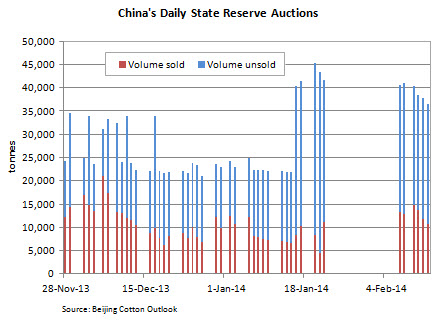
Mills have been slow to resume operations following the Spring Festival. Smaller cotton mills in particular have apparently struggled to attract workers back following the annual migration to families elsewhere in the country. Apparently the recruitment of labour has become still more difficult for mills this year.
 News14 Feb 2014
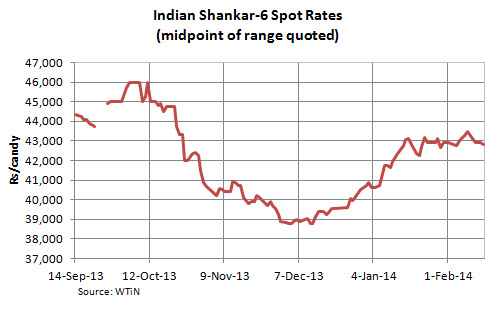
New York cotton futures have held firm in trading this week. The focus of attention has again been the rolling or exiting of positions ahead of the delivery period for the March 2014 contract delivery period, which starts on February 24. Thus far, the liquidation of ‘short’ holdings has taken place in an orderly fashion and the futures market has ruled steady to firm.
 Profile14 Feb 2014
Glatfelter, the nonwoven, specialty paper and engineered products manufacturer, has stated that shipping volumes of its composite fibres are anticipated to be 10% higher in the first quarter of 2014, compared to the fourth quarter of 2013.