Explore ideas, evidence and developments across the textile value chain.
23,367 articles · latest first · 22,273–22,296
 Profile14 Nov 2013
The liberalisation taking place in Myanmar has been making the global textile and clothing sector excited about the country’s thus far untapped potential to export indigenous and mainstream textiles.
 News14 Nov 2013
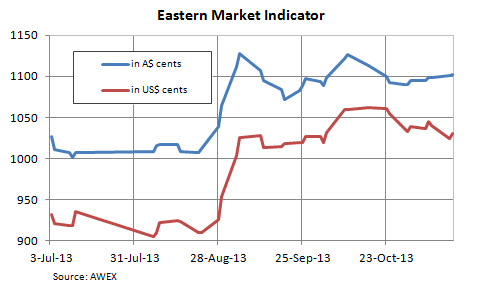
Exporters noted an upturn in buying interest from China this week, with fairly decent volumes sold through much of the micron range. Processors and mills in that country, having remained on the sidelines of the market for a few weeks, would appear to have reached the stage where they can delay raw material purchases no longer.
 News14 Nov 2013
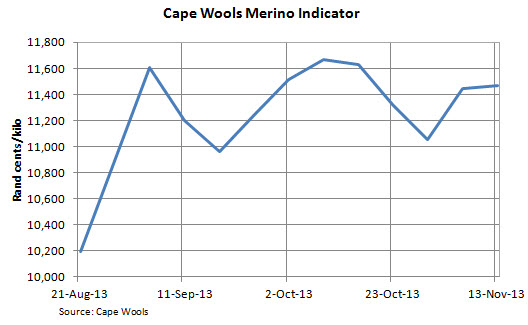
The market held onto last week’s gains, supported by a weaker rand and solid demand for good quality wool. The Cape Wools Merino Indicator rose marginally, by 0.2% to R114.71 per kilo, clean. This is 12.5% higher than the opening sale and up 14.4% from the corresponding sale a year earlier.
Cleantech Solutions International, manufacturer of metal components and assemblies used in various clean technology and manufacturing industries and textile dyeing and finishing machines, saw modest growth in revenue during the three months ended September 30, 2013.
The Hosiery Association’s (THA) board of directors has voted to dissolve this 108 year-old organisation from December 31. Economic volatility and increased globalisation of the hosiery industry has caused consolidation within the membership, said the US-based THA.
 News13 Nov 2013
Trade sources in Turkey have again referred to attempts of the major suppliers of polyester staple fibre (PSF) and filament yarn to increase their offering rates into that country, in an attempt to boost slim profit margins. However, demand from Turkish buyers has remained of meagre proportions, in face of a challenging downstream textile trading climate.
Reports from India have pointed to increasing electricity rates. Mill sources in Tamil Nadu have indicated that rates charged by the All India Electricity Board have increased of late to around Rs. 7.75 per kilowatt hour (about 12.3 US cents), up from Rs. 6.1 (below 10 US cents) back in August.
 News13 Nov 2013
Indian yarn traders report a continuation of sluggish trading conditions during the past week, both on domestic and export markets. However, a renewed depreciation of the rupee against the US dollar, to around Rs. 63.3 at the time of writing, has influenced a steady trend in prices on the domestic market. FOB quotations in US dollars have tended to be adjusted downward. Price weakness has been especially pronounced in viscose yarns, owing to a dearth of fresh demand. The main exception to the softer trend in export quotations has involved finer counts of cotton yarn (combed 60s/80s and higher), prices for which have been well maintained.
 News13 Nov 2013
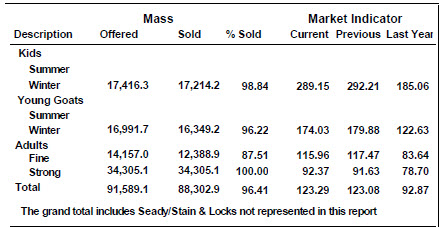
The penultimate mohair sale of the 2013 winter season took place in Port Elizabeth on November 12. A total of 91,589 kilos came under the hammer, of which 96.41% was sold. Although the clearance rate was slightly down from the previous sale, turnover was still considered encouraging in view of the lower quality of the selection.
 News13 Nov 2013
Exhibitors at the autumn edition of Intertextile Shanghai Apparel Fabrics (October 21-24) increased by 11.7% compared to last year. A record 3,751 participants from 35 countries and regions took part, reflecting a 10% rise in domestic suppliers and 15% from overseas.
 Insight13 Nov 2013
The challenges posed by new fibre-based materials in the automotive sector are complex but an appropriate testing regime allows automotive manufacturers and suppliers to match material properties to the requirements of each application, according to Germany’s Hohenstein Institute.
 News12 Nov 2013
Karl Mayer has developed a fabric for shoes produced on its TM 4-EL machine. The shoe is said to be light and comfortable to wear and also stable and breathable. The textile used in the shaft is largely responsible for the shoe’s functional characteristics.
 Insight12 Nov 2013
The accompanying chart attempts to highlight the “bubble” that has been created in cotton yarn prices in Pakistan (but also other parts of Asia), influenced in the main by increased import purchasing by China. To do so, it compares in a simplistic way, which does not account for time lag in between the different processing stages, movements in prices in the early stages of the Pakistan cotton textile supply chain. Prices prevailing on January 2 this year provide the base values from which subsequent movements in the values for fibre, yarn and fabric are measured. We have used international cotton prices (as measured by the Cotlook A Index), as domestic cotton typically would not be of sufficiently high quality to spin the combed 40s count used in this comparison.
While a trend towards casualisation has given knitters an advantage over weavers in recent years, future business success will depend upon customising product quality and design and developing new applications in the technical textiles arena.