Explore ideas, evidence and developments across the textile value chain.
23,367 articles · latest first · 21,553–21,576
 Insight20 Jan 2014
Two new polypropylene (PP) manufacturing sites have been developed in Asia recently, mainly, to deal with China’s increasing PP demand for downstream products - which includes textiles.
A detailed review of movements in fibre, yarn and fabric prices from the previous week, along with changes in production costs.
 News20 Jan 2014
Around 95% of garment finishing processes using laser and ecological techniques in the Colombian textile market are developed by Jeanologia, while in Brazil this figure is 70%, according to Enrique Silla, president of Jeanologia.
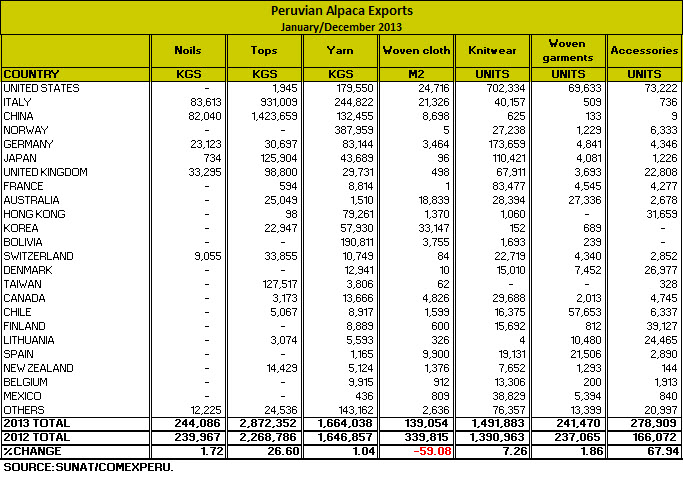
According to official data in Peru, exports of alpaca fibre, textiles and clothing were generally higher in volume last year compared with 2012 levels. The main exception to the general trend involved woven cloth, shipments of which fell by 59%, owing mainly to sharply reduced exports to the UK and South Korea.
 News20 Jan 2014
HeiQ, the speciality chemicals company, has developed a fourth generation of its intelligent textile technology, ADAPTIVE, which significantly enhances the dynamic cooling properties of garments - resulting in an increase of perceived comfort and performance for the wearer.
 News20 Jan 2014
RadiciGroup, one of the world’s leading producers of nylon 6 and 6.6, is to focus its Brazilian research and development (R&D) work on producing high-performance technical fibres and the polymer fibre precursor (PAN – polyacrylonitrile) for carbon fibre – after suspending the facility’s production of acrylic fibres.
SarlaFlex Inc, a subsidiary of Sarla Performance Fibers, has secured $13 million in New Markets Tax Credit (NMTC) allocation from Los Angeles-based National New Markets Fund, LLC (NNMF) to redevelop a manufacturing facility in rural South Carolina into the company's first US-based yarn and thread plant.
 News17 Jan 2014
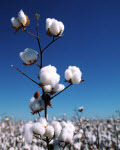
Cotton planting across the US could be up ‘slightly’ in 2014, due to the expected decrease in US corn acres, although corn will be predominantly replaced by soy beans, according to industry members at a recent Plains Cotton Growers’ meeting.
The Professional Clothing Show will take place from April 1-2, 2014, at the NEC in Birmingham, UK. It will feature the latest developments in the manufacture and supply of professional clothing, including corporate wear, workwear and personal protective equipment (PPE).
In an apparent repeat of last season, early, widely-held expectations of a downward correction in prices would seem be yielding to an increasingly firm assessment of the short to medium-term price outlook. So what has happened to undermine the bearish argument for cotton prices?
 News17 Jan 2014
Two key factors have continued to drive international cotton prices higher during the past week: the sustained strength of prices on India’s domestic markets and fund buying of New York cotton futures.