Explore ideas, evidence and developments across the textile value chain.
23,366 articles · latest first · 20,161–20,184
A detailed review of movements in fibre, yarn and fabric prices from the previous week, along with changes in production costs.
 News9 Jun 2014
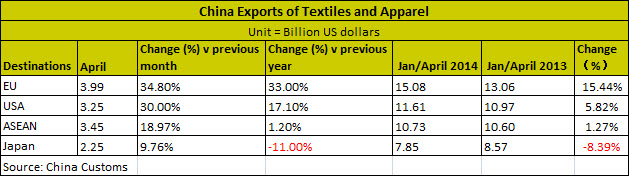
According to China Customs, textile and clothing exports to main destinations during April rebounded from the previous month, but like-to-like shipments displayed a divergent appearance on different markets.
 News9 Jun 2014
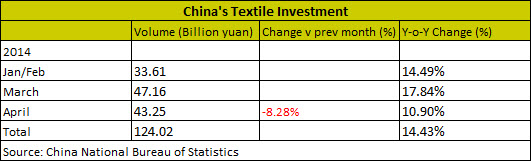
According to the China National Bureau of Statistics, fixed-asset investment in the textile sector during April declined 8.28% from March, to 43.25 billion yuan.

Textile chemist Ben Mead has joined Hohenstein Institute America as customer relations and technical specialist. He previously worked as a textile sustainability specialist at Bleam LLC, as a product chemistry manager at Nike Inc, and as a business integration manager at Kreager Brothers Excavating.
 Technical9 Jun 2014
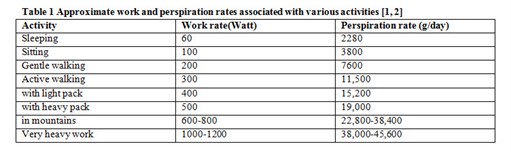
This article describes basic principles, techniques involved in designing of waterproof breathability fabrics and characteristics specifically used for leisure, medical, sports uses, survival clothing and other applications. In many applications, breathable fabrics not only satisfy water-vapor permeability but also a number of other functional characteristics. Breathable fabrics are available in a large variety, which can be categorized as- closely woven fabrics, microporous membranes and coating, hydrophilic membranes and coating, combination of microporous and hydrophilic membranes and coating, use of retroreflective microbeads, smart breathable fabrics and fabric based on biomimetics. Basic principles and mechanisms of water vapor transmission solely depend on the type of breathable fabrics. Smart breathable fabric and fabric based on biomimetics, which are of recent origin, are also showing their potential. The technology is continuously evolving in the areas of a cost-effective manufacturing process, improving material formulation to enhance the film’s properties, and controlling pore sizes and their distributions, developing improved monolithic film and coating materials for a variety of applications. Method of incorporation of membrane, coating techniques, fabric substrate, lining material and garment construction are also undergoing changes and play vital role in designing breathable garments. 1. Introduction Waterproof breathable fabrics are designed for use in garments that provide protection from the weather that is from wind, rain and loss of body heat. Clothing that provides protection from the weather has been used for thousands of years. The first material used for this purpose was probably leather but textile fabrics have also been used for a very long time. Waterproof fabric completely prevents the penetration and absorption of liquid water, in contrast to water-repellent (or, shower-resistant) fabric, which only delays the penetration of water. Traditionally, fabric was made waterproof by coating it with a continuous layer of impervious flexible material. The first coating materials used were animal fat, wax and hardened vegetable oils. Nowadays synthetic polymers such as polyvinylchloride (PVC) and polyurethane are used. Coated fabrics are considered to be more uncomfortable to wear than water-repellent fabric, as they are relatively stiff and do not allow the escape of perspiration vapor. Consequently they are now used for ‘emergency’ rainwear. Water-repellent fabric is more comfortable to wear but its water-resistant properties are short lived. The term ‘breathable’ implies that the fabric is actively ventilated. This is not the case. Breathable fabrics passively allow water vapour to diffuse through them yet still prevent the penetration of liquid water. Production of water vapour by the skin is essential for maintenance of body temperature. The normal body core temperature is 37°C, and skin temperature is between 33 and 35°C, depending on conditions. If the core temperature goes beyond critical limits of about 24 °C and 45°C then death results. The narrower limits of 34 °C and 42 °C can cause adverse effects such as disorientation and convulsions. If the sufferer is engaged in a hazardous pastime or occupation then this could have disastrous consequences [1-4]. During any physical activity the body provides cooling partly by producing insensible perspiration. If the water vapor produced increases the relative humidity of the atmosphere inside the clothing sufficiently to cause sensible perspiration and increased thermal conductivity of the insulating air then the clothing becomes uncomfortable. In extreme cases hypothermia can result as the body loses heat too rapidly causing a decrease in core temperature. If the sensible perspiration cannot evaporate and the thermal insulation of the clothing remains high then the body is prevented from cooling and hyperthermia can result.
The second World Textile Summit (WTS) will explore sustainability strategies that create business value in the textile manufacturing value chain. In line with the key themes of ITMA 2015, WTS 2015 will seek to answer sustainability questions that matter to the industry’s strategic decision-makers:
Almost 500 exhibitors are set to participate in Cinte Techtextil China, which will be held from September 24-26 at the Shanghai New International Expo Centre. The standalone event will utilise an extra hall and a total of 35,000 sqm of exhibition space, as it is no longer held with alongside Intertextile Shanghai Apparel Fabrics.
Dornier, a family-owned German company, produces various types of rapier weaving machines and air-jet weaving machines, implementing innovative and sustainable machine concepts for the production of sophisticated fabrics to eliminate air, water and soil pollution.