Explore ideas, evidence and developments across the textile value chain.
23,365 articles · latest first · 17,593–17,616
A comprehensive weekly round-up and analysis of price developments at the major wool auctions around the world.
US wool trading on a clean basis was moderate to good against good demand, with 869,945 lbs (394,607 kilos) of confirmed sales this week.
 Insight11 May 2015
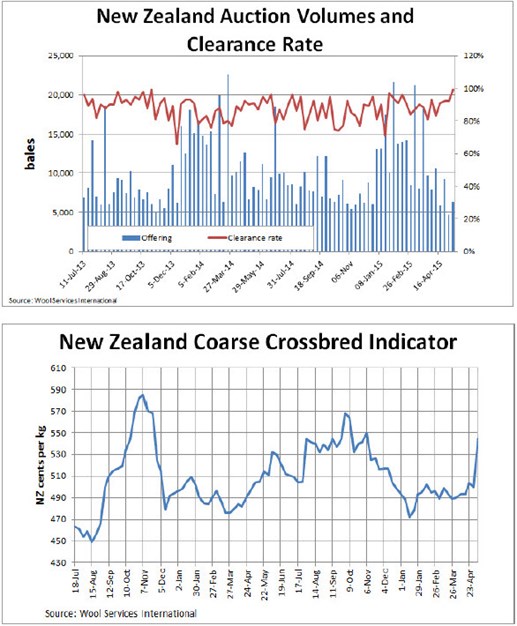
A weaker New Zealand dollar, limited wool volumes pressuring exporters and renewed client interest combined to lift local prices across the board on Thursday, May 7. Of the 6,346 bales on offer, 99% sold. The weighted indicator for the main trading currencies was down 1.79% compared to the last sale on April 30.
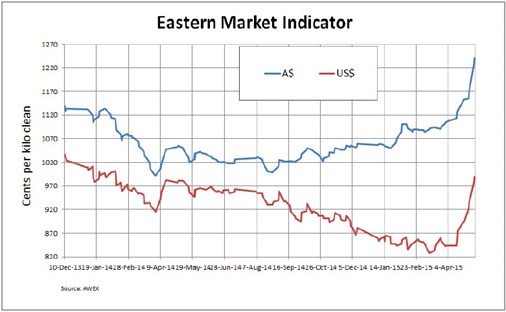
The Australian wool market skyrocketed at this week’s auction, up strongly for the fifth consecutive selling week. The Australian Wool Exchange (AWEX) Eastern Market Indicator (EMI) jumped by 69 cents to close on another season high to date of 1,241 cents per kilo clean on Thursday, May 7. In US dollar terms, the EMI also rose strongly, climbing by 54 US cents to close at 990 cents per kilo for the week.
Orders taken by Italian textile machinery manufacturers during the year’s first quarter show moderate growth of 8% over the same period last year, due mainly to a positive performance in foreign markets. Meanwhile Italian domestic demand has been far weaker raising questions about whether this is simply due to a delay in purchases in advance of ITMA or more systemic.
Stuart McCullough, the CEO of Australian Wool Innovation (AWI), speaks to WTiN about the on-going plans to promote wool directly to consumers, the latest developments designed to tackle on-farm issues such as mulesing, and future prospects for Australian wool production.
China is a global force to be reckoned with and a huge influence on the whole textile industry. Cheaper labour has shifted a lot of the textile industry focus onto Asia, where China rules supreme in terms of size and capacity. Europe has previously been hailed as a key manufacturing technology hub at the helm of innovation and technological advancements, but China is hot on its heels in this respect too, as well as in terms of imports, exports and production of many key textile products like cotton and polyester.
A glance at the product ranges of Sensient and Xennia shows that this week’s pending acquisition should prove a good fit for the diversified US-based chemical producer as it seeks to expand its offer in the growing digital-textile marketplace. Since it began major investment at its production site in Morges, Switzerland, in early 2012, Sensient Colors – an operating division of the group – has focused mainly on its ElvaJet family of dye-sublimation inks, complemented last year by ElvaJet pigmented inks. Notable successes have included commercial partnerships with Reggiani and Konica Minolta – two of the heavyweights in industrial digital-textile printing.
Tajikstan’s textile and clothing sector currently comprises 21 spinning mills, six vertically integrated textile companies, four knitting units and about 40 garment enterprises. The enterprises are heterogeneous and include only a few medium to large vertically integrated companies, medium-sized manufacturing companies (generally from the soviet era) and some modern SMEs that cater to niche markets.
 Insight6 May 2015
With strong roots in textiles, Turkey is a big up-and-comer in the textiles industry and a key player in the European textiles market. Between 2007 and 2012, sales of man-made fibres in Turkey reached TRY7.2bn ($371.6m), with an annual growth of 11%. Nylon, textured and artificial filament yarn fibres comprised 61% of the market in 2012, according to a report by Euromonitor International. This market is largely dominated by importers, the report detailed, with local producers accounting for only TRY2.3bn ($854.8m) in sales in 2012.
 News6 May 2015
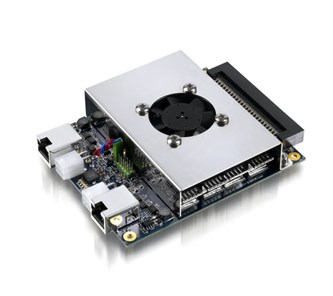
Global Inkjet Systems (GIS), which develops software, drivers and electronics for industrial inkjet print heads, has announced that it now supports the Ricoh MH5420/5440 print heads, formerly known as Gen 5. The heads are used in a number of industrial digital-textile printing systems.