Explore ideas, evidence and developments across the textile value chain.
23,365 articles · latest first · 17,401–17,424
 Insight10 Jun 2015
The excise duty on the Indian man-made fibre industry has had a lot of attention from manufacturers and associations recently, who have put forward concerns that it is encouraging dumping of cheaper man-made fibre from places like China, and is suffocating local manufacturing.
 Intelligence10 Jun 2015
The Indian digital textile market has been moving at a fast pace in line with the overriding trend of the economy over the last 5 years. WTiN Market tracker data has highlighted this economy as not only having some of the highest growth rates in the digital textile market but also as being one of the largest, despite a relative slow start. India, with its huge textile industry, was an obvious opportunity for the quickly growing digital textile market but due to the sheer scale of its production needs digital textile had a less than auspicious start when compared to European markets. But more recently, the gradual increase in machine speeds and reducing costs of ink have certainly helped bring digital textile printing to the Indian market. The increasingly strict labour laws alongside stricter pollution and environmental controls in India have helped drive the market at a faster pace than would have been seen organically.
 Insight9 Jun 2015
Shipments in most textile machinery segments experienced declines in 2014. Deliveries of new short-staple spindles fell by 15% from 2013 to 2014. Shipped long-staple spindles and open-end rotors increased by 70% and 2.6% respectively while the number of shipped draw-texturing spindles grew by close to 12%.
 Insight8 Jun 2015
Following the Rana Plaza factory collapse in April 2013 in Bangladesh, the Clean Clothes Campaign (CCC) has made numerous calls for companies and retailers sourcing from this factory to pay into a fund intended to support the families of the workers who died during the incident and those who suffered injuries. The fund was intended to compensate for loss of income and medical care of those affected.
Spanish textile-chemical producer Polysistec has given WTiN.com more details of its recently announced ‘new complete process’ for polyamide preparation and dyeing, which it says can substantially reduce common problems such as unlevelness, differences of affinity, lack of fastness, a long dyeing process and high water consumption.
 Insight8 Jun 2015
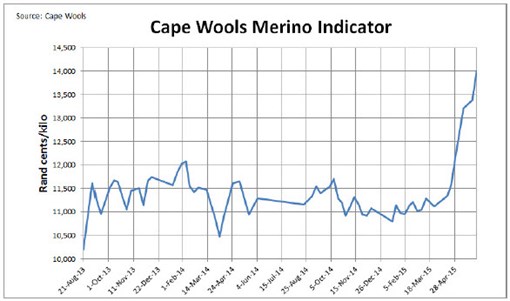
Strong demand and a persistently weak rand drove wool prices to a record high and the Cape Wools Merino Indicator gained 4.7% to close at R140.00 per kilo clean. This is 25.4% higher compared to the opening sale of this season and up 27.9% compared to the corresponding sale of the previous season. On the Australian market, the indicator increased with 5.0%. The Cape Wools All-Wool Indicator gained 4.6%.
 Insight8 Jun 2015
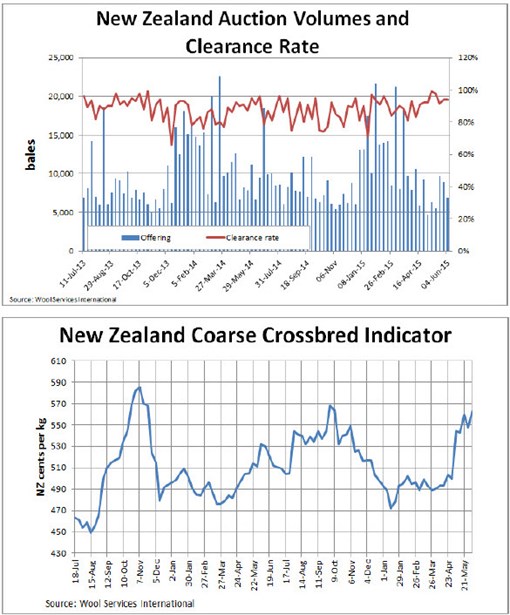
New Zealand Wool Services International’s marketing executive, Paul Steel, reports that the weakening New Zealand dollar, coupled with exporter pressure to meet shipping requirements and a limited supply, continues to underpin the market. The weighted indicator for the main trading currencies came down 2.14% compared to the last sale on May 28. Of the 6,876 bales on offer, 94% sold.
 Insight8 Jun 2015
Globally, the main segments of meltblown nonwovens include the three basic application types: filtration (liquid and air) media, insulation (thermal or sound) media and sorbent (absorption) media. Filtration end uses remain the biggest market for meltblown nonwoven fabrics, with a current market size of $4bn and combined annual growth rate (CAGR) of 7.5% projected over the 2015-2020 period.