Explore ideas, evidence and developments across the textile value chain.
23,364 articles · latest first · 13,465–13,488
 Prices7 Jul 2017
The Australian wool market stayed firm at the first sale of the 2017/18 season despite a large offering of more than 50,000 bales.
 Insight7 Jul 2017
The theme of this year’s InPrint exhibition for industrial print technology, which takes place on 14-16 November in Munich, Germany, has been confirmed as ‘creating value with individualised products’.
 Insight7 Jul 2017
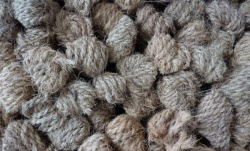
SeFF (sustainable environmentally-friendly fibre) was introduced at the Nonwovens Network UK seminar held in Bradford, West Yorkshire, on 29 June.

Mouvent, a new company focused on pioneering digital print technology, born from a joint venture between Bobst and Radex, was launched yesterday and along with it, the Mouvent TX801, its eight-colour digital textile printer.
 Prices3 Jul 2017
The US dollar depreciated 0.8% against the yuan on 30 June relative to the week before, placing upward pressure on Chinese fibres, filaments and yarn prices in terms of dollars. In terms of yuan, acrylic staple fibre dropped 3.87% relative to the week before and has been on a downward trend since 12 June. Polyester staple fibre prices upped 0.9% relative to the week before, with the trend being relatively flat since 12 June. Viscose staple fibre upped 0.4%, with an upward trend in price level since 12 June. All staple fibre prices are operating below their 2016/17 peak price level.The USDA has been over-optimistic regarding Brazil’s cotton trade balance in 2016/17. The forecast for 2016/17 shows Brazilian cotton trade surplus was revised downwards relative to estimates made in May. Meanwhile, in China, cotton trade deficit for 2016/17 was revised upwards due to higher-than-expected imports. Domestic demand for cotton in China was also revised upwards for 2016/17. Despite this, cotton prices in China have been falling relative to its new peak price level, while Anhui’s cotton yarn prices have remained flat since 26 May in terms of yuan.
 Prices3 Jul 2017
Recorded cotton yarn prices have, for the most part, been stable since 26 May. Prices of both polyester and viscose yarns are below their peak price, and the midpoint price of polycotton seemed relatively more stable than polyester and viscose yarns.