Explore ideas, evidence and developments across the textile value chain.
23,362 articles · latest first · 12,481–12,504
 Preview23 Jan 2018
Apparel manufacturing and technology exhibition, Sourcing at Magic, which is set to take place in Las Vegas, US, on 12-14 February, will focus on the digitalisation of manufacturing
 Insight23 Jan 2018
As consumer demand continues to grow for apparel that offers both performance and sustainability credentials, the global fibre market is becoming increasingly competitive

Epson has launched a new direct-to-garment (DTG) printer, capable of making high-quality full-colour prints on a range of items including T-shirts, sweatshirts, polo shirts and tote bags
 Prices22 Jan 2018
The US Dollar dropped further as the ECB showed signs of a close end to its purchases of US Treasury bonds. The falling demand fuelled by the ECB places upward pressure on yields in the European market, making it relatively more attractive to foreign investors. The European market has also been outperforming the US market in terms of growth, as it remains in the earlier stages of its expansion. According to figures provided by the China Petroleum and Chemical Industry Federation, YTD staple fibre production (Polyester, Viscose, Polypropylene, Acrylic) in China went up 2.3% year-on-year, due Viscose staple fibre production offsetting a year-on-year drop in Polyester staple fibres. Acrylic and Polypropylene staple fibre production also contributed towards the year-on-year gain in Chinese staple fibre production. According to the National Bureau of Statistics, chemical fibre production rose marginally but and yarn production dropped 1.8%. According to the United States Department of Agriculture, US cotton supply and demand for the 2017/18 market year was revised downwards in January due to weakness in the domestic market relative to expectations in December 2017.
 Insight22 Jan 2018
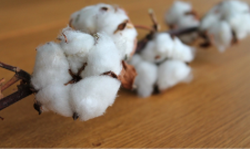
Latest figures provided by the United States Department of Agriculture, in January, show the projected total supply of cotton was revised downwards for this 2017/18 market year, relative to projections made in December, due to weakness in the domestic market.
 Insight22 Jan 2018
According to YTD figures provided by China’s National Bureau of Statistics, very weak production within November led to only a marginal increase in chemical fibre production in 2017 up to November, relative to the same period the year before. Yarns, on the other hand, had negative growth in China, in 2017 up to November, relative to the same period the year before. As with chemical fibres, low production within the month of November was the reason behind this drop in year-to-date output.
 Insight22 Jan 2018
According to data provided by China Petroleum and Chemical Industry Federation, and CEIC, staple fibre production (Polyester, Viscose, Acrylic, and Polypropylene) amounted to 15.16 billion kgs in 2017 up to November, up 2.3% year-on-year from 14.83 billion kg during the same period the year before. The bulk of the increase came from Viscose staple fibre production, which more than offset the year-on-year drop in Polyester staple fibre production. Acrylic and Polypropylene staple fibre production also contributed towards the year-on-year rise in fibre production in China.
 Insight22 Jan 2018
Industry 4.0 can be summarised as the trend towards automation and data exchange in manufacturing. For spinning technology expert Savio, this trend is already part of its business. Tansy Fall speaks to Paolo Puntoni, Marketing Director, and Eva Babbo, Media Relations, Savio.