UK apparel manufacturer Vollebak has launched a brand new jacket which has been coated in graphene.
The jacket, which is already commercially available, is reversible, with one side coated in graphene to make it a conductor of both heat and electricity. The fact that the jacket is coated in the so-called ‘wonder material’ means that it attains a number of the properties that graphene boasts.
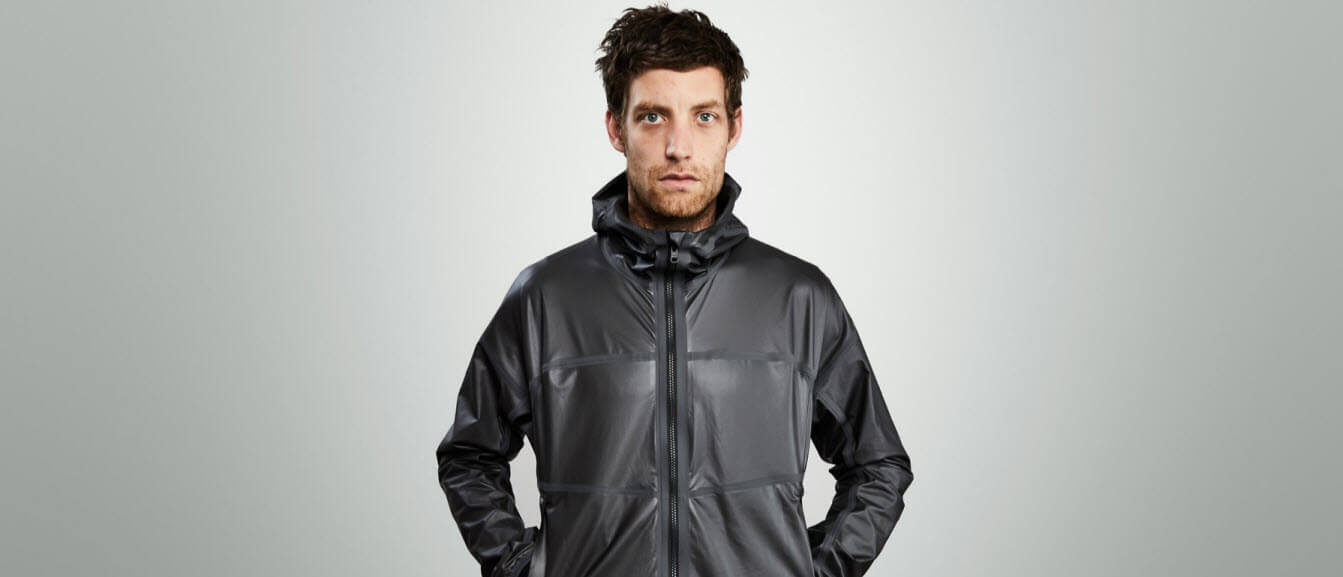
Vollebak's Graphene Jacket is reversible, with one side being coated in graphene
For example, Vollebak states that the jacket is waterproof to 10,000mm of liquid, while it is bacteriostatic due to the antimicrobial qualities of graphene. Due to this, the garment can be worn without the need for laundering for longer durations as the scent of bacteria does not form.
The jacket also possesses enhanced strength, and in the future, Vollebak hopes to develop a bulletproof and intelligent sportswear garment. At present, however, this is not possible as despite its extreme strength, it would require at least 10 sheets of the one-atom-thick coating to stop a bullet mid-flight. In the past it has been proven that graphene is 10 times stronger than steel. The reverse side, meanwhile, is made from high-strength, high-stretch nylon.
Three-step R&D
In order to create the Graphene Jacket, Vollebak and its collaborators underwent a three-step research and development process to ensure that their concept became reality. The first stage of the development saw the team convert raw graphene into graphene nanoplatelets. These small stacks of graphene were then blended with polyurethane and nylon to create a new material that possess all the benefits of graphene, while still being a useable textile fabric.
The second stage is where Vollebak is currently at. The jackets the company has released are what it describes as ‘experimental prototypes’ which are available to purchase. These buyers essentially test the garment to ensure it is suitable for use. “Our aim is to open up our R&D process and accelerate discovery by getting graphene out of the research labs and into the field,” the company states.

The jacket possesses many of graphene properties, including high strength and water resistance
“Together, they’re some of the smartest and most hardcore guys in the world – adventurers, entrepreneurs, scientists – so, we believe that between them they’re likely to discover things that we simply don’t know. It brings massive scale to our ability to experiment with the material to see how it behaves.”
The third and final stage of Vollebak’s R&D process is the next generations of the Graphene Jacket. The company states that as graphene is such a complex material and because it was isolated as recently as 2004, there is still much that scientists do not know.
As one of just a few companies already developing graphene-enhanced garments, Vollebak views itself as somewhat of a pioneer in the field, and with graphene offering possibilities in the wearable technology market, there is also the potential for further developments.
The company says: “Heating is not the end game. Our view is that wearable technology will become increasingly invisible over the next 10-20 years. Instead of wearing it over your eyes or on your wrist, it will be embedded as clothing and tech simply merge. We think graphene’s ability to conduct heat and power and withstand insane forces, while adding zero mass, should make it central to the story.”
Booming demand
As the availability of graphene rises, so too does the number of companies developing and producing goods made with the product. According to research firm Markets and Markets, the global graphene market will be worth US$278.47m by 2020.
This is a significant rise from the 2015 global value, with the market exhibiting a compound annual growth rate (CAGR) of 42.8% over the forecast period of 2015-2020. The report states that the Asia-Pacific region is expected to register the fastest growth rate through to 2020, which is attributed mainly to the high economic growth rate, rising manufacturing industries, cheap labour, the increasing number of graphene-based patent applications and also the involvement of major research institutes and university collaborations in graphene.