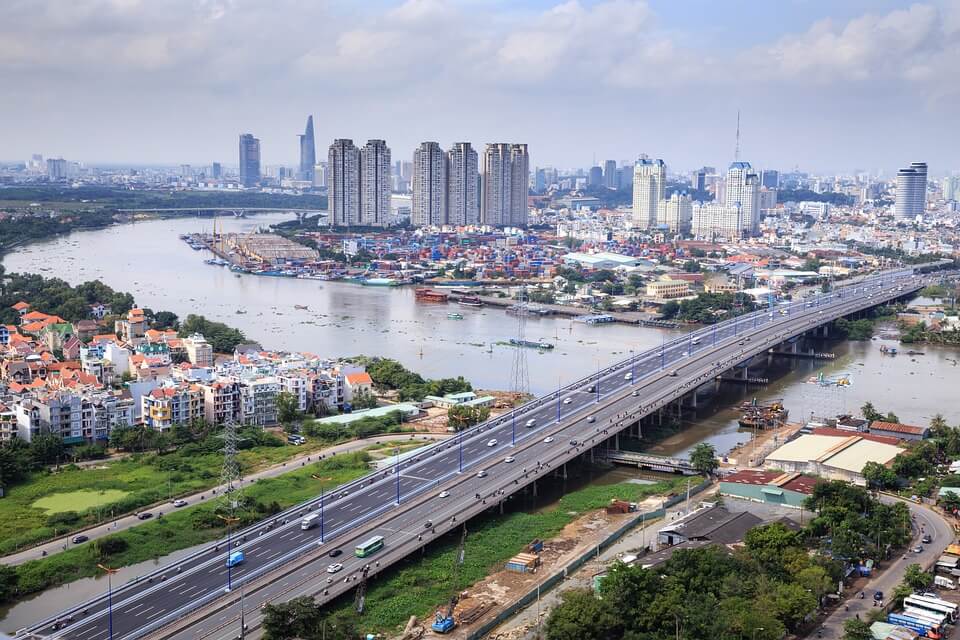
The Vietnamese textile garment sector has benefited from an impressive list of free trade agreements, but a lack of chemical engineers makes it difficult to satisfy their rules of origins. This especially applies to the European Union (EU)-Vietnam free trade agreement, whose terms were influenced by EU textile manufacturers who wanted to ensure that the deal did give a backdoor entrance to European markets for products based on China finished fabric.
Tran Nhu Tung, vice chairman of Thanh Cong Textile Garment Investment Trading (TCM), in Ho Chi Minh City, was quoted in July 2019 by Malaysia’s The Star newspaper as saying that “finding people to operate dyeing or weaving machines [in Vietnam] is easy, but finding experienced chemical engineers with a thorough knowledge of chemistry and dyeing is rare.”
There are a number of reasons for this shortage, according to local recruiters.
“Firstly, the investment required for a full dyeing facility is significant, and many companies in Vietnam have found it easier to import raw material from overseas, mainly China, and cut and sew in Vietnam,” says Mark Donnelly, director at recruiter Michael Page, Vietnam.
He says this means very few opportunities have in the past existed for specialists to develop themselves in Vietnam, “which has led to a shortage now that more and more companies will need to do 100% of their production in Vietnam.”
He adds that another problem is that chemical engineering graduates in this key southeast Asia outsourcing centre have a number of options when entering the job market, which may give them better career prospects. This includes oil and gas, chemical producers, building material companies, as well as plastics and footwear-makers. “There is not such a clear and established career pathway in the textile world,” he notes.
According to Saponti Baroowa, the associate director of business intelligence at Dezan Shira & Associates, in Ho Chi Minh City, for Vietnamese companies to increase the share of domestically-produced elements of finished textile and clothing products, rather than relying on imports, businesses – both local and those backed by foreign direct investment – will increasingly have to invest in fabric manufacturing and dyeing facilities and yarn-making.
However, Baroowa says both local authorities and local communities remain averse to such facilities, including factories for dyeing fabrics, which could be harmful to the environment. As a result, says Baroowa, investors needed to look to design projects that are perceived as more environmentally friendly, such as those utilising good wastewater treatment technology.
“This, in turn, could offer opportunities for companies, including European businesses, which are willing to transfer or invest in clean technology while setting up facilities to produce or dye fabrics in Vietnam,” Baroowa continues.
“Of course, once such facilities develop and the country’s capability to produce fabrics domestically increases, at the same time, the need to train the local workforce in the use of such technology will also increase,” he adds.
Michael Page’s Donnelly says that a result, forward looking companies and the government need to start investing in human expertise now, so that talent is developed to operate the innovative technology and machinery required to develop a true end-to-end process.
While initially talent will need to be imported from overseas, “it is imperative that Vietnamese textile companies work with universities to help establish courses to build the skills they need and develop a longer-term supply of talented chemical engineers that can see the benefits of a career in the sector,” he says.