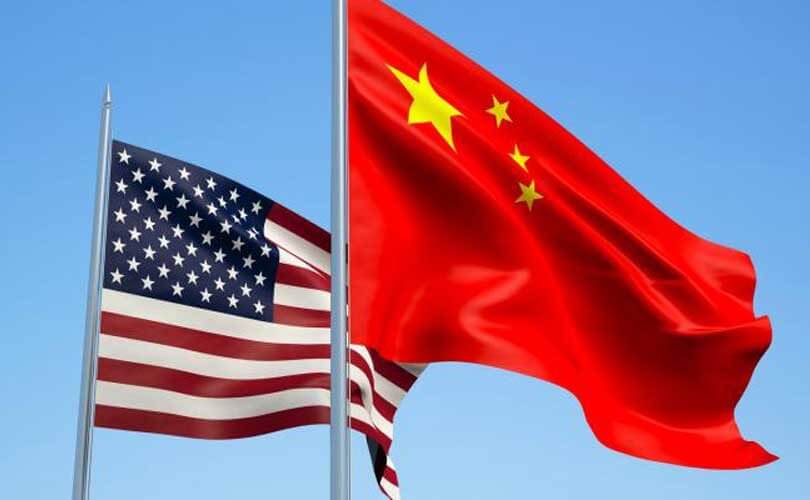
The US-China trade dispute could offer an incentive for Chinese companies to dump textile products into Indonesia, according to a report by Moody’s Investors Service.
Indonesian textile representatives, though, say they are confident safeguards are in place to minimise the risk of such dumping. They also hope to capitalise on the trade war to boost Indonesian textile exports to the US and attract Chinese investment to support domestic production and curb reliance on imports.
A Moody’s report suggests the high tariffs imposed by the US against Chinese products could lead to an influx of Chinese yarn, fabric and garments into Indonesia. This, it warns, could potentially disrupt the so far stable levels of demand and supply in Indonesia by pushing up supply, which would in turn depress prices and hurt local manufacturers.
As Moody's points out, tariffs imposed by the US on Chinese textile exports are at 25% versus the 10%-15% that Indonesia has implemented. The US tariffs are set to rise on many lines to 30% after 1 September, under the latest measures announced by US President Donald Trump.
"The Indonesian textile companies that we rate are not immune to the dumping of Chinese textile products in Indonesia, should it occur," says Stephanie Cheong, a Moody's analyst.
However, Moody's notes that initial trade data estimates, published by Bank Indonesia, for the six months between January and June 2019 show that, so far this year, the year-on-year value of imports and exports has broadly held steady.
Director of the textile, leather and footwear sectors at the ministry of industry, Muhdori, says the government continued to work to restrict imports of raw materials such as fibre, thread and fabrics, with licences only given to manufacturers.
“The influx of imports can be controlled by carefully matching quotas with the industry’s needs,” Muhdori says. “For garments, there is a trade ministry regulation on such quotas.”
Achmad Sigit Dwiwahjono, director general for chemicals, pharmacy and textiles at the ministry, believes Indonesia should take advantage of the trade war to increase exports to the US.
“But to boost exports we need to increase production capacities domestically, including polyester and rayon,” he says. “If the domestic production is not enough, naturally imports are inevitable.”
One way of achieving this additional capacity is Indonesia attracting investment from China, to strengthen Indonesia’s textile sector by Chinese firms setting up production there to avoid the punitive US tariffs that are levied on exports from factories actually based in China, says Dwiwahjono. Chinese-owned factories based in Indonesia would not be covered by the American tariffs. “Our global market share for the textile sector is at 1.7 percent so there’s room for growth.”
Ade Sudrajat, chairman of the Indonesian Textile Association (API – Asosiasi Pertekstilan Indonesia) says Indonesia has safeguards to protect it from the impact of the trade war.
However, reform of such measures would be useful. “We need to harmonise tariffs. Currently there are discrepancies in tariffs,” says Sudrajat, highlighting how rayon can be subjected to 20% duties, while fabrics often enter at 0%. “That way, nobody wants to make fabrics,” he says. “This can threaten the stability of our textile industry.”
Redma Gita Wirawasta, secretary general of the Indonesian Association of Synthetic Fibre Producers (APSYFI), says even before the trade war, the industry had been severely hit by what he regards as a pro-import policy of the government.
“Before, we predicted we’d reach a deficit in two or three years but, with the trade war, we can hit a deficit in six or eight months, unless we can get our act together,” Redma says.
“The government needs to change its mindset. It needs to change erroneous policies. The key is not in investment, but in competitiveness. We need to be competitive by reducing the costs of energy, gas, electricity and logistics,” he says. As for cheap Chinese imports, he says the government needed to use its safeguard and anti-dumping regulations to protect Indonesian producers.