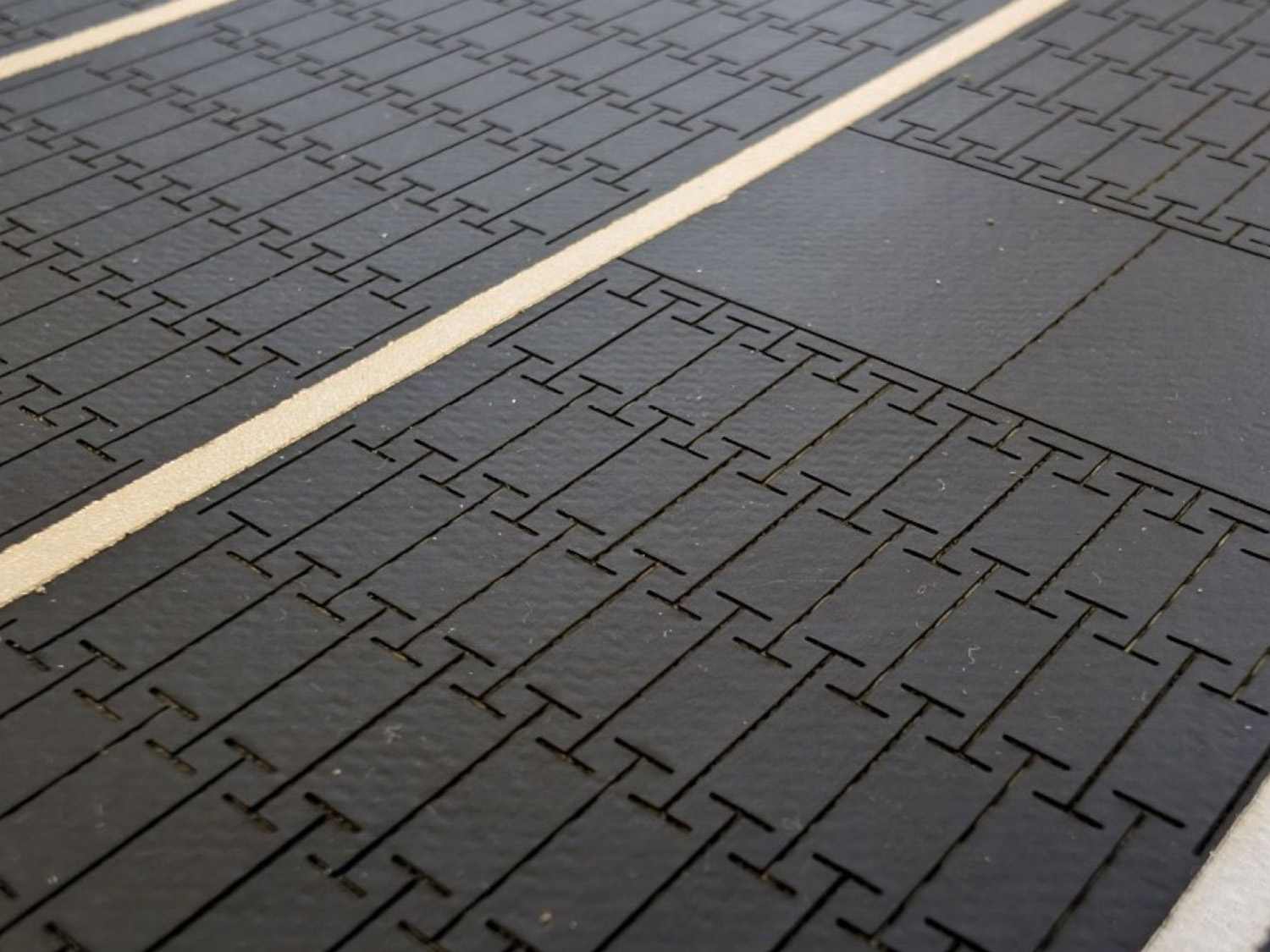
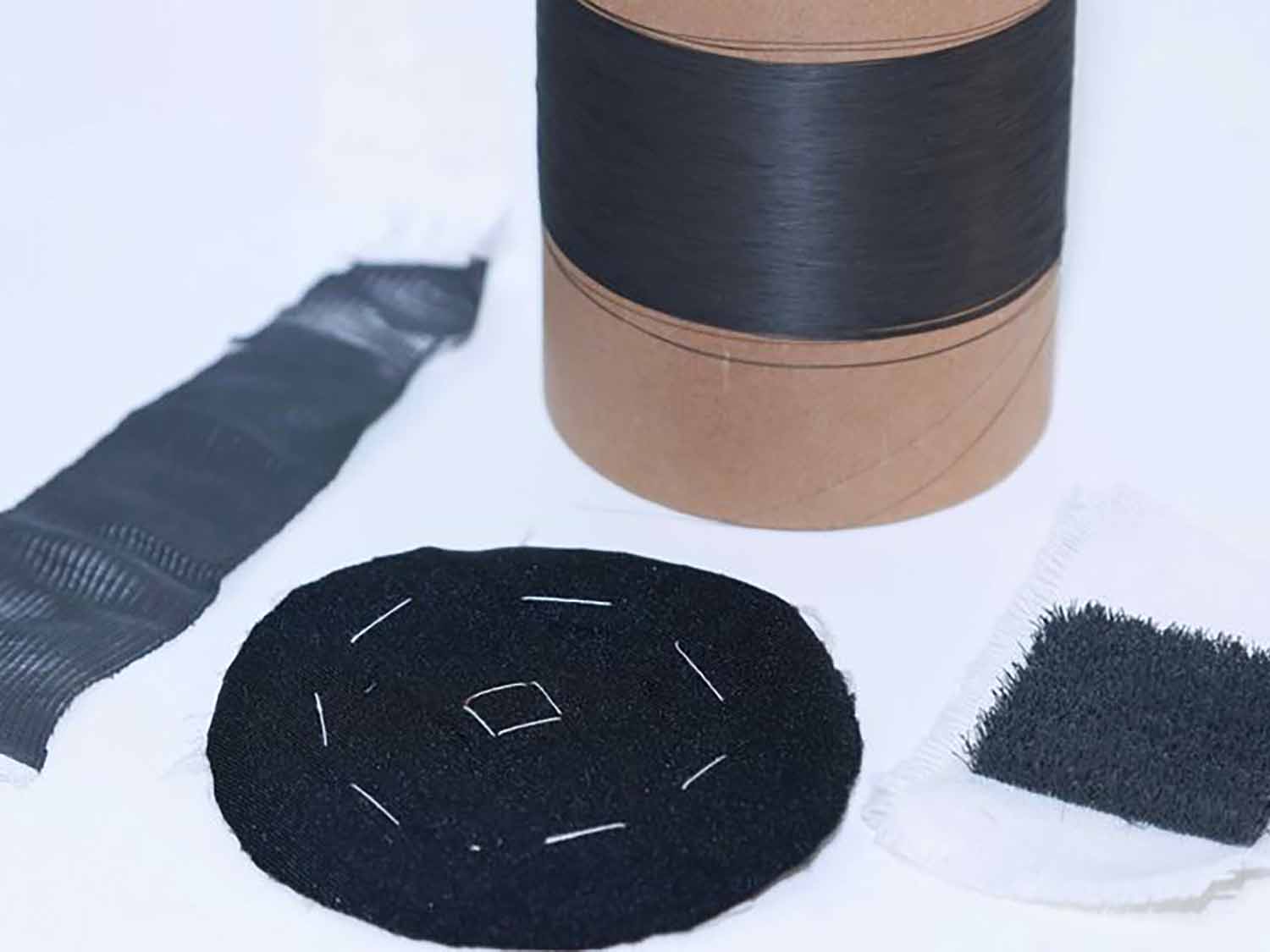
The next generation of wearable activity sensors will not be strap-on devices that can be lost or forgotten, instead they may be threads or fabric patches sewn into shirts and pants to offer light, care-free, continuous monitoring of movement that could help doctors, therapists and coaches respond to changes that warrant concern or improve performance.
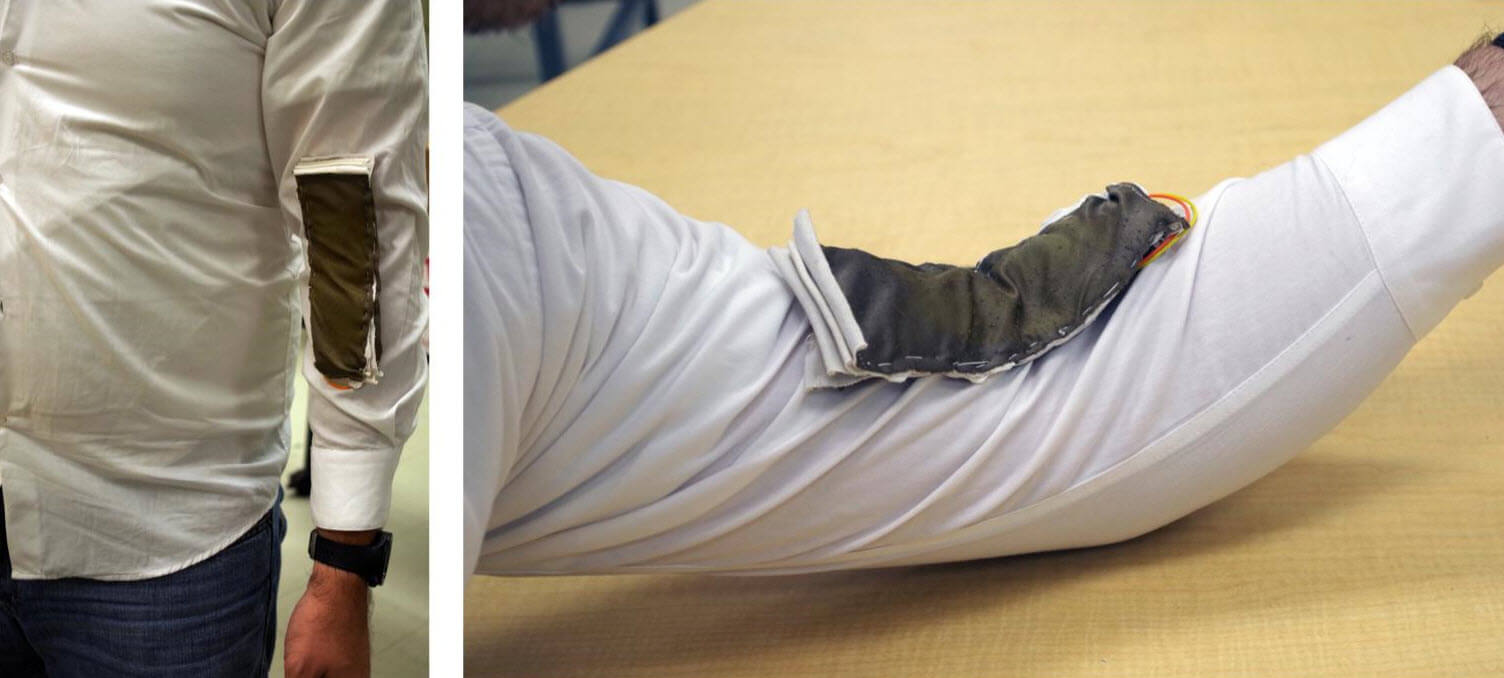
Fabric patches sewn into shirts offer light, care-free, continuous monitoring of movement
Computer scientist Deepak Ganesan, materials scientist Trisha Andrew, and computer engineer Jeremy Gummeson – all part of UMass Amherst’s Institute of Applied Life Sciences’ Center for Personalised Health Monitoring – recently received a three-year, US$1.1m grant from the National Science Foundation’s Computer Systems Research programme to advance smart textiles.
“Textiles with computing elements are coming, and we are building some of the expertise that will lead to practical advances,” says Ganesan.
“This is early days, and we don’t even know some of the problems we’ll run into, but we’re building little things and trying to understand the interaction of hardware, electronics, software, computing and analysis that will all go into their success.”
Making life easier
Currently, if a physician wants to know details on how an elderly patient’s knee is contributing to unbalanced gait and risk of falling, monitoring requires a visit to a special lab equipped with cameras and tread mills. However, if pants made of a smart textile could go home with the patient, it would be easier and more comfortable for them, according to Andrew.
“There we can collect data on how fast you are moving your knee in daily life, its range of motion, and whether it’s better or worse than your own personal normal,” she continues. “This is the kind of basic science question we might be tackling.”
Andrew adds: “We chose to work on knees and elbows to begin with, because they are points of motion, and you can’t do this type of monitoring by sticking your smart watch on your knee. Most people don’t want to have to wear a gadget around anyway, or they tend to forget to use them after a while, or they refuse to wear them during sleep, which is another area where smart textiles might have a really important health application.”
As a materials chemist, Andrew is particularly interested in creating flexible, lightweight, washable and reuseable smart textiles for such uses. But smart fabrics must be paired with algorithms developed by computer scientists like Ganesan and hardware engineers such as Gummeson who can calibrate the sensors, teach computers how to interpret incoming sensor data and help non-scientists make sense of it all.
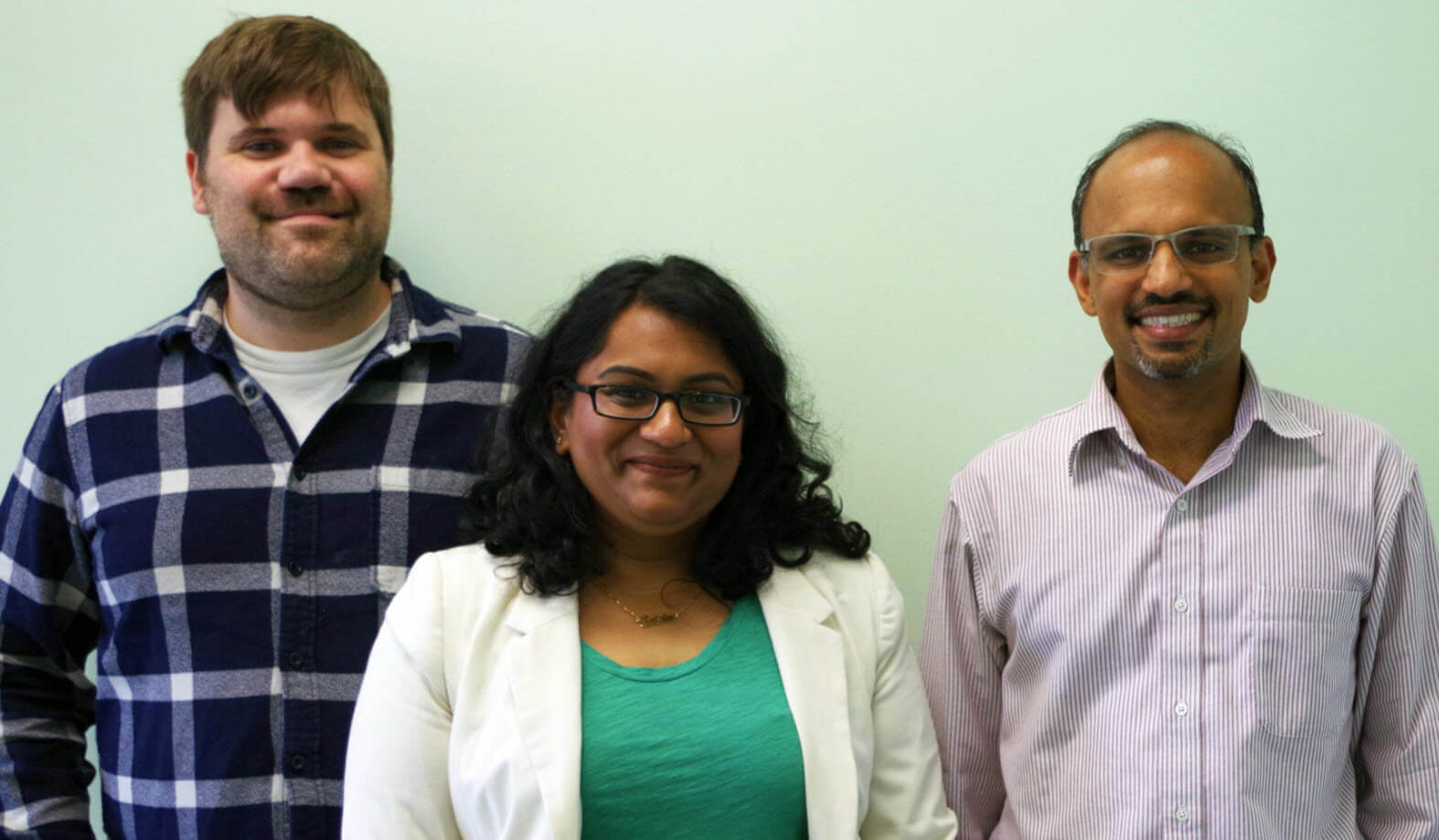
From left to right, Jeremy Gummerson, Trisha Andres and Deepak Ganesan
Future applications
Gummeson says medical scenarios that focus on improving elderly care is one area where continuous sensing is exciting; athletic performance is another.
“If you think of the body as covered with textiles that all have opportunities for measurement, the possibilities are vastly larger than what could be previously achieved,” says Gummeson, who has experience designing sensors in wireless research for the entertainment industry.
As part of their initial exploration into these goals, the researchers and their students have built a prototype dress shirt that incorporates fabric patches to measure joint motion. It also addresses practical issues such as dealing with ‘noise’ from power lines and other sources of electromagnetic interference. They have shown that they can directly correlate electronic signals from the shirt with the type, direction and force of motion of the elbow and knee joint.
“We know that many of these things work in the lab, but they haven’t been tested in real situations on real people going about daily tasks,” adds Andres. “When you test this stuff out on more than five people, that’s when you really begin to find the bugs.
“For example, we’re still experimenting on what chemistry and materials work the best. We hope by the end of the grant to be testing our smart textiles on groups of volunteer subjects.”
The collaborative project will not only seek to overcome hardware design problems, software architecture and adaptive algorithms to weave sensors and interface elements directly into textiles, it will explore energy harvesting, sensing, communication and interaction. It will develop systems principles and building blocks to enable self-powered textile-based sensing applications.
The researchers also plan to mentor students and offer internship opportunities for science students at Starter Academy, Springfield Technical Community College, Massachusetts, US, to increase underrepresented students in chemistry and computing. It will support an annual workshop for middle school girls in partnership with Girls Inc of Holyoke. All data will be made publicly available, as well.