
Materials scientist Melik Demirel suggests four possible approaches to solving microplastic pollution at the annual meeting of the American Association for the Advancement of Science.
While the polyester leisure suit was a 1970s mistake, polyester and other synthetic fibres such as nylon are still around and are a major contributor to the microplastics load in the environment.
“These materials – during production, processing and after use – break down into and release microfibres that can now be found in everything and everyone,” says Melik Demirel, the Lloyd and Dorothy Foehr Huck Endowed chair in Biomimetic Materials at Penn State University, Pennsylvania, US.
Unlike natural fibres such as wool, cotton and silk, current synthetic fibres are petroleum-based products and are mostly non-biodegradable. While natural fibres can be recycled and biodegrade, mixed fibres that contain natural and synthetic fibres are difficult or costly to recycle.
Now, at the 2019 annual meeting of the American Association for the Advancement of Science in Washington DC, Demirel suggests four possible approaches to solving this problem.
The first is to minimise the use of synthetic fibres and switch back to natural fibres such as wool, cotton, silk and linen. However, synthetic fibres are less expensive and natural fibres have other environmental costs, such as water and land-use issues.
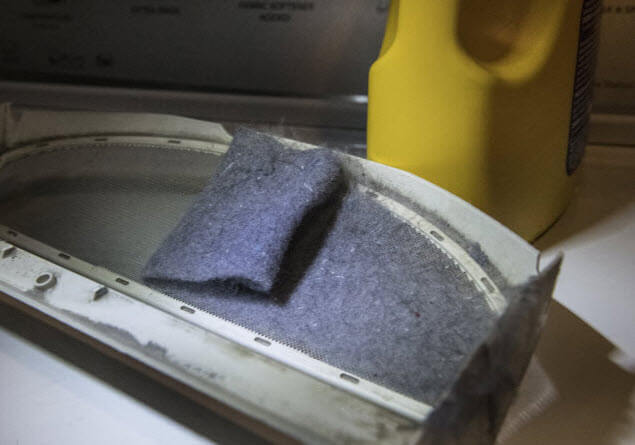
Because much of the microfibre load that ends up in water sources comes from laundering, he suggests aftermarket filters for washing-machine outflow hoses. Clothes dryers have filters that catch lint – also microfibre waste – but current, front-loading washing machines usually do not.
“Capturing the microplastics at the source is the best filtering option,” Demirel says.
He also notes that bacteria that consume plastics do exist, but are currently at the academic research phase, which takes some time to gain industrial momentum. If bacteria were used on a large scale, they could aid in the biodegradation of the fibres or break the fibres down to be reused.
While these three options are possible, they do not solve the problem of the tons of synthetic fibres currently used in clothing around the world.
Biosynthetic fibres, a fourth option, are both recyclable and biodegradable and could directly substitute for the synthetic fibres. They could also be blended with natural fibres to provide the durability of synthetic fibres but allow the blends to be recycled.
Derived from natural proteins, biosynthetic fibres can also be manipulated to have desirable characteristics. Demirel, who developed a biosynthetic fibre composed of proteins similar to silk but inspired by those found in squid ring teeth, suggests that by altering the number of tandem repeats in the sequencing of the proteins, the polymers can be altered to meet a variety of properties.
For example, material manufactured from biosynthetic squid ring-teeth proteins, called Squitex, is self-healing. Broken fibres or sections will reattach with water and a little pressure and enhance the mechanical properties of recycled cotton as a blend. Also, because the fibres are organic, they are completely biodegradable as well.
The Army Research Office, Air Force Office of Scientific Research and the Office of Naval Research supported the squid-inspired biosynthetic material. Demirel is the co-founder of a company planning to commercialise Squitex.


