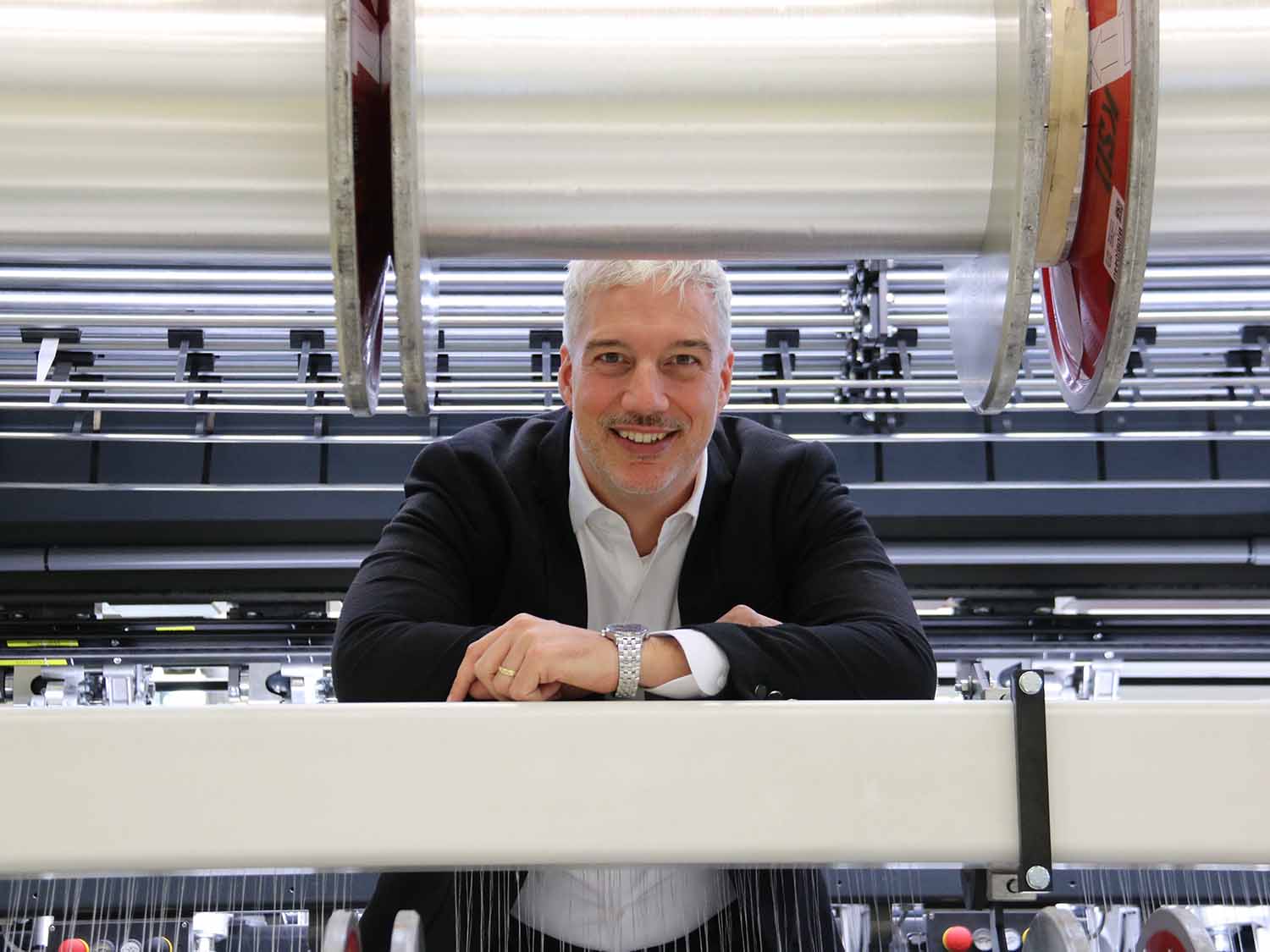
Christof Naier, president of warp knitting at Karl Mayer Group, explores the digital future of warp knitting. By Jessica Owen.
Industry 4.0 is revolutionising the way companies manufacture, improve and distribute their products. Technologies such as artificial intelligence (AI), machine learning (ML) and cloud computing are helping to advance production and operations in all industries – the latest being warp knitting.
While Industry 4.0 is already prominent in other sectors of the textile & apparel industry such as printing and weaving, the warp knitting business has only recently adopted such solutions. And even now, it’s mainly down to one manufacturer: Karl Mayer.

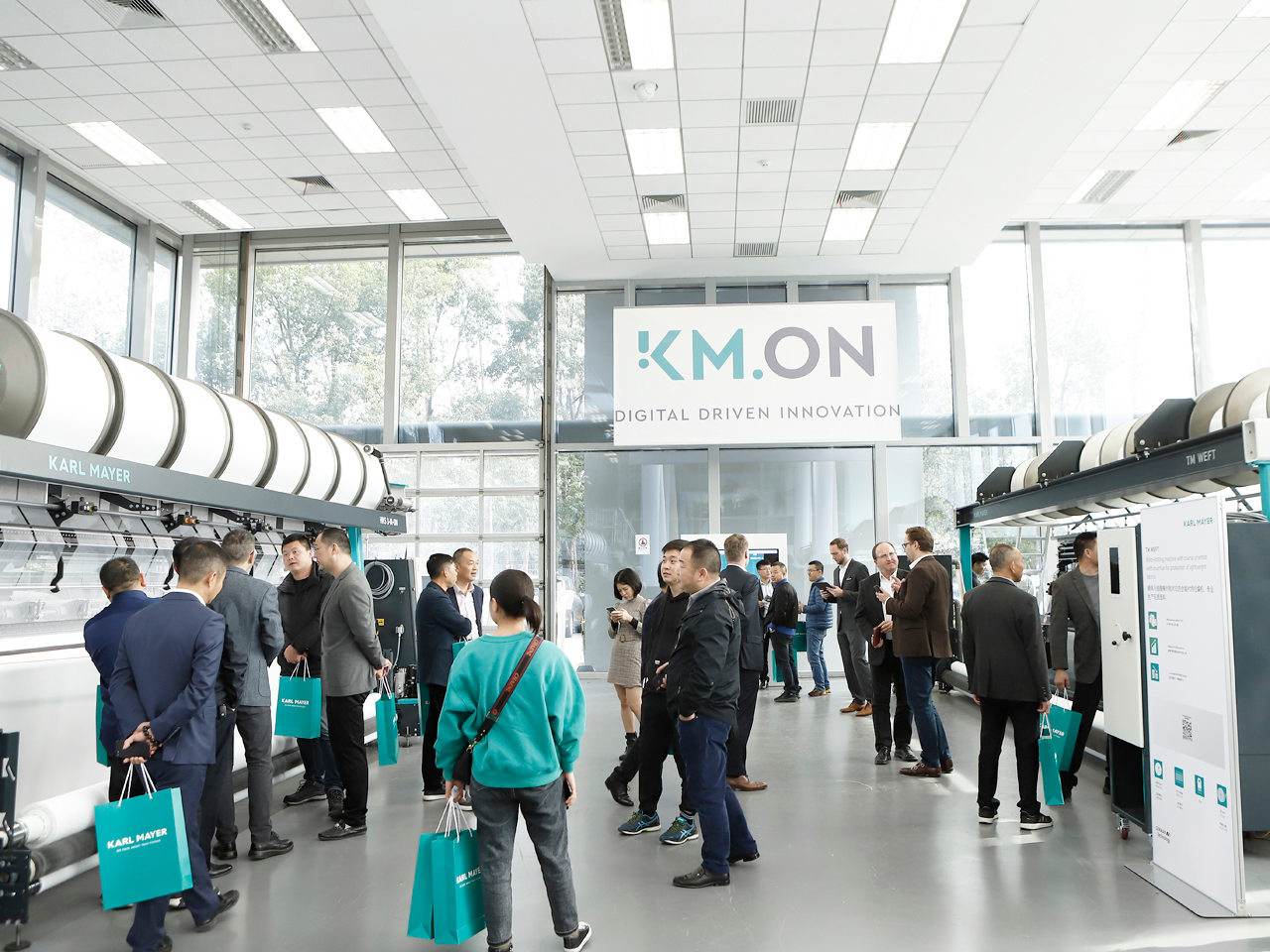
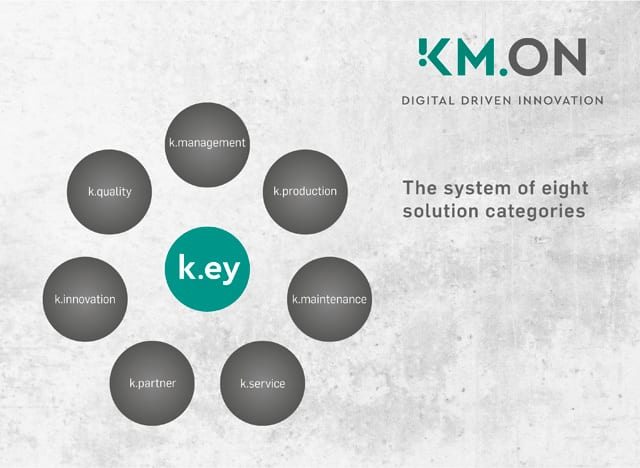
Founded in 1937, Karl Mayer is a German enterprise that specialises in the fields of warp knitting, flat knitting, technical textiles and warp preparation for weaving. It’s involvement in digitalisation officially begun in 2017, when the company founded the start-up KM.ON to develop digital solutions for its portfolio.
Christof Naier, president of warp knitting at the Karl Mayer Group, says: “Many industries are already successfully working with digital processes, so there is no reason why this will not also be the future in warp knitting.”
There are numerous ways in which Industry 4.0 can benefit warp knitting, says Naier. The first being predictive maintenance. While Industry 3.0 was all about developing hardware, Industry 4.0 is centred around the collection and collation of big data, which allows companies to continuously monitor operations to detect or predict problems. For instance, continuous monitoring can detect a rise in a motor’s operating temperature, and appropriately obtained data can be used to localise the reason for the temperature increase and remedy it before the motor fails.
Naier says: “Event predictions also give us the opportunity to automate certain actions. Staying with the example of the overheating issue, for instance, the speed of the machine could be reduced automatically until the motor problem has been resolved.”
An alarm system can also be implemented. For example, a machine can automatically send a warning signal to the operator’s mobile phone informing them when a warp beam will soon need to be changed.
Elsewhere, the development of cloud solutions is helping Karl Mayer to offer its customers better customer service. Until recently, customers would communicate with the Karl Mayer team via smartphone, app or email when they needed support – a system that was quite unstructured, says Naier. But now, the company has developed a new platform that allows it to communicate in a simple and targeted manner. Here, the company has the necessary information about the machine and access to the log file, for example, to better address and resolve any issues.
He explains: “Thanks to WeChat, WhatsApp, PayPal, Amazon and similar offerings, we already use a variety of cloud computing solutions in our everyday lives without even thinking about it. This technology is now finding its way into industrial use, opening up new possibilities.”
For instance, during the height of the Covid-19 pandemic, Karl Mayer conducted machine installations and service via its remote support capabilities. Naier says: “We would not have been able to support the customers on the level we did without these tools.”
This data and networking ability also enables Karl Mayer to deliver as much knowledge to its customers as possible – which it does under its umbrella term, Smart Machine. This may concern quality, productivity or other warp knitting tips – all of which should help companies to improve their business operations.
Naier says: “In the Smart Machine field, for example, customers can load highly optimised lapping data from the cloud onto their machine using our Pattern Data System. These optimised movement sequences ensure that the machine will operate at the highest working speeds possible without affecting the quality of the product.”
As previously mentioned, data is at the heart of Industry 4.0 technologies. But to paraphrase the 32nd US President Franklin D Roosevelt, a great amount of data comes with great responsibility. Used responsibly, data can benefit a company but data breaches concerning sensitive or confidential information can also harm an organisation. That is why Naier says ‘it is of utmost importance’ for Karl Mayer to protect data.
He says: “Data security is very important to us, we use state of the art tools to secure it, additionally we have encryption technology in our group, which Stoll is already using.”
He adds: “Thanks to our innovative k.ey Box, we guarantee the highest level of data and IT security for customers – including all subsidiaries and partners – when using any of these services.”
Moving forward, Karl Mayer is “working at full speed on additional solutions,” says Naier. These include considering how 5G could benefit warp knitting, showcasing its design software to develop patterns between global partners and rolling out its new planning tool. Additionally, Karl Mayer is trying to address bottlenecks such as how to successfully introduce solutions in countries such as China that are less accepting of these technologies.