
Any consumer who has purchased a bespoke suit will be familiar with the process of selecting a cloth. Typically, this is done by leafing through a bunch of fabrics presented in small swatches, as the consumer tries to imagine how the final suit will look. Yet as new digital technology emerges, a revolution in all aspects of bespoke fashion is coming closer – and one recent development is focused specifically on allowing the consumer to quickly and easily visualise how a suit might look in any number of fabrics.
The Scanatic™ Nuno Fabric Scanner, launched at the end of July by TG3D Studio, a 3D fashion technology solutions provider based in Hong Kong, is designed for use by fabric suppliers, retailers and tailors to capture the properties necessary to accurately display a fabric’s most true-to-life appearance, all in 3D. This can be used for simulations and product displays, such as how it would look as a suit on an individual customer.
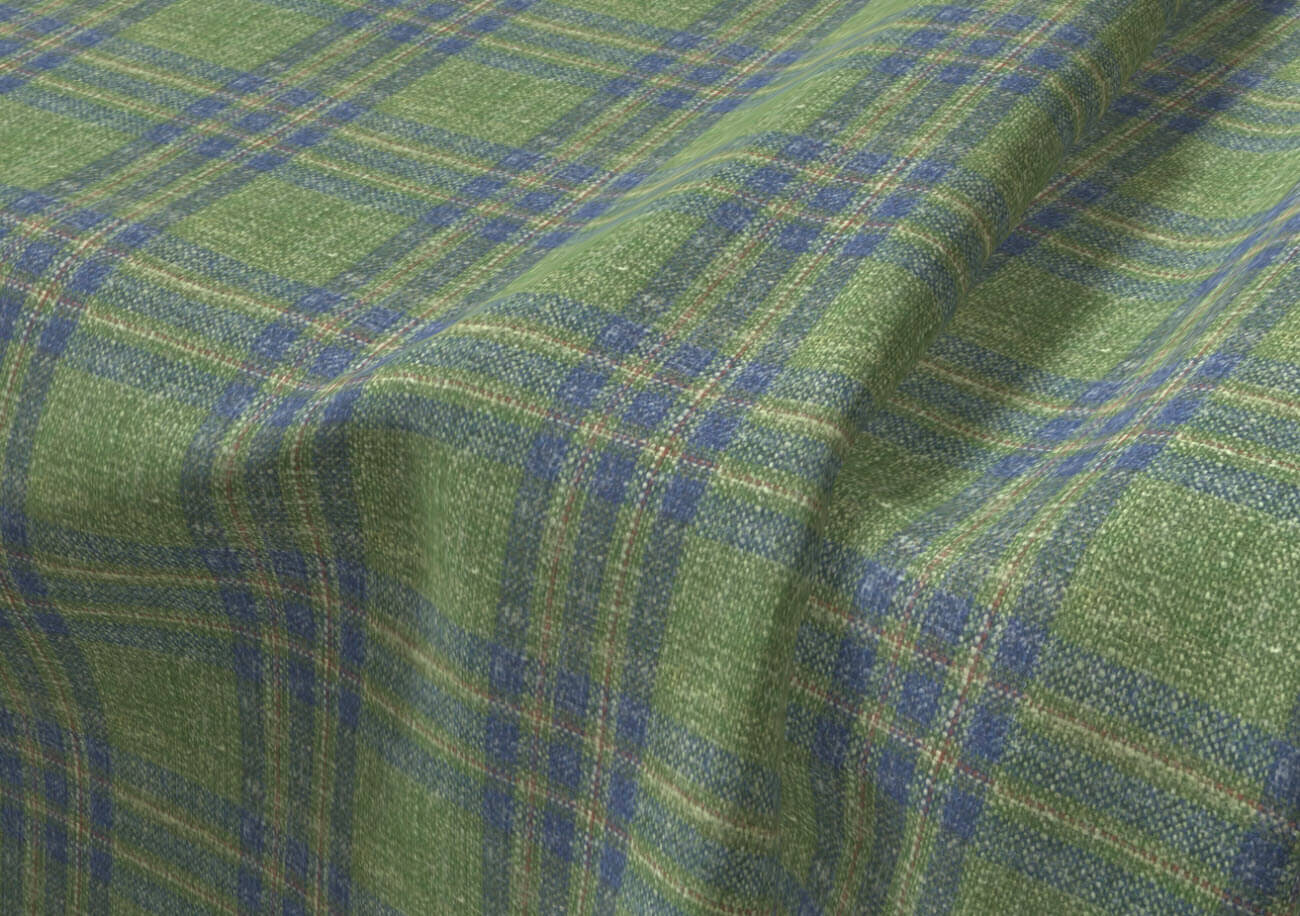
A 3D fabric visualisation on TG3D Studio’s Scanatic™ MTM Cloud Console. The original fabric was scanned using the company’s Scanatic™ Nuno Fabric Scanner
The new scanner works alongside TG3D Studio’s Scanatic MTM Cloud Console, which allows data about a fabric to be saved and stored, and the free NunoScan App, which is available on iOS and can be used on an iPhone 7 or later version. The technology is used together through four simple steps:
Step 1: Upload a list of the fabrics to be scanned on to the Scanatic MTM Cloud Console.
Step 2: Place the fabric sample inside the Scanatic Nuno Fabric Scanner.
Step 3: Place the iPhone on top of the Scanatic Nuno Fabric Scanner, launch the NunoScan App and follow the step-by-step instructions.
Step 4: Preview 3D fabrics on the Scanatic MTM Cloud Console and apply refinements.
Speaking to WTiN, Rick Yu, chief marketing officer and co-founder of TG3D Studio, says that the technology creates a life-like visualisation of the fabric. “The Scanatic MTM Cloud Console is a cloud-based, intelligent, image-processing engine that captures the 3D texture, such as colour map, specular map, and UV maps of fabrics in their smallest repeatable unit,” he explains. “These properties can also be imported into various 3D fashion design software, including TG3D Studio’s Scanatic DC Suite, for simulations.
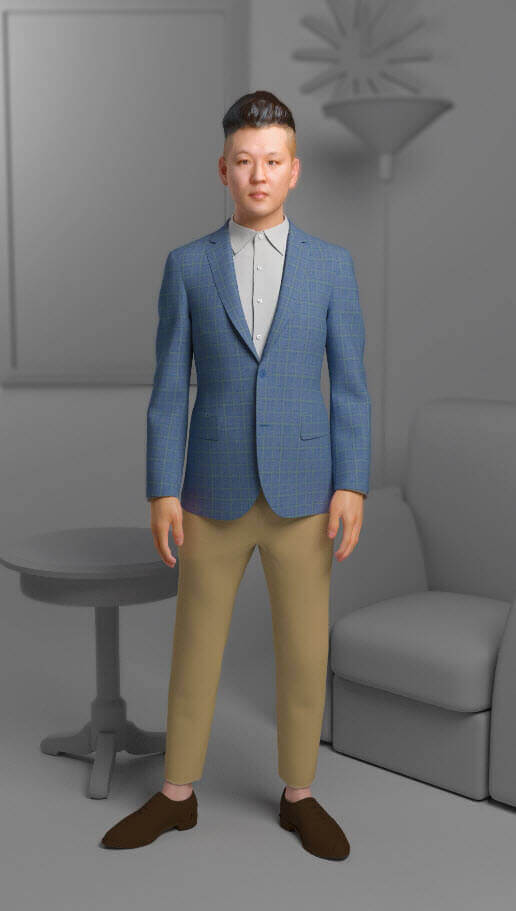
Visualisation of different fabrics on a 3D garment generated by TG3D Studio’s technology
“If a fabric has a certain amount of lustre this will appear in the digital visualisation. The scanner takes different pictures with different lighting conditions, and this allows it to reproduce the natural quality and appearance of the fabric. This is important as when the consumer first sees a fabric they tend to move it around.”
He adds that the image of the fabric can also be changed if necessary. “This is because, through the scanner’s algorithm, it maps the smallest repeatable unit of the fabric’s display properties, for instance an element of the fabric’s texture such as a square, and duplicates that to create the image of the fabric,” he says. “This is something that can also be refined through the Scanatic MTM Cloud Service. For each fabric, if you want to make some changes to the visualisation, or experience it with different pattern arrangements, you can define which specific part you want to be repeated on the fabric.”
Once all the fabrics are scanned and saved in the Scanatic MTM Cloud Service, the user can create different fabric collections, or create an image of how any of the fabrics would look as a tailored suit.
“This technology provides a fast and cost-effective way to digitalise fabric collections,” says Yu. “It means you can market to the world electronically with a standalone virtual fabric presentation or as an entire garment, while also controlling the number of fabric swatches that actually need to be produced.”
He adds: “We’re trying to solve the pain points of the consumer. Even if they like the look of a new, flashy fabric, they often just end up with a plain blue, for instance, as they are scared to try something different. Our technology provides a tool to avoid that happening and ultimately facilitates sales of much more diversified collections of fabrics for the cloth manufacturers.”
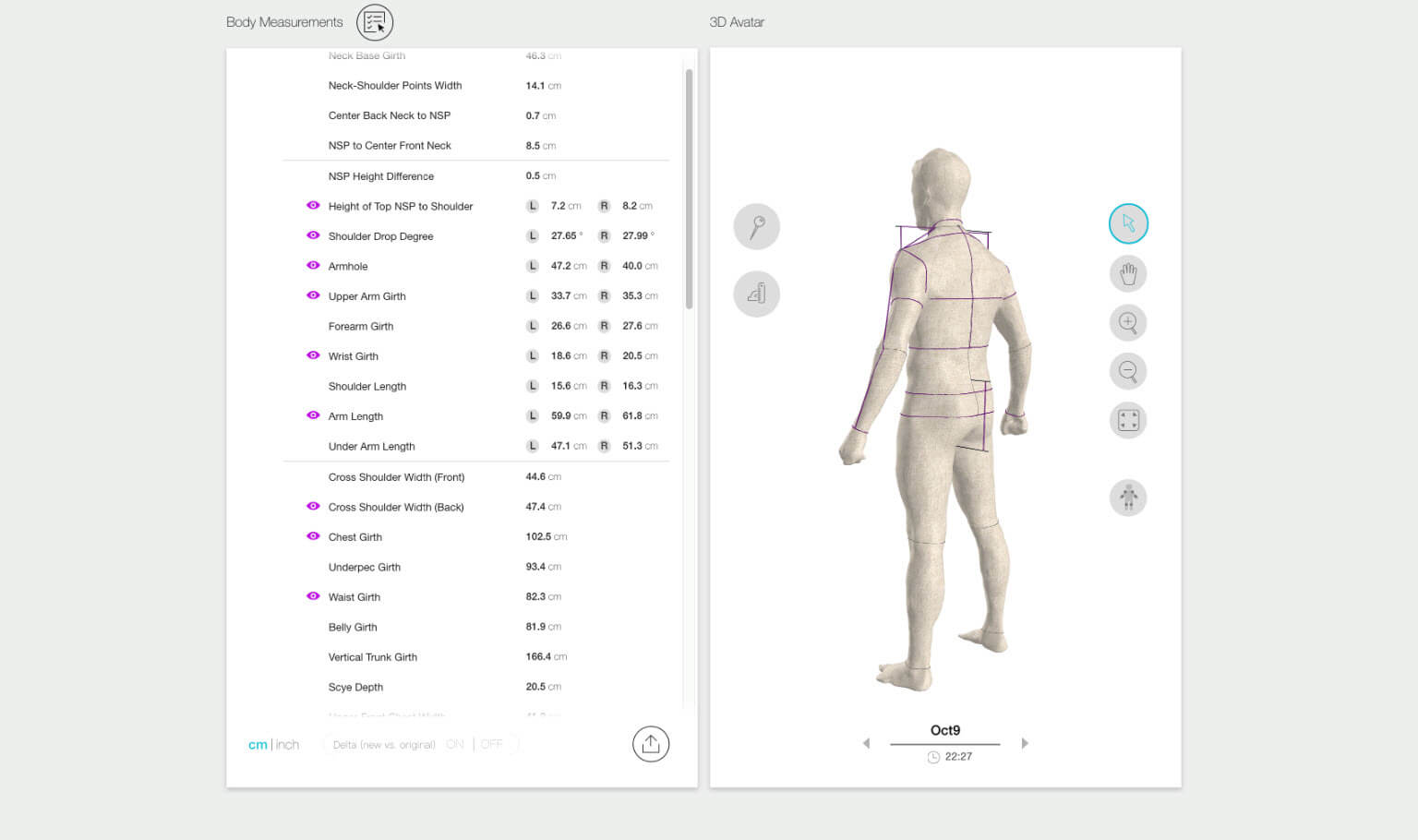 A 3D avatar and body measurements displayed via the Scanatic™ MTM Cloud Service after being created using TG3D Studio’s Scanatic™ 360 Body Scanner
The new fabric scanning technology forms part of TG3D Studio’s range of digital tools for bespoke fashion, first launched two years ago. These include its Scanatic 360 Body Scanner, said to be the world’s first self-service 3D body scanner. It uses 16 human-safe IR sensors to sample raw 3D points on the body surface and is controlled from TG3D Studio’s Cloudzet™ App on consumers’ own mobile phones, with images available in just three seconds.
TG3D Studio’s Scanatic DC Suite is a piece of 3D fashion design desktop software that enables designers and pattern makers to work on their creative projects, with the ability to instantly review their changes as a simulated 3D garment to achieve the best silhouette and fit, without having to just rely on making real samples.
“Our digitalisation tools allow our customers to translate the important ingredients – the body, fabrics, accessories, patterns and garments – of the apparel business into their own digital footprints,” says Yu.
“The Scanatic 360 Body Scanner is a multi-purpose fitting room with embedded infra-red sensors that allows consumers to serve themselves through the three-second 3D body scan, all through their own Cloudzet mobile app in a space that can be comfortable, private, and well-decorated. Fashion designers and pattern makers use the DC Suite to input existing patterns, whether they are from paper or are already computerised, or drafted from scratch, and create the assembled garments in 3D with a clear visualisation of the fit, silhouette and draping without having to go through numerous rounds of sampling to get things right.
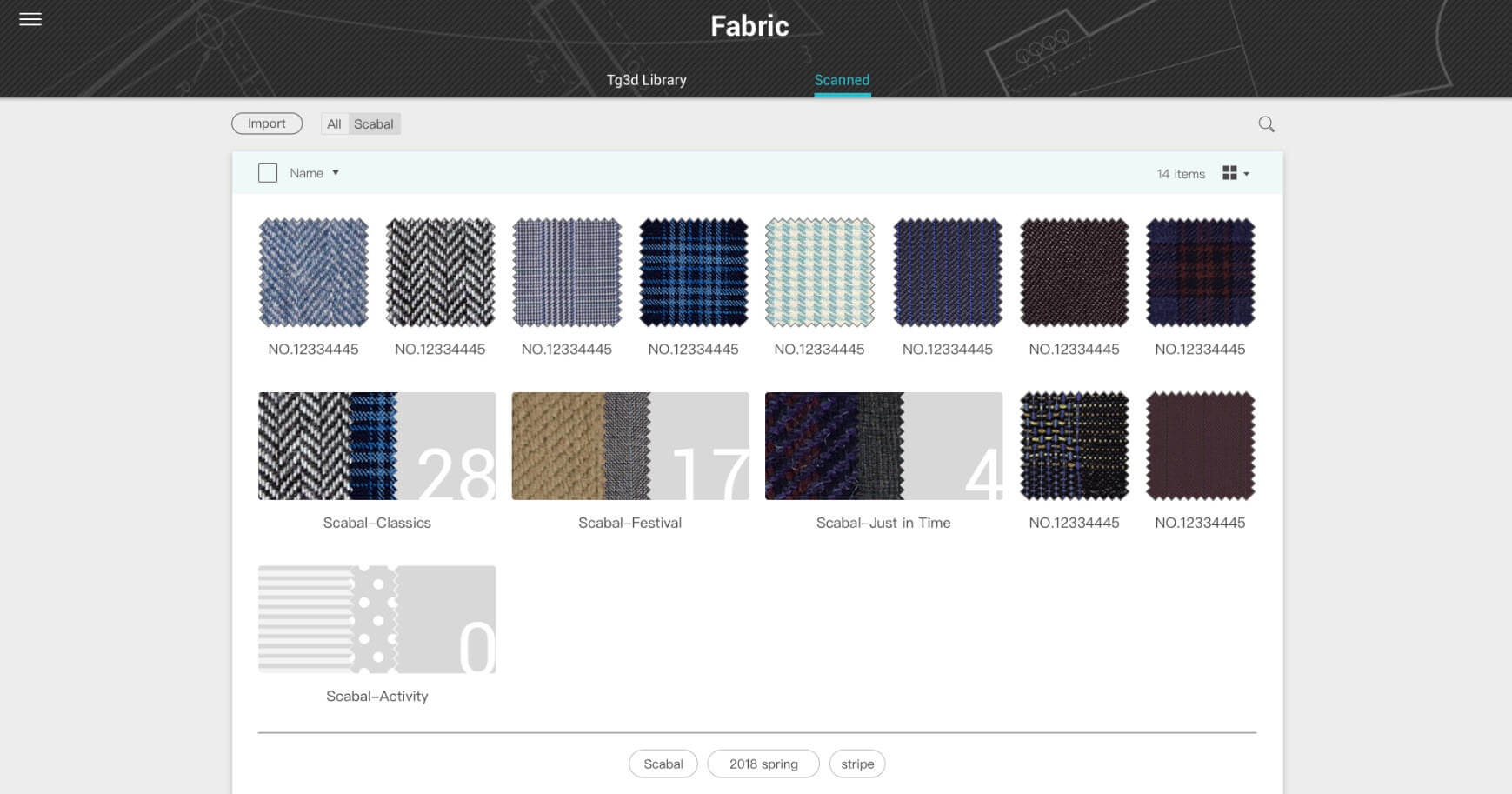 Fabrics displayed via TG3D Studio’s Scanatic™ MTM Cloud Service after being scanned using its Scanatic™ Nuno Fabric Scanner
“All these digital assets can be used for analytics to understand the body shape and measurements of the consumers, and also they can be leveraged into product development, and integrated with the automation of on-demand apparel manufacturing, retail, and e-commerce product visualisations. The implementation can also be used for interactive consumer experiences with various add-on features from the Scanatic MTM Cloud Services, such as the StyleBook, Cloudzet Store, and SizeRec. Brands and manufacturers can select and configure the most relevant features that they need from the Scanatic Solution and use these as an underlying framework to build their own brand-unique value propositions.
“The TG3D Studio Scanatic product lines are a hybrid of hardware, subscribe-able software cloud services and client apps that are deeply integrated and yet flexible to the choosing. Our customers can configure different product combinations that are tailored to their specific needs.”
Yu says that the technology can help bespoke tailors enhance all aspects of their service. “We are helping solve the problem of taking physical measurements and helping the tailor achieve a more accurate cut – in one shot. We can control the margin of error within 1cm.”
But he adds: “The creation of a top-end bespoke suit still requires the craft of a tailor. We’re not trying to replace the Savile Row experience. It’s more about bringing tailoring to the mass market, as that requires flexibility, stability and ways to duplicate.”
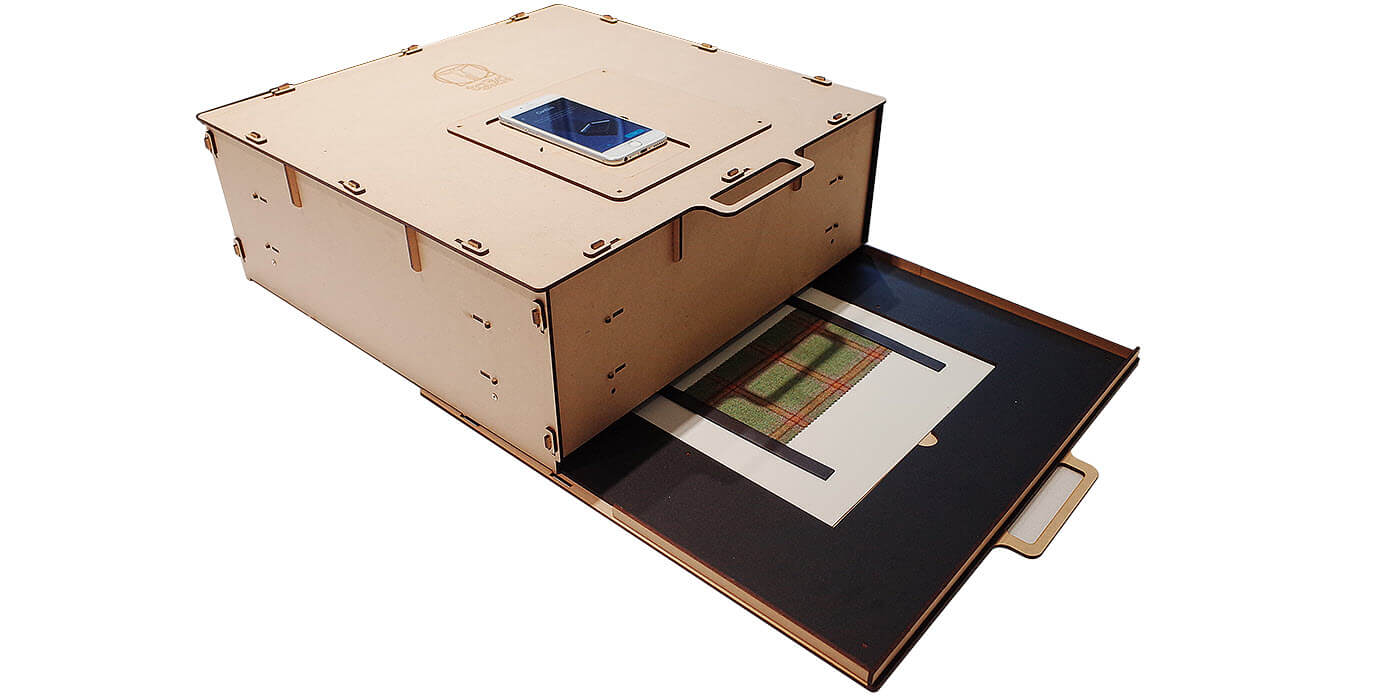 The Scanatic™ Nuno Fabric Scanner
He explains that the cloud infrastructure means “the factory making the suit can be anywhere in the world, and it can supply a customer anywhere in the world. And as well as bespoke tailoring, our technology can be used for casualwear, helping meet the growing interest in personalisation.”
TG3D Studio has offices in the US, Hong Kong, Shanghai, Taipei and Seoul. More than 100 stores are currently using its technology, mainly in China, as well as Taiwan, Japan and Korea. “We also have customers in the US, including a bridal gown franchise and a chic, trendy custom apparel brand for ladies in Miami, Florida, and we also have clients in Austria,” says Yu. “And we are working with distribution partners on entering the UK market.”
Yu adds: “We see a huge increase in demand for made-to-measure clothing and, as well as helping meet that demand, ultimately our goal is to create an entirely new customer experience.”


