The Stucken Group, based in Port Elizabeth, South Africa, has long been one of the world’s leading mohair businesses, and over recent years has evolved to encompass the entire value chain, from raw fibre to finished product.
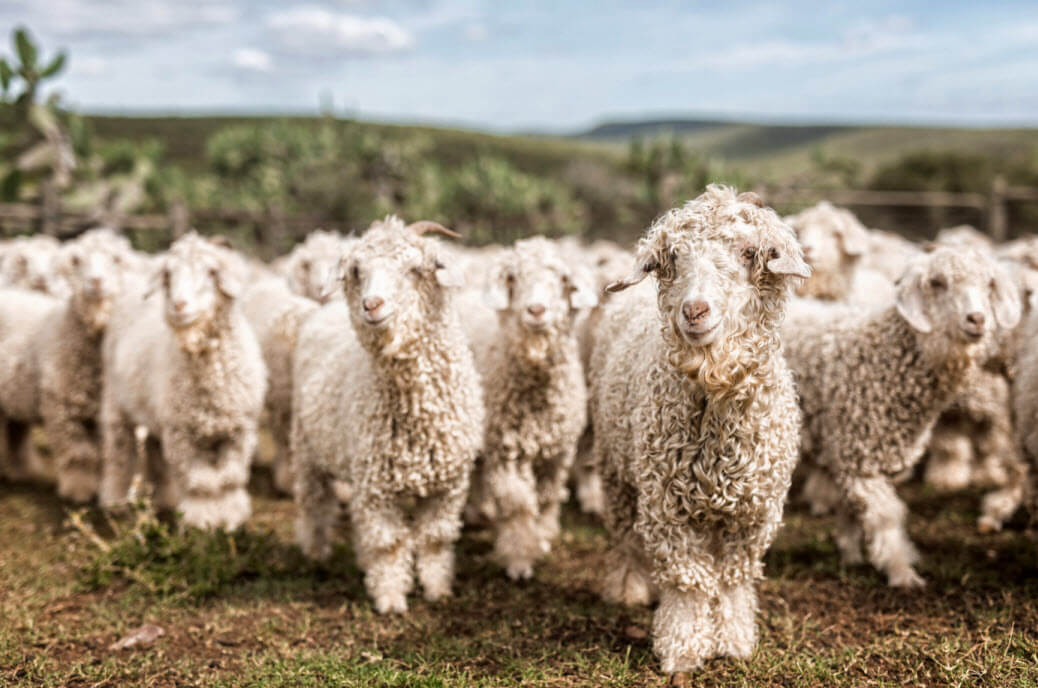
The Stucken Group sources its mohair from South African farmers, through its buying division – Stucken & Co
The family-owned company, which has operated as a trader of mohair and other natural fibres for more than 150 years and has long experience in fibre processing, is today a vertically integrated textile manufacturing group.
The group sources its mohair and wool from South African farmers, through its buying division – Stucken & Co. The raw fibre is washed and combed into tops at Stucken’s processing plant Gubb & Inggs, then spun into yarns at the group’s spinning operation Mohair Spinners South Africa. The yarns are dyed at Speciality Yarn Dyers, also owned by Stucken.
Completing the chain is Hinterveld, Stucken’s weaving and knitting operation, launched following a re-branding exercise after Stucken’s acquisition of Pure Cape Textiles in 2010. Hinterveld produces a range of fabric and finished scarf and blanket products. The fabric is marketed under the Cape Tweed label, in mohair and other natural fibres such as wool, silk, alpaca and linen.
The Cape Tweed trademark originated from the region of the old Cape Colony in South Africa. “If traditional tweed employs primarily wool, Cape Tweed is an expressive combination of contemporary yet classic design, colour and texture, using slightly wider combinations of natural fibre, with special strength in mohair,” says Daniel Stucken, the Hinterveld sales director.
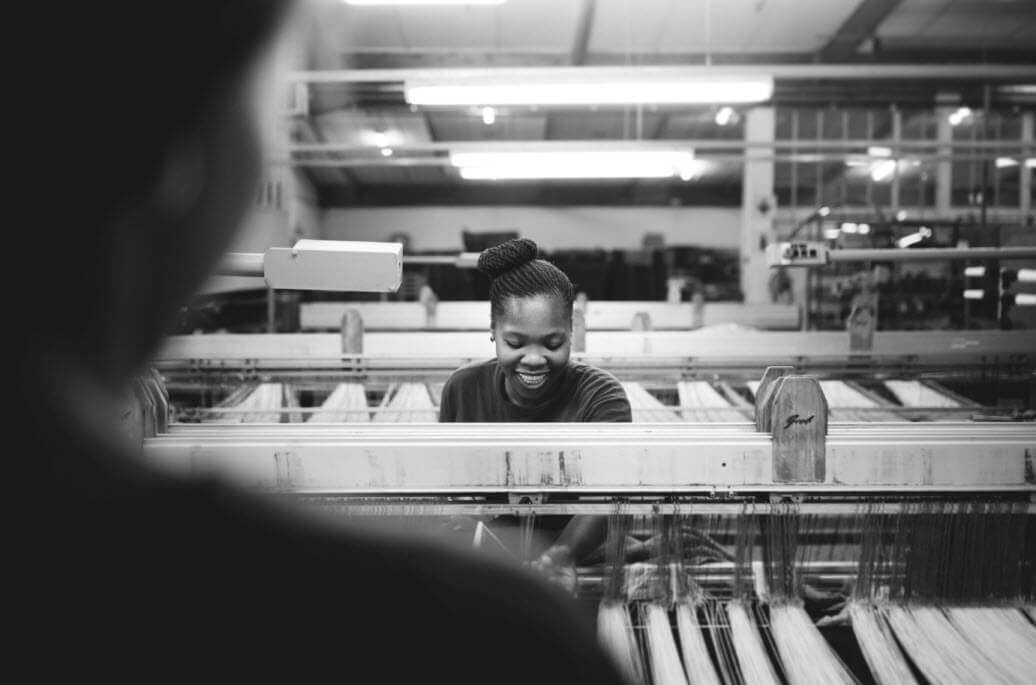
Fabrics are produced on slow speed power looms by Hinterveld
The fabrics – made entirely in South Africa – are characterised by their bold, unique appearance. Furthermore, the use of natural fibre gives a luxurious handle, which makes them highly sought after both locally and internationally. Key customers include well-established brands, primarily in Europe, including France and Italy, as well as the US, South Korea and Japan.
“Each year we launch a new collection,” says Stucken. “Our fabric is typically used by high-end fashion houses in the production of ladies’ garments targeting autumn/winter, but a spring/summer collection is in the making.”
He adds that as part of the Stucken Group, “Hinterveld has access to the vast experience acquired by the group’s vertical divisions.”
A culmination of this experience will be highlighted this September at Première Vision Paris, through the launch of the new Cape Tweed fabric collection for autumn/winter 2019/20 from Hinterveld.
Daniel Stucken explains that key to the collection is new yarn development from the Stucken Group’s spinning plant.
“Our group’s in-house spinning operation, Mohair Spinners South Africa, has recently made important machinery investments in fancy yarn spinning, which opens up more creativity for exciting new styles for our tweed fabric,” he says.
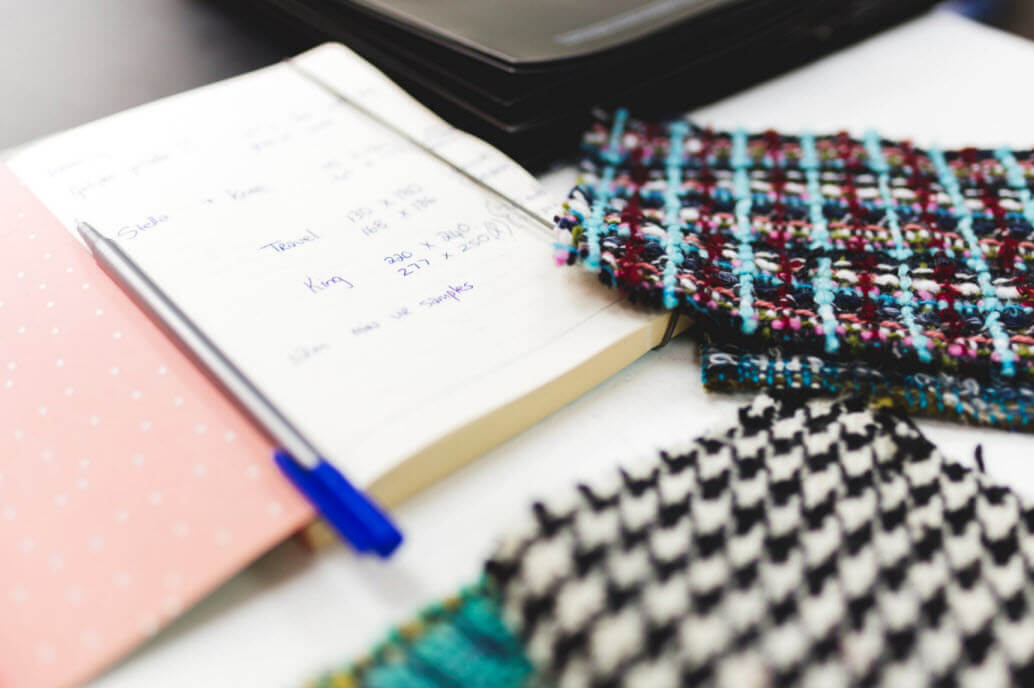
One in-house and two independent textile designers drive the creative process at Hinterveld
According to Stucken, the new collection stays true to Hinterveld’s core style. “We don’t plan to steer too far away from our unique look, which includes a lively array of colour and texture, translating into bold and classic tweeds, whilst tonal and monochrome colourways are always in demand, and our love of natural fibre, particularly mohair, remains an important differentiator for us,” he says.
In terms of designing he adds: “One in-house and two independent textile designers ensure that the creative process always remains fresh and relevant, always considering international trends. We like to produce fabric on slow speed power looms, offering volume capabilities, but with a distinctly hand-crafted appeal.”
Daniel Stucken also stresses that the new collection highlights the group’s commitment to sustainability – a key focus across all the group’s operations.
“The nature and philosophy of our group is fair trade, community commitment, and sustainable manufacturing,” he says. “As a company with sustainability at its core, we strive to minimise our environmental impact at every stage of the manufacturing process. From farm to final product, we embrace nature’s resources and believe that our people, animals and natural environment should be treated with care and respect.”
He adds that the group’s environmental performance across its manufacturing facilities has been improved as a result of new investments following a fire in April 2015 that destroyed its entire combing and part of its spinning operations.
“Thankfully three years later we are back to full production with a new state-of-the-art factory re-build, better process flows and modern, efficient machinery, which is already proving advantageous not only for our primary processing economies, but also in optimising energy and power consumption, as well as waste,” he states.
“At the Stucken Group, preserving the environment is not only a concern of ours and our customers. It is about embracing a fresh attitude and philosophy in all decision making, starting with procurement. We strive to source our raw material from producers who have committed to an official Code of Best Practice or Sustainable Guidelines on their farms. Adherence to these best practices is increasingly independently monitored, allowing our group to improve the traceability and sustainability credentials of our products as we focus our raw material sourcing from farms which adhere to these production guidelines.”
Looking ahead to Première Vision Paris, Daniel Stucken adds: “Hinterveld seeks to grow long-term supply relationships with international fashion houses, big and small. We offer flexibility in custom design and development, in order to align with our clients’ needs.”
Besides fabric, Hinterveld also produces a range of luxurious blankets and knitted (kid mohair) fashion accessories, which are sold either to existing brands or via the Hinterveld stock supported label.
- Hinterveld will be exhibiting at stand 5H48 at Première Vision Paris on 19-21 September