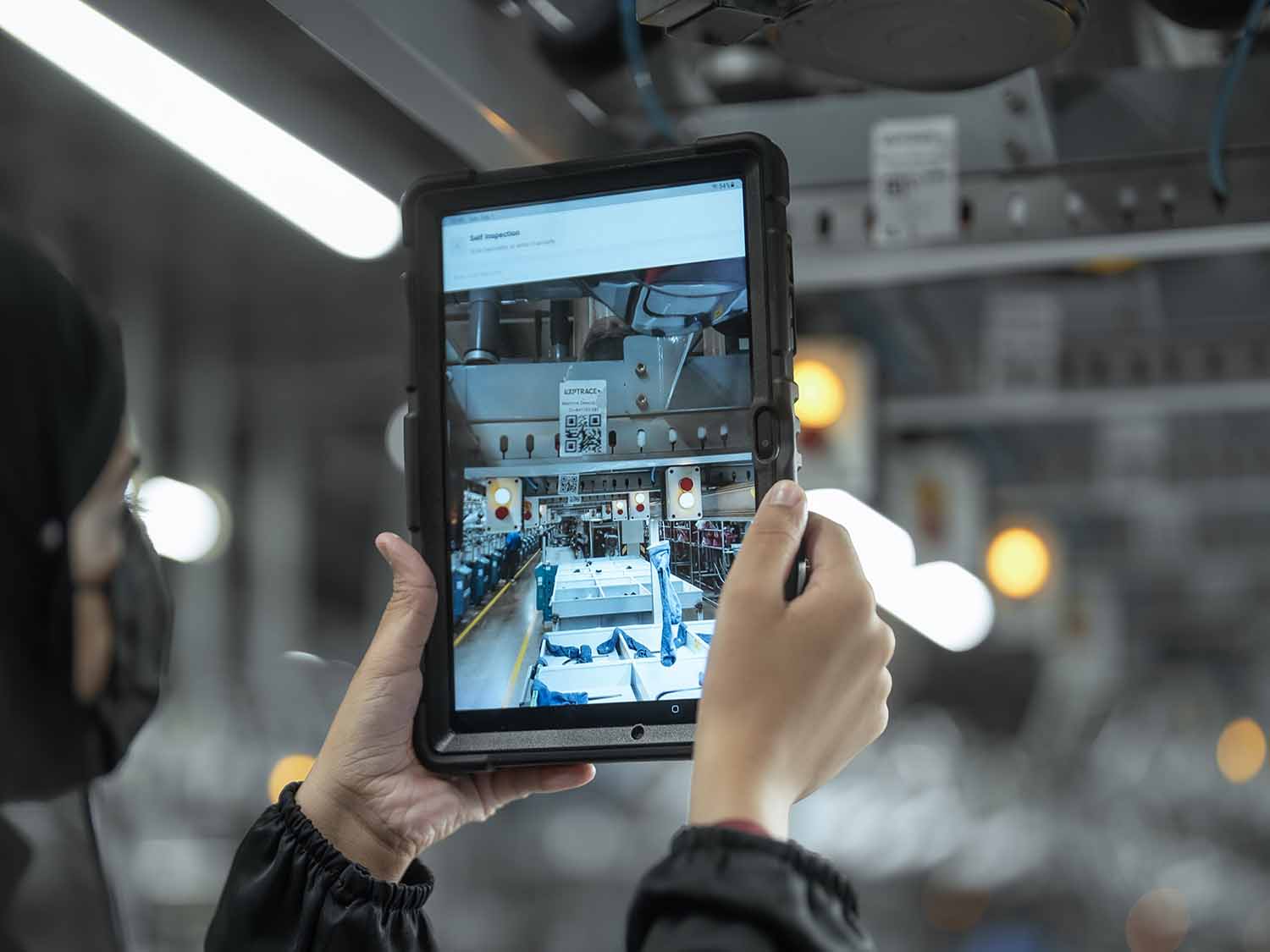
The Malaysian government has announced that it has completed a draft of the national policy on Industry 4.0. International Trade and Industry Minister Darell Leiking will share details of the new policy and has told local press: “I believe that by providing an enabling ecosystem for the manufacturing sector to thrive, by adopting new technologies, we can ensure that Malaysia will remain as an attractive prospect for high-technology, innovative and high value-added industries in years to come.”
Malaysia is a prominent textile and apparel producing country with countless spinning, textile processing, weaving, knitting, and garment producing operations. And, it might seem like an unlikely proponent of Industry 4.0 but, in actuality, over 40% of the country’s manufactured exports have been considered to be high-tech since 2009, according to the World Bank. In combination, this means that Malaysia has both an established textile industry complete with almost 70,000 skilled workers and a well-established technology sector and is thus well placed to play a major role in the digitalisation of the textile and apparel industry.
With news such as this we see the horizons of the Fourth Industrial Revolution broadening. Since 2000 Malaysia’s GDP has tripled, from just over US$93bn to over US$314bn in 2017, and while this is minimal in comparison to China’s astronomical growth it is still significant. It suggests that it is not only the dominant economies that will reap the benefits of technological change, but also the regions that have been nascent. We can all look forward to seeing how Malaysia and other countries like it will respond to the changing shape of global manufacturing and trading with Industry 4.0.