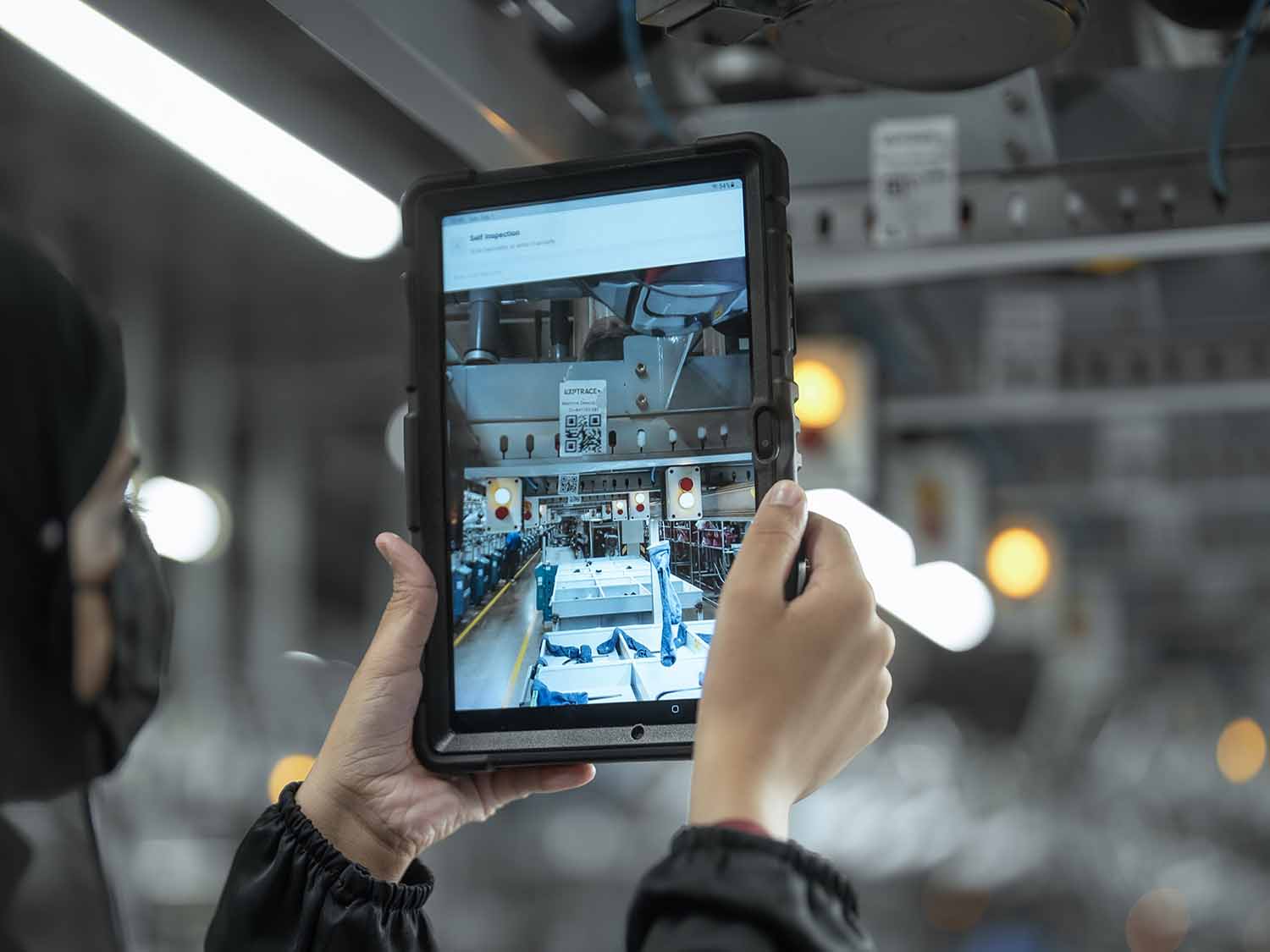
With cost and time pressures building on the textile and apparel supply chain, Industry 4.0 is introducing new technologies and systems that help streamline manufacturing processes, improve lead times and minimise outlays.
Eton Systems is a global supplier of customised material handling solutions that help customers in manufacturing industries such as home textiles, apparel and upholstery to increase productivity, profitability and improve the workplace environment. The company has over 4,000 systems installed in more than 60 countries and in different production areas. Globally, it provides material handling systems consisting of individually addressable product carriers, automatically finding its way to the correct operation. The systems are designed to eliminate manual transportation and minimise handling, radically increasing the time for adding value to products, according to the company. The systems include a real-time information system and the necessary tools to improve the manufacturing processes through software.

An Eton Systems production line
The Swedish company has been part of the commercial industry for over 50 years. Eton Systems’, UPS system, one of the first for the industry globally, is the core of the company’s technology. Alex Vega, president of Eton Systems, says: “The UPS system is a fantastic product that combines the new technology that automation has brought to the market and allows the manufacturing facilities to become intelligent in its true sense.”
Eton Systems has over 70 installations for shirt production worldwide. In the shirt industry, the company has a flexible material-handling system designed to eliminate manual transportation and minimise handling. It increases productivity by 50%, ensures an optimal working flow and provides time for adding value to products, according to the company. For example, Eton Systems increased the throughput time for one manufacturer from 14 days to less than a day and increased capacity per shift from 1,056 units to 1,400 units with a ROI of one to three years.
Similarly, the company has over 60 installations for the production of jeans across the globe. One example the company gives in this industry is a successful increase in throughput time from three days to just half a day, with a production increase of 87% and a ROI of between one and two years.
Eton Systems helps to enable the smart factory which, by connecting up different siloed manufacturing processes, helps to consolidate the production line into a smooth, data-flowing process that can save incredible amounts of time, increase productivity and therefore profits. Vega says: “We produce smart factories. A smart factory is a combination of the physical and software components deeply intertwined with one another and machines. Each machine becomes a centralised robot that can create these centralised decisions.”
He continues: “At the same time, those machines become self-going, they can communicate with every single product, every product becomes a product of unit information and each unit will carry a lot of information about what we have today on the floor that allows you to do balancing. Sequencing and buffering also allows you flexible times and fast changes of small runs/batches. So, what we do in reality is give the customer the flexibility to produce one thing once, when they want it, whilst controlling quality and reducing cost.”
All the data that is collected is stored in the cloud and the individual manufacturers own their own data and will lease Eton Systems’ software programme, Eton Select.
And Vega says that, in today’s manufacturing marketplace, having automated systems is incredibly vital for businesses in all industries, not just in the textile and apparel industry. He says: [Automation in manufacturing] is very important because we can applicate and allocate the production process flow. We have absenteeism, we have people who get tired, fatigue. What we create is an ergonomic station where operators are just concentrating on that sewing process. We create momentum and repetition. Talking about ergonomics, we reduce fatigue and this means increase in quality. That’s why it is important.”
This kind of automation is also helping with the US’ reshoring initiative, an attempt to bring manufacturing back to the country and closer to the US consumer. Vega wants to support this trend both in the US and Europe. He says: “In the US we have seen a lot of reshoring mainly in the home textile areas. I think, with regards to the apparel business, here in the US we’re still going to be expecting a delay of around 10 years and this is because we have lost all those educational programmes and university courses. So, we don’t have the know-how of how to do apparel anymore in the US.” But with the help of Eton Systems’ technology, Vega hopes this will change. “This is why we are here,” he adds. “We created this technology to be able to help these manufacturing companies bring that labour back home.”