As the global nonwovens market continues to evolve, Austrian manufacturer Lenzing is reshaping its business to make the most of current opportunities. Andy Rhodes reports.
It is no secret that the world’s nonwovens industry is currently one of the fastest growing and most innovative areas of the textile landscape. Changes in product specifications and shifting consumer demands are changing how nonwovens manufacturers are developing their products.
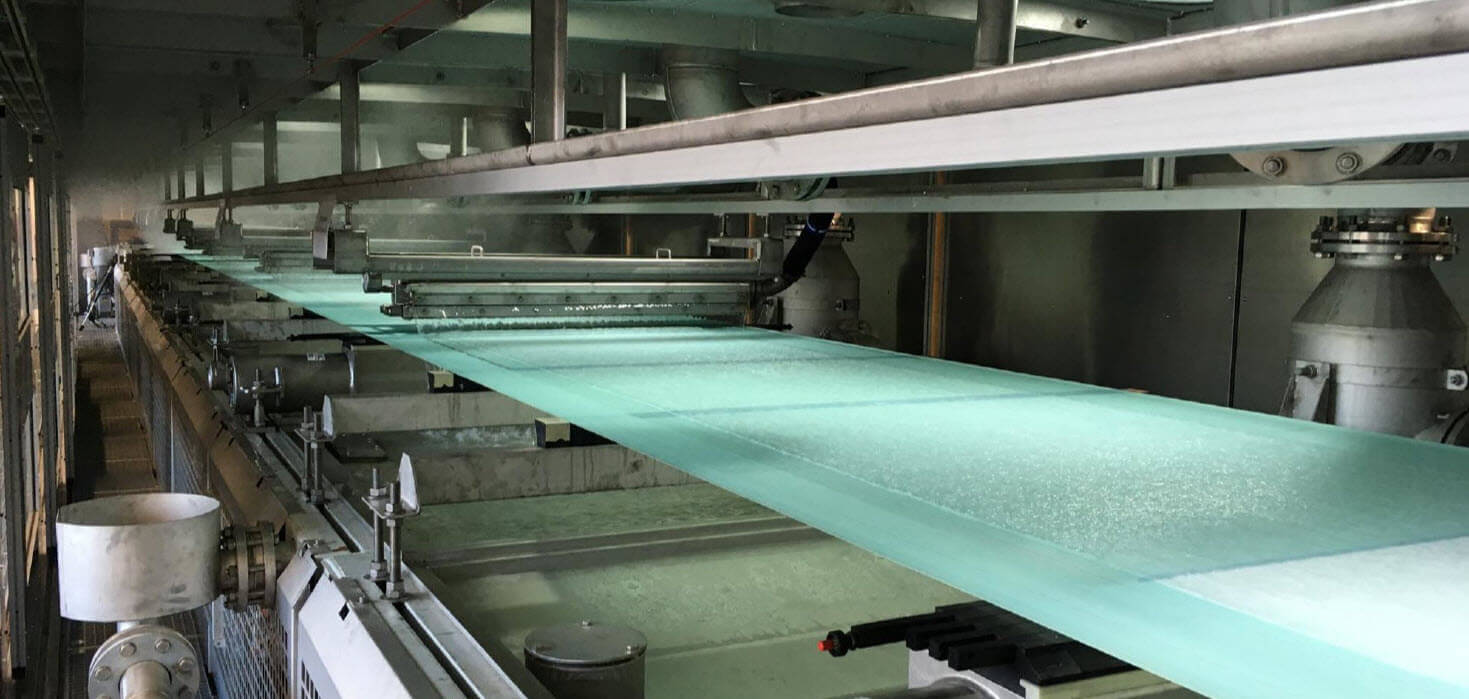
Lenzing's new pilot line
Many utilise the plethora of new technologies available in order to cater for these changing demands, while others rescale their business to shift a focus onto new opportunities. Lenzing Group has done both in recent years.
Recently, the company unveiled a €26m investment in its new Web Technology for nonwoven products. The technology, the company states, is botanic in origin and will be manufactured using an environmentally-responsible production process.
The technology also contributes to Lenzing’s increasing focus on sustainability – a theme that is growing in importance throughout the textile industry. As the sustainability debate intensifies, both manufacturers and consumers are investing more in sustainably-produced products.
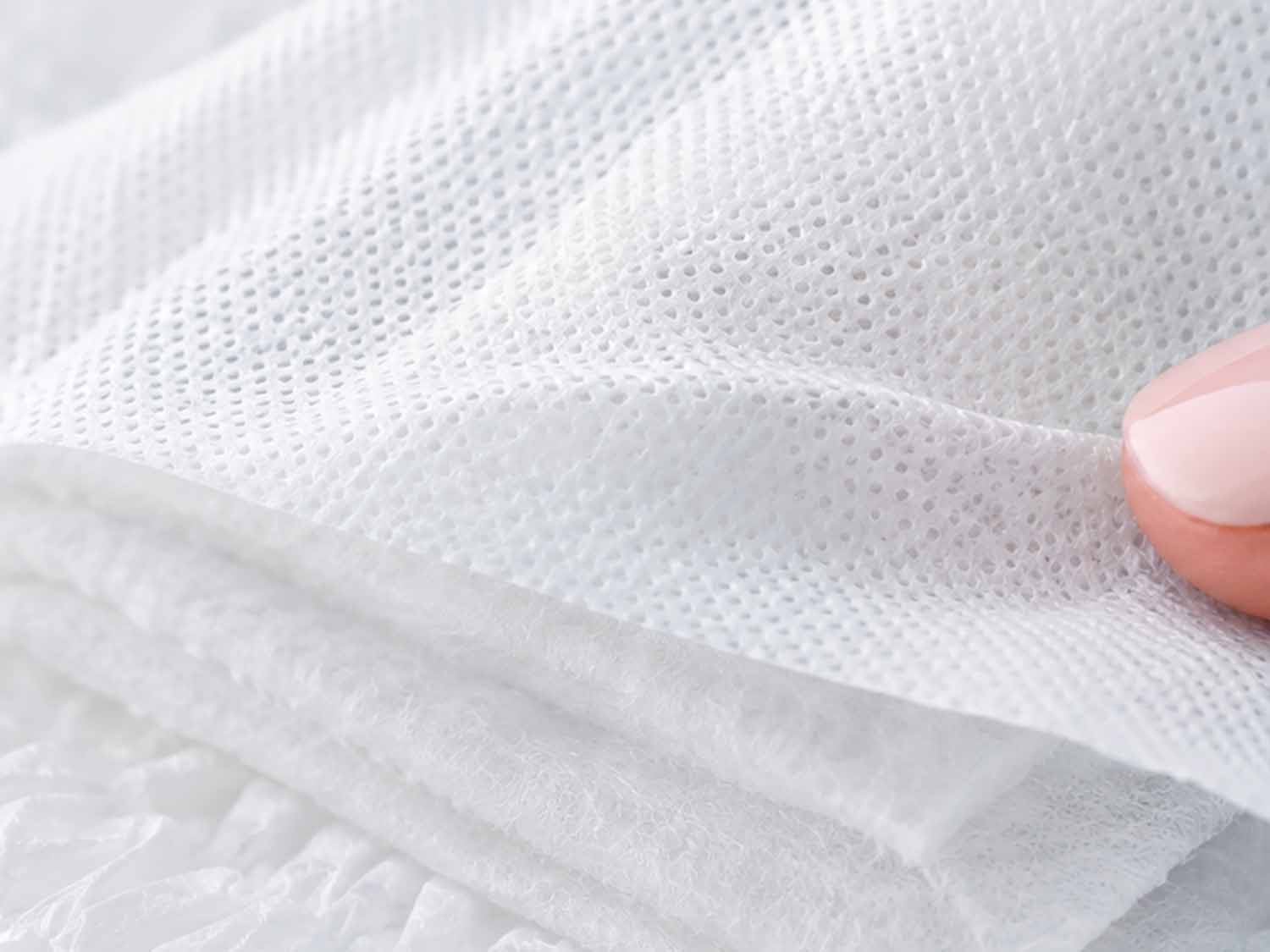
With this in mind, Lenzing states that its Web Technology platform starts with botanic wood pulp and creates a nonwoven fabric made with 100% continuous Lyocell filament. Currently, most nonwoven products are made with plastic materials such as polyester or polypropylene, which take hundreds of years to fully decompose.
However, Lenzing’s Web Technology means that absorbent nonwoven fabrics with botanic origin will be manufactured using environmentally-responsible production methods. Additionally, the web can be integrated with standard non-thermal-based nonwoven bonding technologies such as hydroentangling and needlepunching, while the patented technology enables a unique self-bonding mechanism where filaments bond into a fabric during the laydown process.
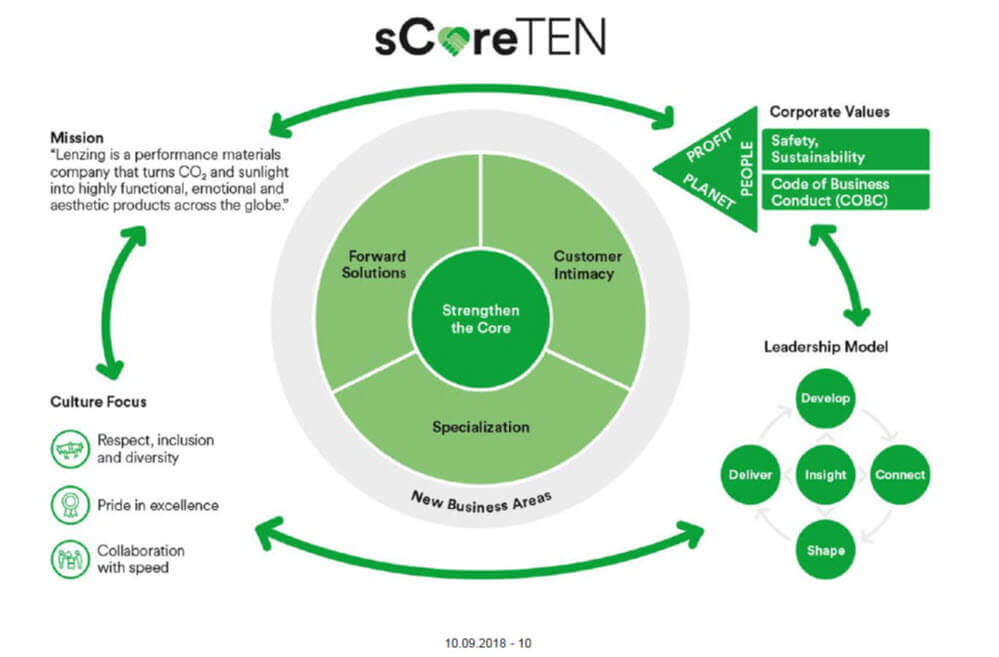
Lenzing's sCoreTEN model
The nonwoven fabrics produced in 15 gsm to 80 gsm basis weights with a wide range of surface textures and drapeability properties will also be certified biodegradable, clean and safe.
Describing the platform, Stefan Doboczky, chief executive officer and chairman of the management board of the Lenzing Group, says: “While the nonwovens segment currently represents 30% of our core business, we are committed to driving stronger growth through more active involvement in innovations across the value chain. Lenzing Web Technology is a key milestone that embodies our focus on speciality products under our corporate strategy sCore TEN.”
He adds: “We will continue to lead the innovation of sustainable speciality products and empower industry partners and customers with more sustainable offerings to drive business success.” The commissioning phase of a one-metre-wide pilot facility located at the company’s headquarters in Lenzing, Austria, was completed following several years of R&D.
According to the company, the new pilot line is capable of providing a range of benefits, with samples available from Q2/2019 and the first commercial line expected in 2022/23.
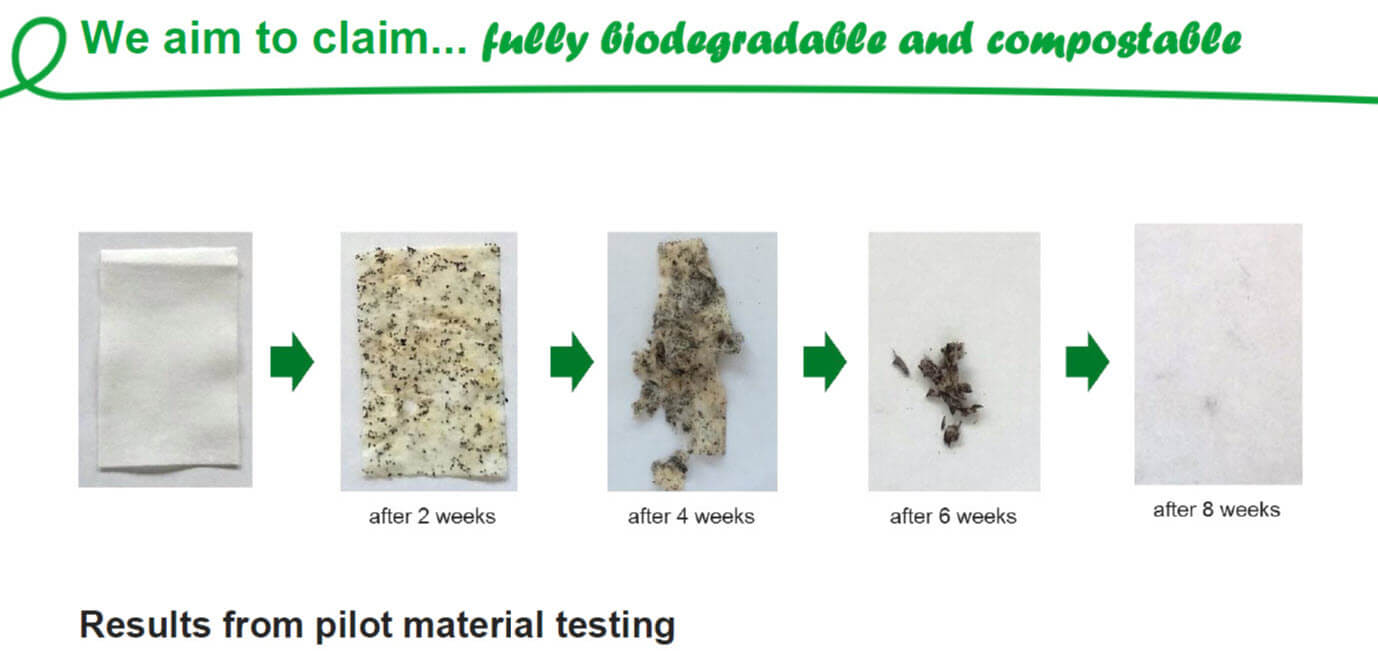 Lenzing states that nonwovens made with the new Web Technology can fully biodegrade within eight weeks
Economic change
The Web Technology forms just one part of Lenzing’s plan to reshape its global nonwovens portfolio. Elsewhere, the company has responded to the changing economic landscape in various regional markets.
In the US, Lenzing has temporarily mothballed its Lyocell expansion project in the city of Mobile, Alabama. The move comes following escalating trade tensions between the US and other major economies, most notably China. “The rising likelihood of increasing trade tariffs, paired with the potential surge in construction costs due to the buoyant US labour market, have increased the risk of this profile,” Lenzing says.
Due to this, Lenzing has opted to channel its efforts into a similar investment in Prachinburi, Thailand. “Lenzing continues to be fully committed to implement its sCore TEN strategy and remains on track for the speciality expansions such as Tencel Luxe filaments and Lenzing EcoVero viscose fibre; however, this decision will slow down the implementation of the lyocell speciality staple fibre growth,” the company adds.
Global growth
The nonwovens market is growing the world over, largely due to shifting consumer demands and increasing consumers GDP. According to Lenzing’s estimates, the nonwoven fabric market is expected to reach a value of US$35bn in 2022, rising at a compound annual growth rate (CAGR) of 7.5% per year.
The growth is being driven in part by the rise in popularity of disposable nonwovens. Researcher Smithers Pira states that the growing upper and middle classes in central Asian markets are demanding higher-performance and higher-value products as they begin to spend more on personal care and sanitary products.
However, these consumers are also looking for more sustainable and environmentally-friendly products as the industry works towards reducing pollution, and ultimately, achieving circularity.
“It is crucial to support responsible development of the nonwoven industry by using sustainable raw materials,” says Wolfgang Plasser, vice president of Global Business Management Nonwovens at Lenzing.
“Consumers have become more aware of the negative impact of plastics in waterways and marine ecosystems,” adds Plasser. “It is therefore incumbent upon the disposable products industry to step up and address such concerns. We envision that our new Lenzing Web Technology will enable the value chain to create more innovative applications out of natural, biodegradable cellulose materials.”
RISE conference
The issue of sustainability in the nonwovens industry was discussed in detail at the recent RISE conference. Hosted by INDA, the association for the nonwovens fabrics industry, the event sees topics surrounding Research, Innovation and Science for Engineered Fabrics (RISE) related to nonwovens considered in detail.
At this year’s event, Thomas Carlyle, global project manager – Special projects, and Gisela Goldham, project manager, both represented Lenzing and discussed new cellulose-based nonwoven fabric technology – or Lenzing’s Web technology.
During the presentation, the duo explained Lenzing’s sCore TEN model, while they also stated that the new Web Technology aims to make sustainable materials that fully biodegrade within eight weeks.