ITMA Asia + CITME is well established as Asia’s leading textile machinery show and this year’s edition, which takes place on 15-19 October 2018 at the National Exhibition and Convention Center (NECC) in Shanghai, China is the sixth edition of the combined show and is set to welcome around 100,000 visitors.
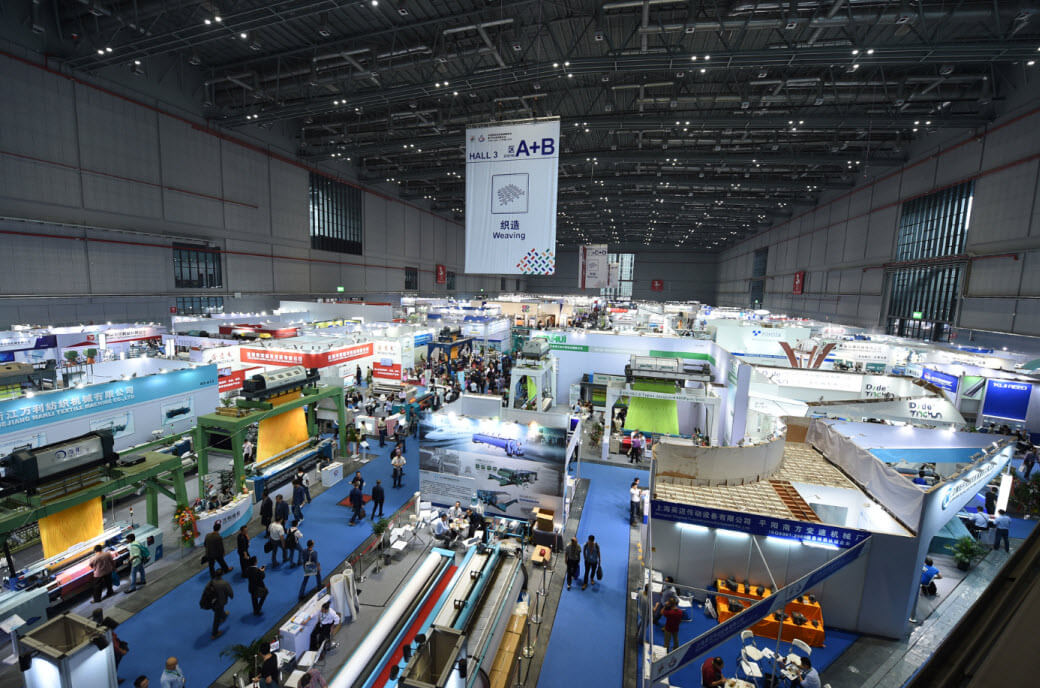 The last edition of ITMA Asia + CITME 2018
In total, more than 1,700 national and international exhibitors from 28 countries operating in the textile machinery and fabric industry have signed up to the show.
Organisers say that products that promote automation and boast energy-saving features will be showcased, as well as the latest developments from the textile machinery industry.
Fritz P Mayer, president of CEMATEX, says: “The combined showcase is highly appreciated by leading textile machinery industry players, as it offers them a cost-effective platform for their products and services in Asia.
“In today’s global market, textile makers are sourcing innovative solutions and upgrading their facilities. The drive for better technological solutions is expected to grow in Asia, especially China. Hence, we are confident that all leading brand names will continue to have a large presence in this credible showcase.”
Exhibitors have taken up 100% of the available 170,000 sqm gross of exhibition space, according to show organisers. And due to this demand, the joint owners of the exhibition have had to book further space at the North Hall (NH) at the NECC to accommodate the event’s popularity.
Organisers continue that manufacturers from China have taken the largest percentage of exhibition space, followed by exhibitors from Germany, Italy, Japan and Switzerland. Meanwhile, the largest sector is expected to be spinning machinery, followed by finishing and dyeing, knitting, weaving and nonwovens.
The demand for exhibition space and the overall response of the event is the result of China’s ongoing strategic push for innovation to enhance the global competitiveness of the Chinese textile sector, among other industries, under the government’s 13th Five-Year Plan period (2016-2020). After a successful 2016 edition, this will be the second ITMA Asia + CITME within the period of this Five-Year Plan.
Additionally, to further enhance the country’s position in the global value chain, the Chinese government has drawn up a roadmap to upgrade the industries through innovation. Its ‘Made in China 2025’ strategy aims to drive manufacturers swiftly towards smart industrial production and valued-added manufacturing.
Wang Shutian, president of China Textile Machinery Association (CTMA), says: “Rising labour costs and the need to stay competitive in a challenging business environment have spawned the demand for intelligent manufacturing. Using advanced information and communication technology allows effective integration of the entire textile and garment production processes. Such seamless integration will enable manufacturers to be more responsive to specific customer requirements.”
China’s textile machinery market
China remains the world’s largest market for textile machinery, despite losing custom to both European countries and the US, with the rise of automation, and to countries closer to home, such as Cambodia, Vietnam and Bangladesh, where labour is cheaper and there are less regulations prohibiting certain ways of manufacturing.
The Chinese government has been undergoing an anti-pollution drive over the last few years and, in October 2017, 80,000 factories had been shut down in the most recent crackdown across multiple industries, with textiles one of the key sectors hit. The rising regulations have made manufacturing more expensive in the country, as has the rising cost of labour and economic slowdown. As a result, factory owners within China have been turning to countries with cheaper labour to maintain profits. These countries include Cambodia, Vietnam, Thailand, Sri Lanka and Bangladesh. Additionally, these countries are also manufacturing more products sent from Western economies.
With these challenges facing the industry, China has the most to gain from digitalisation, especially as its middle class continues to grow rapidly, leading to increasing demand for textile products in the domestic market. According to the World Bank, by 2030, China expects to surpass the world's most advanced countries in adopting new technology and innovation. To try and achieve this, the Chinese government has been putting a number of strategies in place, such as its Made in China 2025 programme and the China Garment Manufacturing Plan 2020, which focuses on smart industrial production, value-added manufacturing and the automation of industries such as the textile machinery, textile and garment manufacturing industries, taking inspiration from Germany’s Industry 4.0.
Automation and smart manufacturing play a crucial role in improving quality and reducing costs, including labour costs and increasing sustainability in textile manufacturing. To a certain extent, this has already been shown with the introduction of digital textile printing in the Chinese market, which has become very popular as the machines become faster, their output capabilities grow and ink becomes cheaper. However, rather than making one process digital, Industry 4.0 aims to connect individual processes and create a seamless workflow integrating each step of the manufacturing chain, creating an end-to-end production line.
Long term, upgrading to automated technology will be crucial for productivity-driven growth in China and will eliminate problems with the shortage of workforce, as a rising middle class seeks new employment. It will also play a central role in the sustainable development of China’s economy, with the transparent nature of smart manufacturing eliminating any bad practice.
Upgrading its technology will allow China to stay at the forefront of the textile manufacturing industry for decades to come. According to the 40th annual International Textile Machinery Shipment Statistics (ITMSS) released by the International Manufacturers Federation (ITMF), published in May 2018, China was the largest single investor in flat circular knitting machines globally in 2017 and remains the world’s largest supplier of fibre, yarn and fabric, so its impact on the global marketplace remains vast. However, in the future, with China also one of the world’s largest consumer markets, the country’s future investments are likely to be around meeting the increasing demand of its own growing domestic market.