The Indonesian government have announced plans to integrate digital technologies into the country’s batik sector to differentiate and authenticate its products from other Asian competitors.
Indonesia is the world’s largest batik exporter, with the industry reaching US$52.4m in 2018 and US$17.9m in the first quarter of 2019, according to data gathered by Indonesia’s Antara news agency.
Last May (2019), at the 11th Gelar Batik Nusantara exhibition in Jakarta, Indonesia’s ministry of industry introduced the Batik Analyser, a smartphone app available for Android and iOS smartphone operating systems. Using artificial intelligence (AI), the app helps buyers and resellers identify genuine Indonesian batik, and its various styles, to maintain and preserve the cultural value of the textile by differentiating it from cheap imports and imitations.
Batik manufacturing is a key part of the country’s textile and clothing industry – which Indonesia's ministry of industry recognises as a mainstay sector in the implementation of the government’s Making Indonesia 4.0 Roadmap.
With the number of batik painters on the decline, the government plans on educating millennials about batik, helping to foster interest in the art form and encouraging the workforce to continue producing the cultural fabric for international export.
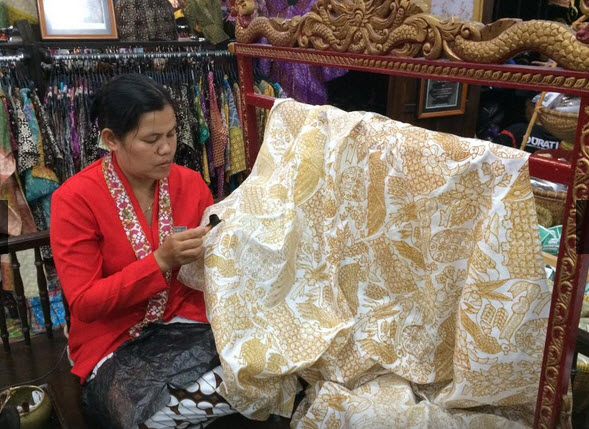
The ministry of industry’s director-general of small, medium and various industries, Gati Wibawaningsih, explained that the Indonesian Batik Foundation is working to preserve, develop, and become part of contemporary lifestyles.
“The ministry aims to interact with Indonesia’s millennials by digitising and utilising social media for the advancement of national batik. New digital technologies are helping Indonesia’s younger generations to innovate whilst carrying on the tradition,” says ministry officials.
Patricia Sutanto, vice-chairperson for international trade at the Indonesia Textile Industry Association, says: “Batik in Indonesia has several authenticities. The use of digital technologies to print on grey fabric can cut down on production costs, fabric waste, time spent on design, and allows for a wider range of colouring options.”
Sutanto explains that – with new digital technologies - artisans could utilise digital drawing tools to quickly mock-up designs for batik that would traditionally need to be painstakingly hand-drawn and printed on cloth. Likewise, digital drawing techniques can enhance stamp moulds for ‘hand stamped’ batik, creating more intricate designs with greater precision.
She adds: “Digital printing and roller printing also allows artisans to design traditional prints that can be automatically transferred to fabric, resulting in a quicker process with less manpower and no need for stamping.”

The Batik Analyser could identify the difference between long lines of artisans’ drawings and the intricate traditional patterns hand-printed on cloth, versus the machine-made imitations which are currently imported from China.
“In a way, batik is in my blood, so of course I can differentiate between printed and handmade batik easily, without the help of AI,” says Sutanto. “However, with such a wide range of local designs and styles, few people are familiar with all of the various batik styles and techniques.”
These new digital batik technologies aim to further the drive to make the industry more sustainable and environment friendly. Back in 2014, the German-Indonesian Chamber of Industry and Commerce (EKONID) completed a Clean Batik initiative. The European Union (EU) funded project involved reducing the excessive use of water, wax, chemical dyes and bleaching agents that some batik manufacturers have consumed in the past – which harmed the environment and risked workers’ health.
Batik is still largely a traditional sector in Indonesia but the new government implementations, along with the ongoing work of EKONID – the Industry 4.0 initiative is a huge step towards a digital future.