Sweden-based dyeing company imogo announced its latest sustainable spray application at World Textile Information Network’s (WTiN) Innovate Textile & Apparel virtual trade show last month (October). The Swedish firm illustrated its latest innovation, the Dye-Max system, in a roundtable discussion featuring a whole host of industry experts.
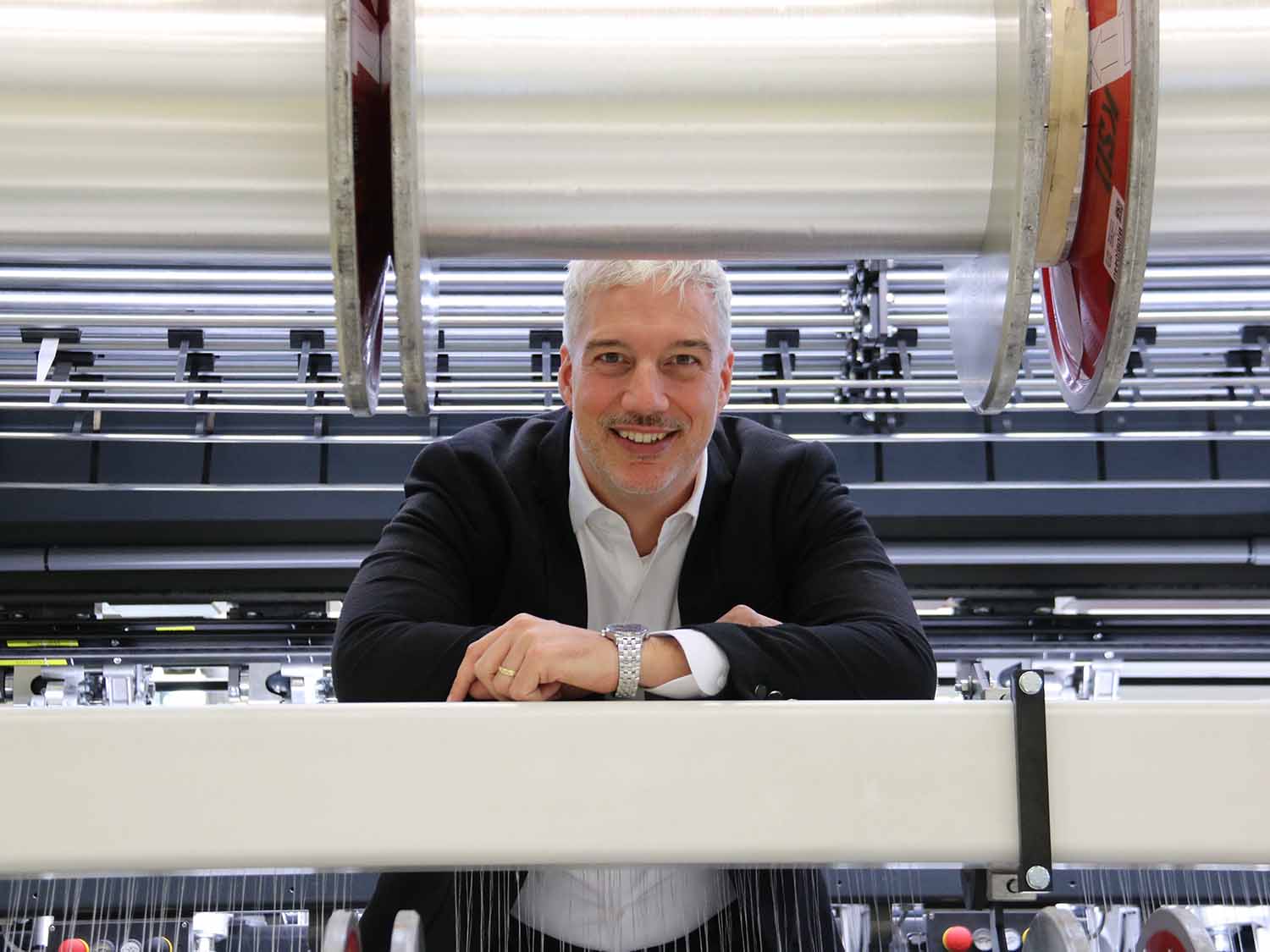
The system can slash the use of fresh water, wastewater, energy, and chemicals by as much as 90%, compared to conventional jet dyeing, and was highlighted by the company’s founding partner Per Stenflo. The solution’s green credentials stem from its extremely low liquor ratio of 0.3-0.8 litres per kilo of fabric. Moreover, considerably fewer auxiliary chemicals are required to start with.
Although the product is a positive in the industry-wide drive for a sustainable future, Stenflo did admit there were challenges in the current climate: during the ITA discussion it was agreed that 2020 has not provided the ideal climate for adventurous investors.
“The textile industry is quite conservative and is definitely in survival mode at the moment and it is not the time to be a visionary,” says Stenflo. “Day to day business is about staying alive – that’s the reality for many of our customers.”
However, on a refreshing note all of the panellists agreed that sustainable production will remain top of the agenda for the textile industry in the longer term and spray technologies for dyeing and finishing processes will be a part of it.
The roundtable featured world-class industry knowledge including Simon Kew (Alchemie Technology, UK), Christian Schumacher (StepChange Innovations, Germany) Tobias Schurr (Weko, Germany), Rainer Tüxen (RotaSpray, Germany) and Femke Zijlstra (DyeCoo, Netherlands).
Money talks
Although proud of his efforts, Stenflo was adamant that his products must be economically viable for his customers before they are sustainable – otherwise there would be no market for his Dye-Max solution.
“Any investment in something new is a risk of course, and we have to be able to explain and convince manufacturers that there’s a good return on investment, not only in respect of sustainability, but in terms of making good business sense,” says Stenflo.
“We are also looking into new business models in terms of how to reduce or lower the thresholds for investment and minimise the risk for the manufacturers who are looking to be the innovators.”
Government backing
Stenflo made it clear that there was still a long way to go in fulfilling his goal of a sustainable industry – he urged world leaders and big brands to back this push.
“Here we could use the help of the brands of course, in putting pressure on their suppliers to be more sustainable,” explains Stenflo. “Governments also have a role to play, in providing incentives for producers to move in a sustainable direction.”
On the other hand, the Textile Machinery Association of Sweden (TMAS), which imogo is a proud member of, was delighted to see that the drive for an innovative and sustainable technology came from deep within the European dyeing & finishing sector.
“It’s fantastic that all of this innovation is taking place in Europe based on established know-how and forward thinking,” says Therese Premler-Andersson, TMAS secretary general.
“TMAS members – backed by Swedish brands and advanced research institutes – are playing an active part in pushing forward new concepts that will work, and I have no doubt that digitalisation now goes hand in hand with sustainability for the textile industry’s future.”