After four days of demonstrating new technological innovations, CES 2019 came to a close last week. More than 4,500 exhibitors showcased the latest tech to some 180,000 attendees in Las Vegas, US.
“CES showcases the power of innovation to solve global problems and improve lives around the world,” says Gary Shapiro, president and CEO, Consumer Technology Association (CTA).
“The passion, ideas and business connections at CES make this the most significant global tech event, and the most inspirational week of the year.”
Among the array of innovations spanning the fields of vehicle technology, smart home devices and sports gear, health and wellbeing wearables yet again played a large role in the latest edition of CES.
We take a look at some of the most innovative products on display.
Myant SKIIN Blood Pressure Shirt
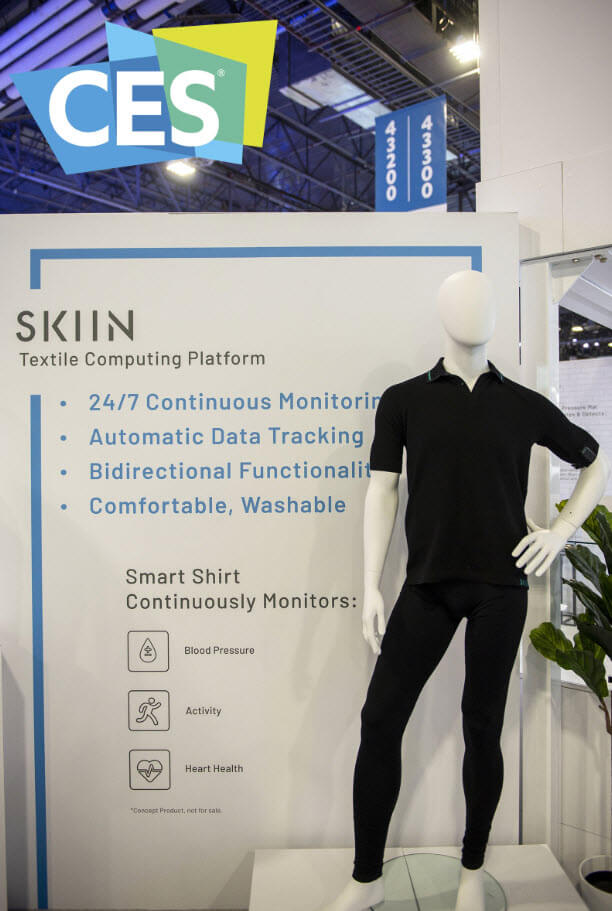
Myant, a leader in the design and production of smart textiles, showcased its cuffless blood pressure monitoring technology inside its SKIIN Textile Computing Platform this year.
Myant's SKIIN Textile Computing platform integrates innovative sensor and actuator technology into the fabrics that surround us every day. This includes the world’s first smart garment that delivers continuous, cuffless blood pressure monitoring in a comfortable and machine-washable polo shirt.
“Myant’s vision is to build a new platform for human-computer interaction that helps individuals manage and anticipate their health and wellness 24 hours a day, across all life stages,” says Tony Chahine, CEO and founder of Myant.
“The addition of cuffless blood pressure monitoring to our SKIIN Textile Computing platform is a major step forward in empowering continuous monitoring in a comfortable garment.”
The SKIIN Smart Shirt eliminates the hassle of regular blood pressure monitoring and adds automatic data tracking to share data and trends with clinicians.
Later this year, Myant plans to release both its SKIIN Smart Underwear for heart health detection and its SKIIN Smart Shirt with continuous blood pressure monitoring.
NEOFECT’s NeoMano
One company with a focus on health and recovery is Medtech start-up NEOFECT.
NEOFECT helps stroke survivors and people with spinal cord injuries, musculoskeletal disorders, or neurological conditions regain independence and live fuller, more active lives.
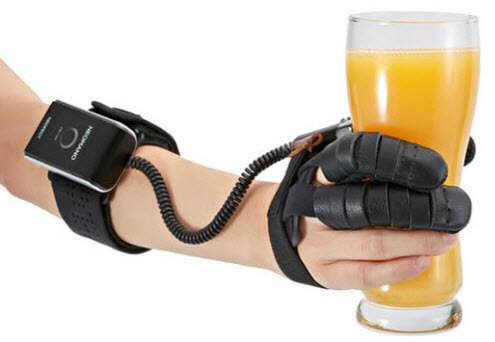
The company showcased its NeoMano glove this year at CES. The glove is powered by titanium wires that close the wearer’s fingers so they can firmly grasp common objects with one hand. The glove itself is simple to put on and use – it fits over a user’s index finger, middle finger and thumb.
A single press on its wireless, Bluetooth-connected controller activates the pulley housing and motor, causing the built-in titanium wires to actively close the wearer’s hand. The button is pressed again to release the tension and return fingers to a neutral position.
The robotic glove is portable, allowing users to wear it wherever they need gripping assistance, and the battery provides eight hours of continuous use.
Teslasuit
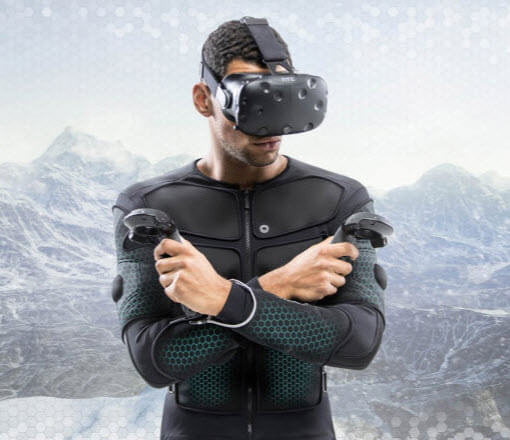
Stepping away from the healthcare sector briefly, the Teslasuit is a full-body haptic suit that makes the experience in virtual and augmented reality more realistic and effective through the synergy of systems – haptics, motion capture, and biometry.
The suit was first officially unveiled at CES in 2018, and this year it returned with collaboration partners to present various VR-Training Demonstrations for improved human performance in different business verticals, including the aerospace, oil and gas, and power plant industries. Visitors were able to test the smart suit and demo the solution for these business domains.
“Teslasuit as a platform solution for xR training generated great interest and demand from enterprises. Teslasuit offers an integrated approach to solving corporate training requirements,” explains Sergei Nossoff, CEO.
“The synergy of several systems allows for simulating conditions more realistically and to monitor the state of wellbeing of the trainee.”
Teslasuit was also named a CES 2019 Innovation Awards Honouree in Virtual and Augmented Reality.
Intellinetix Headache Band
A new release this year at CES was Intellinetix’s Headache Band. The band sits around the wearer’s head against the forehead and targets pain relief for headaches, migraines and sinus pain.
Embedded vibration therapy serves as sensory distractions, disrupting pain signals constantly travelling from the body to the brain and replacing them with gentle massaging sensations. There are three distinct levels of vibration to help provide the right pain relief.
Clinical studies on whole body vibration have shown that it can help reduce pain and inflammation as well as improve joint flexibility and strength.
Dreem sleep headband
Another headwear innovation on show this year was the Dreem Sleep Headband – a device to help study and improve your sleep.
The Dreem Band’s sensors track your statistics throughout the night. When coupled with artificial intelligence tools, these readings reach a degree of precision comparable to that of a laboratory.
The Dreem Band contains a miniature electronic core, equipped with signal-processing and machine-learning algorithms. It analyses the data received from the sensors and adjusts its response in real time, staying in sync with your biological signals.
Then, the headband transmits sound via bone conduction, directly from the forehead to the inner ear to help improve your sleep.
The band is lightweight and can fit all head shapes and sizes. It is made of soft and breathable materials and is designed in collaboration with designer Yves Béhar and his agency, fuseproject.
Piavita Vet System
And it’s not just human wellbeing technology that was on show this year; Swiss-based Medtech company Piavita demonstrated its Vet System – a hardware-enabled intelligent assistance toolset to support veterinarians.
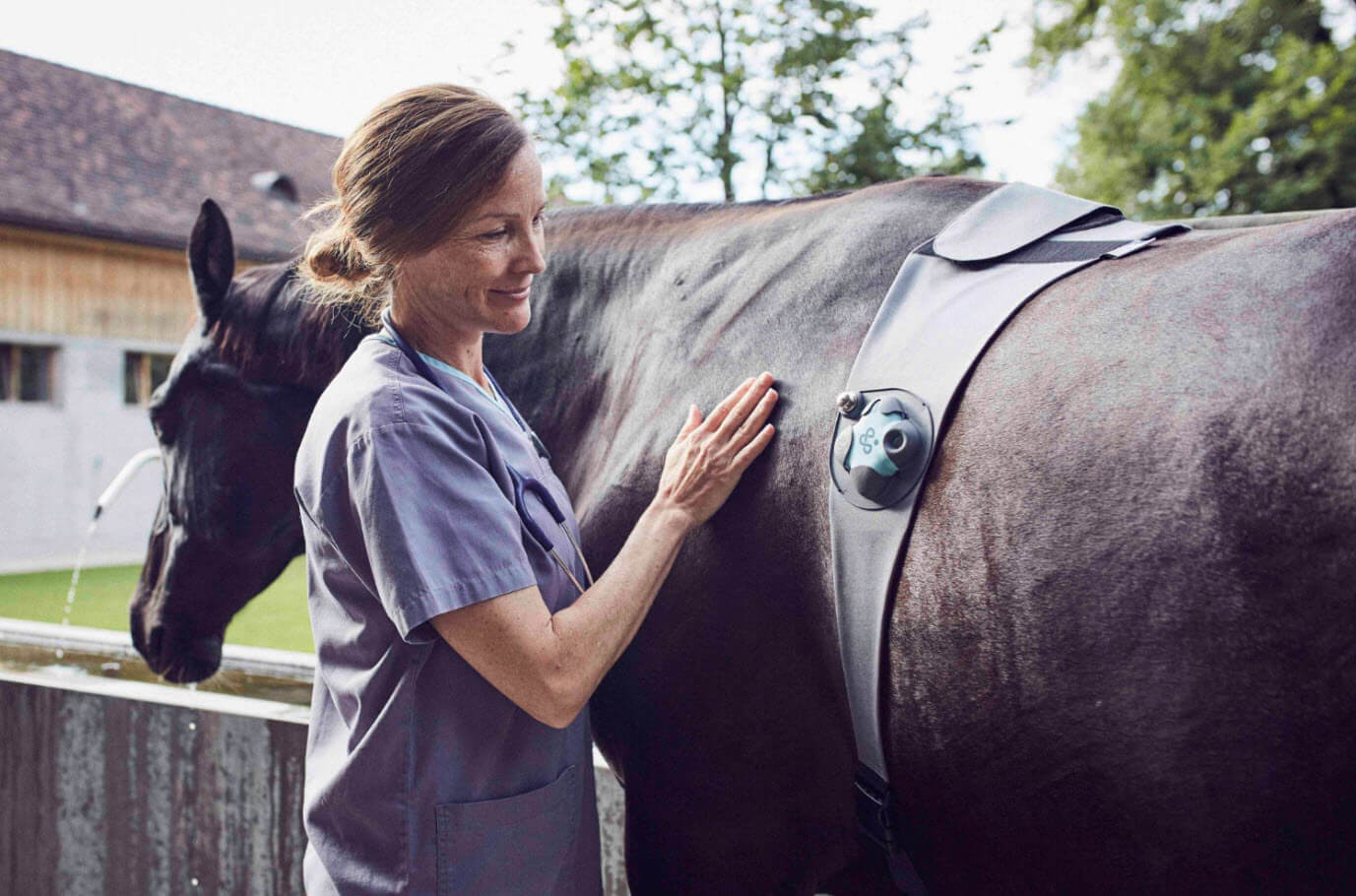
The system uses a smart combination of the Piavet Sensor Technology and the Piavet Cloud Applications. The Piavet Belt is attached around the animal and the Piavet Measuring Device is then added to this.
The system is able to record instant real-time insights into the animal’s health, such as heart rate, ECG, RR intervals, core body temperatures, breathing pattern and respiration rate.
What’s more, the integrated Patient Management System lets you set up patient profiles easily and link them with their individual records, reports, analytics and data.
Nanit Breathing Wear
Nanit, a company that uses technology to create products for parents and babies, unveiled its newest monitoring solution for parents at CES 2019 – Breathing Wear.
Designed to work with Nanit’s Nanit Plus nursery camera, parents and caregivers can now monitor their baby’s breathing motion without putting sensors on their skin or in their crib.
“Nanit is the only monitoring solution that puts your baby’s sleep development in your hands,” says Dr Assaf Glazer, co-founder and CEO of Nanit.
“We are excited to introduce Breathing Wear at CES, as it helps provide parents with a complete picture of their baby’s night and gives them the confidence and assurance they need when they put their baby into the crib.”
Nanit’s HD camera uses computer vision technology and a bird’s-eye view to see everything that happens in and around the crib. The camera’s advanced sensors see motion down to the pixel level, to help parents track and understand their baby's sleep patterns and progress.
Now, with the introduction of Breathing Wear, Nanit can monitor a baby’s breathing motion simply by reading the patterns on the fabric of a Nanit Swaddle or Breathing Band. The specific shapes, colours and ink on the fabric were scientifically engineered to be read by the Nanit camera from any angle.
To find out more about CES, visit https://www.ces.tech/