
Blockchain technology offers the knitwear sector a chance to boost much-needed supply chain transparency. By Poorna Rodrigo.
As digitalisation takes over supply chains, disruptive technologies such as blockchain and artificial intelligence are revolutionising industries globally – and the knitwear industry is no exception.

By scanning the Provenance smart label attached to a Martine Jaarlgard-designed Alpaca Mirror jumper, using a smart phone, consumers can trace its origins
Indeed, the launch of the world’s first system tracking and tracing knitwear with blockchain technology, launched in May 2017, has stirred the industry’s interest, experts behind the project say. See https://www.provenance.org/assets/0x2fb1d92d6891d7bcfeb88cd9558b86ee14703f69
Its first demonstration ensured every element of a supply chain for an alpaca-wool jumper, produced in the UK, from harvesting wool to the final product, was traceable, thanks to the blockchain-powered supply chain technology. A London company advocating an open circular fashion sector, called A Transparent Company (www.atransparentcompany.com) led the project’s strategy and implementation.
The project is a collaboration between blockchain-led traceability technology provider Project Provenance Ltd, also based in London, and UK fashion designer Martine Jarlgaard, who launched it during the Copenhagen Fashion Summit last year.
“We worked with the British Alpaca Fashion Company as the main sourcing supplier of the alpaca fleece and they were super open to providing information about their alpacas which is very important to have transparency from the first mile,” says Neliana Fuenmayor, founder and CEO of A Transparent Company.
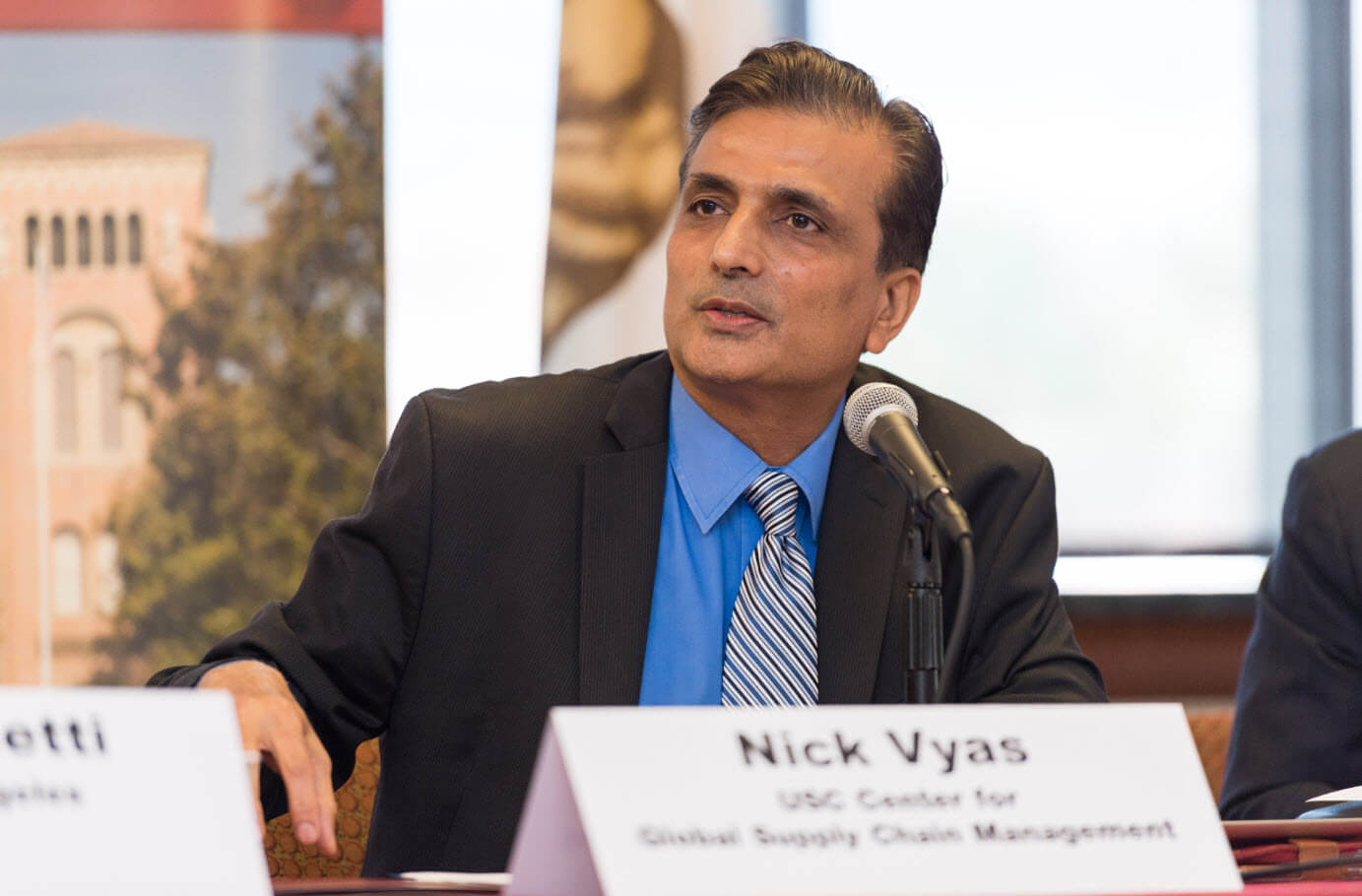 Dr Nick Vyas from University of Southern California’s Marshall School of Business
Two Rivers Mill in Dorset, UK, spun the yarn and transferred it to London-based knitting studio Knitster LDN.
“Altogether a digital passport was created and connected to the garment through a smart label, in this case, an NFC button that then got transferred back to the designer Martine Jarlgaard studios,” adds Fuenmayor. See https://www.provenance.org/assets/0x2fb1d92d6891d7bcfeb88cd9558b86ee14703f69
Explaining the technology behind blockchain, Provenance says it is a data system for securely storing information – inherently auditable, unchangeable and open.
“We are working towards an open traceability protocol that anyone can use to track the provenance of anything from coffee beans to a roll of fabric,” it said in a note. “We envision a future where every physical product has a digital history, allowing you to trace and verify its origins, attributes and ownership.”
Obviously, technology is aiding the global trend towards transparency in the fashion sector. And it has proved blockchain’s potential for “forging greater trust in businesses along a fashion supply chain, enabling brands to provide verified information about the materials, processes and people behind products,” says Fuenmayor. “Opaque supply chains are devastating environments and compromising the wellbeing of people, animals and communities.”
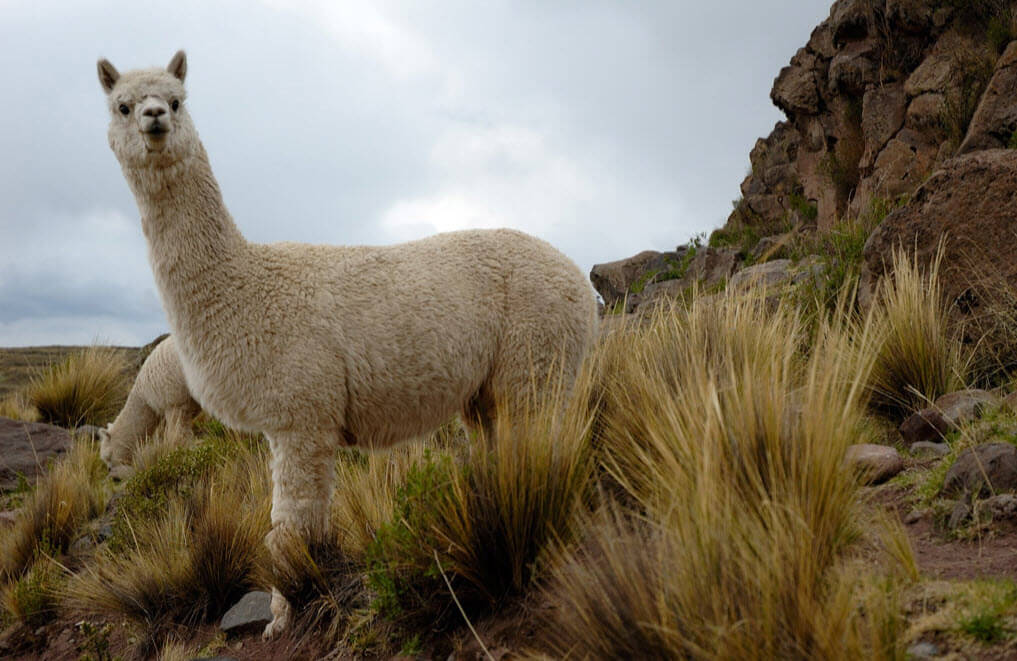
A pair of young alpacas
Credit: Christophe Meneboeuf
Indeed, “innovative technology such as robotics, artificial intelligence, machine learning, and blockchain can have a significant impact on the manufacturing industry including knitwear,” adds Dr Nick Vyas, executive director of the Centre for Global Supply Chain Management and assistant professor of clinical, data science and operations at the University of Southern California’s Marshall School of Business, US.
The blockchain technology “can help identify the source of the raw material and link it to the factory and continue to provide track and trace capabilities,” he says. Besides, it helps child labour tracking and unethical practices of the industry, he notes.
London-based Brookes Supply Chain Solutions (SCS) is another company providing such technologies. Brookes’ supply chain software ‘ToolsGroups SO99+ solution’, which sits in a cloud, can be implemented in any business quickly and easily. See https://www.brookes-scs.com/toolsgroup
“We provide demand forecasting and supply planning for small craft businesses and global clothing providers, which include knitting, sports and leather goods,” says Brookes SCS vice president of sales, Jon Oliver-Freeman.
“At Brookes SCS, we work with a leading provider of knitting supplies, helping them meet the demand for growing sales while avoiding poor purchasing decisions which lead to slow and obsolete stock,” he adds.
Obviously being out of stock costs sales. “This has led to the adoption of highly sophisticated demand forecasting solutions that can take demand trends, seasonality, complex retail promotions and even competitors’ activity into account and produce extremely accurate demand forecasts down to single item level,” says Oliver-Freeman. That way, “retailers can be more confident placing orders on long lead times knowing that stock will be sold through”.
Moreover, the dramatic surge in internet shopping means customers expect products to be available off-the-shelf and delivered the next day, he adds. That apart, the supply of these products from large mills, Far East suppliers and craft manufacturers leaves a distinct mismatch between the patterns of supply and demand – some of the issues that the latest supply chain technologies can address.
In a report entitled ‘Building block(chains) for a better planet’, released in September 2018, global accountancy firm PwC stressed the importance of ‘see-through’ supply chains powered by blockchain. It can create “undeniable (and potentially unavoidable) transparency in supply chains,” it notes.
Recording transactional data throughout the supply chain on a blockchain and establishing an immutable record of provenance (ie origin) offers the potential for full traceability of products from source to store, the report says, adding that such transparency creates an opportunity to “optimise supply-and-demand management, build resilience and ultimately enable more sustainable production, logistics and consumer choice”.
And for the fashion industry, the availability of such tech is timely. It has been characterised as being low-tech: “With major ethical and environmental issues, it has been slow to adopt such technologies, simply because the mindset of fashion is not that of an open community willing to share solutions, information and even challenges,” says Fuenmayor.
The issue, perhaps, is that despite the presence of technology, a major mindset shift that is needed is not yet there, “and this is what we have been focused on in the last 12 months,” she adds.
A Transparent Company not only offers services tailored to the fashion industry to accelerate the adoption of new technologies such as blockchain, but also offers design solutions and strategies that can work for any sector.
And knitwear is definitely one of the clothing and textile sub-sectors that the company is keen to work with as its supply chains are leaner than woven products.
Fuenmayor adds: “We are happy to work with those suppliers and brands that want to be part of a new generation of sustainable fashion innovations.”


