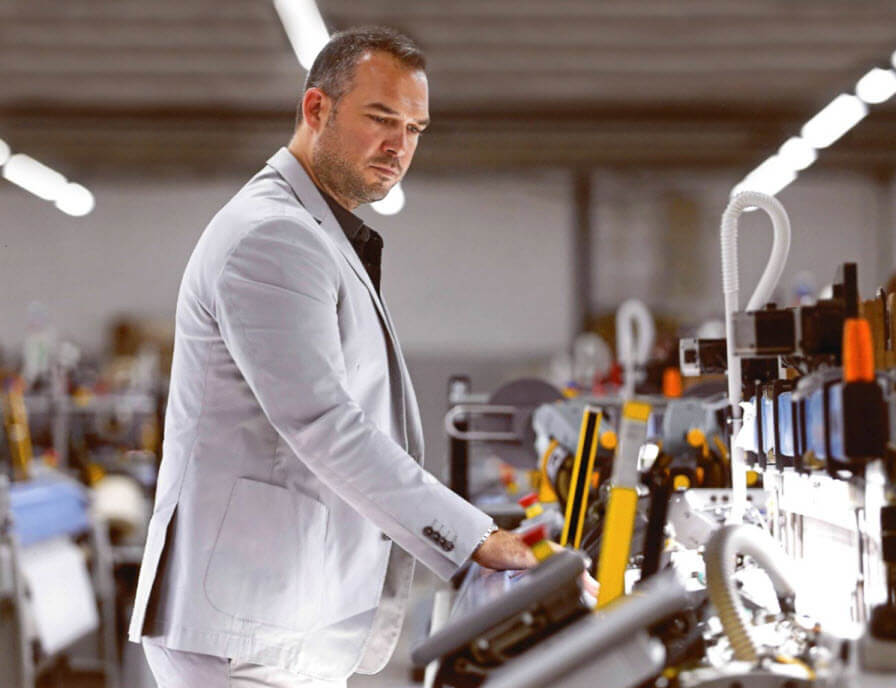
As digital textile printing continues its rise in popularity in Turkey’s textile industry, İhsan İpeker, managing director, İpeker Tekstil, talks to Madelaine Cornforth about the company’s evolution through the market.
Officially founded in 1930, İpeker Tekstil is a family-owned vertical textile company. However, the actual birth of the textile business in the family goes back to the beginning of the 20th century. “The journey initially started with silk weaving and today delivers high-quality novelty fabrics all around the world,” says İhsan İpeker, deputy managing director, İpeker Tekstil. “The wide assortment of dyed and printed fabrics produced with many years of experience by our talented and creative team have enriched collections of many well-known designers and large retailers.”
The company creates four main collections and 10 sub-collections annually, backed by monthly fast-fashion additions. “The huge variety of fabrics, together with the technical capabilities makes İpeker Tekstil’s collections unique in the eyes of the customers,” continues İpeker.
The company believes it is important to produce products under the framework of ethics, fair trade, and with value added innovations, and has over 3,000 clients in 52 countries. “All our client demands and our sustainability vision, create İpeker Tekstil’s trends,” adds İpeker.
Of these 52 countries, İpeker Tekstil’s main market is Europe – Germany, France, Italy, Spain, the US and Japan are the company’s particular export markets. In total, İpeker Tekstil exports 80% of its total production. The other 20% is therefore kept within the Turkish market, İpeker Tekstil’s domestic market. İpeker says: “[Turkey] is a growing market, so being fast and providing quality results are the main demands of customers.”
Technology
To meet the needs of its markets, İpeker Tekstil began using digital textile printing machines in 2007 for sampling. “The developments on digital printing solutions have become one of the best practices of printing,” says İpeker.
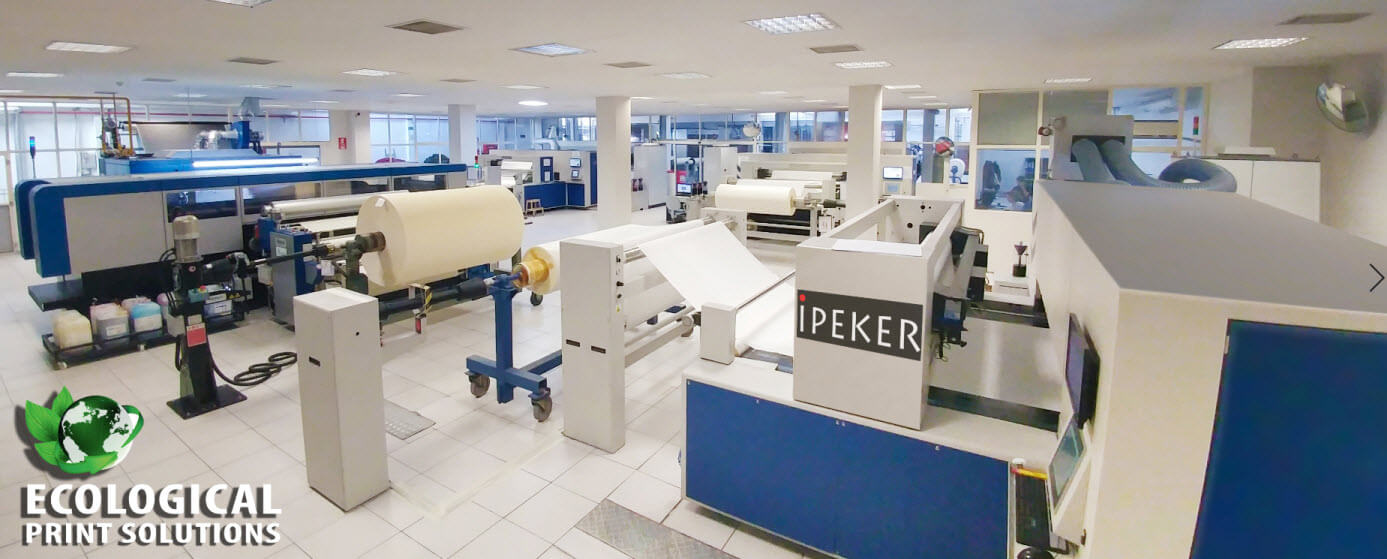
Today, the company has EFI Reggiani and Konica Minolta digital textile printing machines for “eco digital printing solutions,” says İpeker. The print house uses original Konica Minolta and Huntsman dyestuff for reactive and direct disperse digital textile printing. “Digital ink-jet printing provides the wide range of colours required by designers,” adds İpeker.
As well as a wide colour gamut, there are many other benefits to digital textile printing such as, “energy saving, simpler operation procedures, reducing the environmental burden, and speed,” notes İpeker. He adds that the process is flexible and provides the ability to change designs quickly.
İpeker has found there are also a number of challenges to digital textile printing, to coincide with its benefits. Firstly, getting the right fabric for the machine can be testing, as the wrong fabric can destroy the print design. “İpeker Tekstil offers a very wide range of fabrics in its collection, with around 100 active micro-printed fabrics as well as woven, knitted and jacquard weaving fabrics. We have specific fabrics to provide sustainable consistency.”
He also adds that hardware and software developments are key elements of the digital textile printing industry. “It has to be simple for computer user,” says İpeker.
For the future, İpeker and the İpeker Tekstil team believe digital textile printing machines will become more integrated with the wider manufacturing facility, reducing the cost of energy and materials and increasing environmental efficiency.