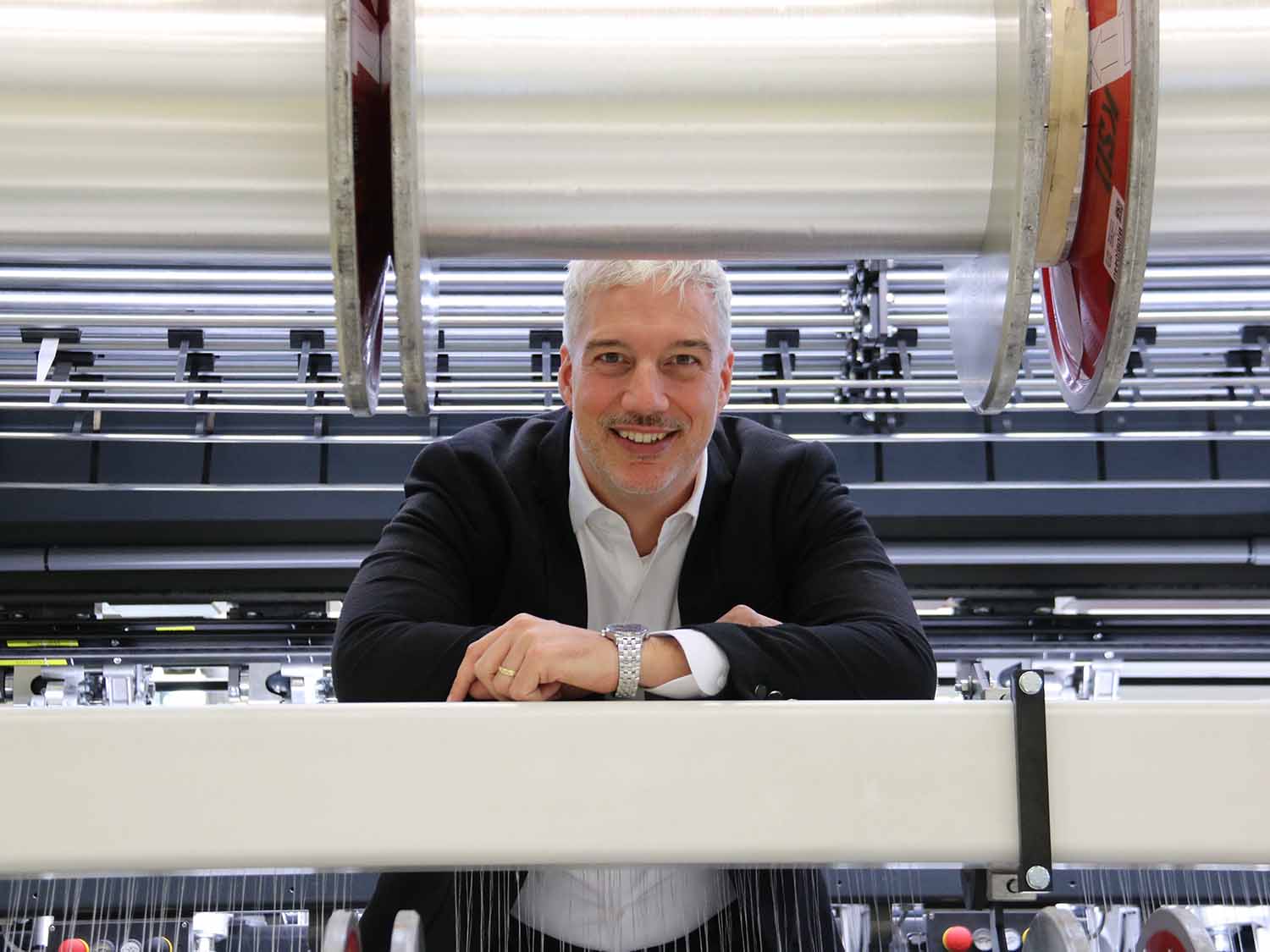
In this episode of The WTiN Podcast, we talk to Scott Mellin, CEO of LifeLabs.
LifeLabs is a materials science company founded by Professor Yi Cui, director of Stanford University’s advanced materials laboratory, and Meng Sui, a chemist and CEO of clean-energy foundry EEnotech. The company has developed textile technologies to reduce energy consumption with the aim to shift the way that we think about fabric and its environmental impact.
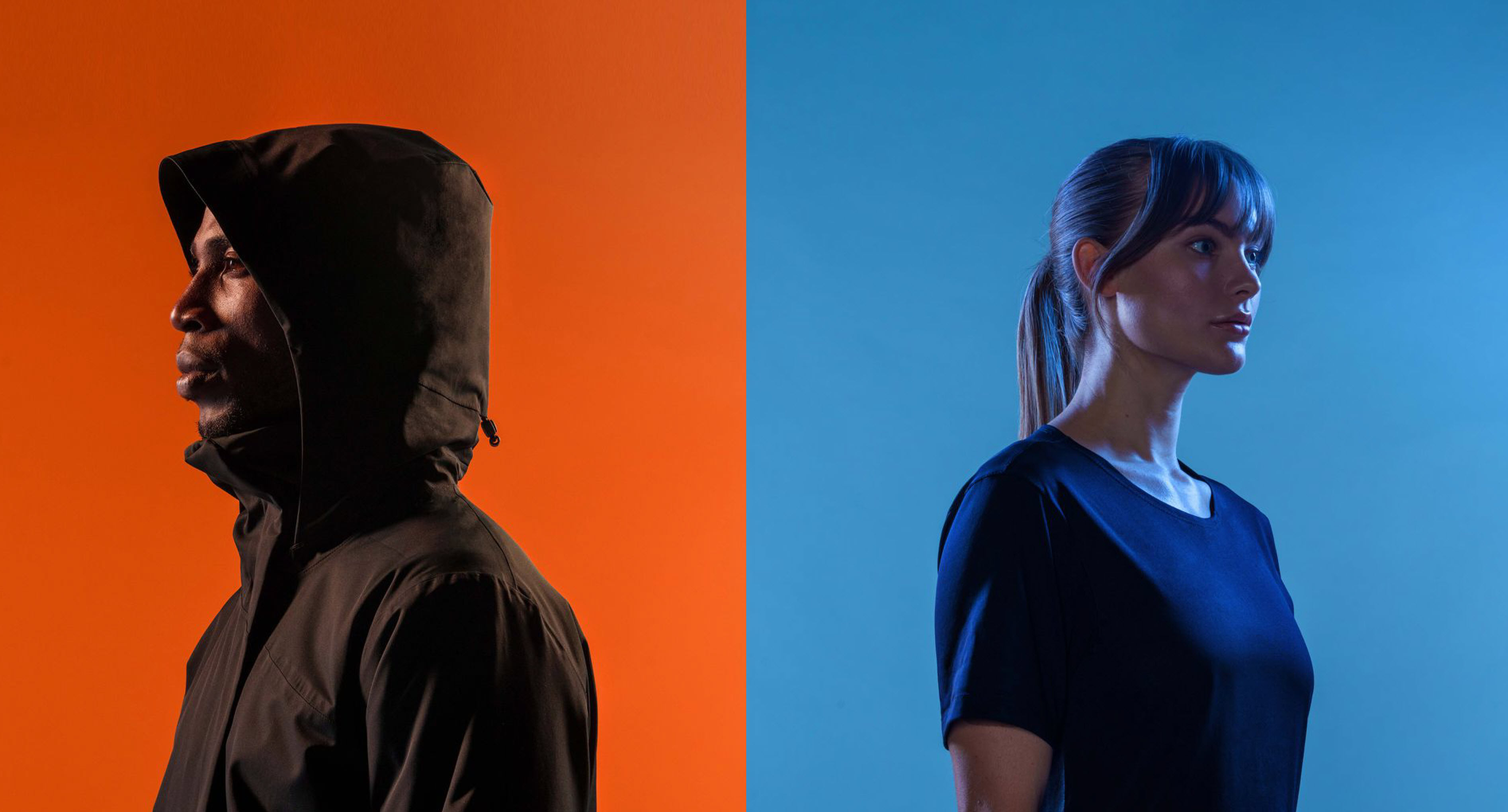
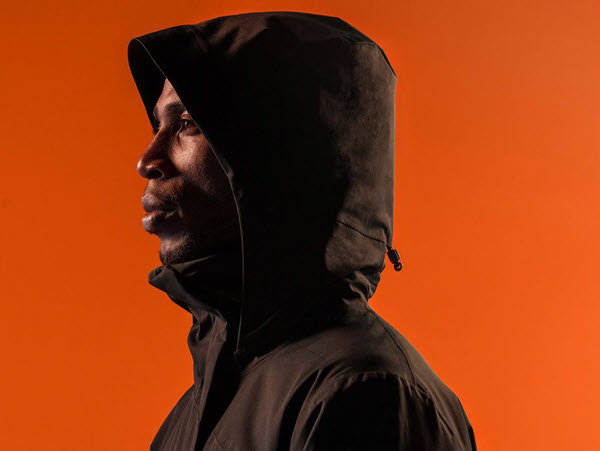
In this podcast, Mellin talks about the company’s two thermoregulating technologies – WarmLife and CoolLife – which he describes as a democratic solution to climate change. In fact, Mellin says that wearing these products 365 days per year can help one person to save 1,000 lbs of carbon in that time. Elsewhere, he talks about LifeLabs’s holistic approach to sustainability, his opinion on the Higg MSI and how the company’s technology could be applied to automotive, upholstery and sportswear in future.
Transcript
This transcription has been AI generated and therefore may have some inaccuracies.
Ep. 82: Thermoregulating clothing: A democratic solution to climate change
In this episode of The WTiN Podcast, we talk to Scott Mellin, CEO of LifeLabs.
Speaker 1: WTiN
Speaker 2: Scott Mellin
Speaker 1
Hello, my name is Jessica Owen, and I'm part of the team here at WTiN. And this is the WTiN podcast. Join me, my colleagues and our guests every month as we talk about new and interesting innovations from across the textile and apparel industry. Whether it's talking to sustainable startups quizzing experts on the latest research and development, or chatting to companies about their most recent products, you can rest assured that the WTiN podcast will connect you with everything you need to know. In this episode, we talked to Scott Mellin, who is the CEO of LifeLabs, Scott talks about the company's thermo regulating textile Technologies, a new concept called New sustainability, and how he believes that LifeLabs could extend to other applications to make it a democratic solution to climate change. Welcome to the WTiN podcast Scott, thank you so much for joining me today. And how are you?
Speaker 2
I'm great, Jess, what a pleasure.
Speaker 1
Good and how's 2022 treating you so far? Here you're up in the mountains been hiding away?
Speaker 2
Well, 2022 has been a been a little bit of a mixed bag. January was amazing. We had beautiful snow conditions here in my hometown of Aspen, Colorado, and spent a lot of time you know, launching into the into the new year, our mega warm jacket and seeing great traction and success with consumers. And then I got COVID February 6 way before I was supposed to go to Europe for for some meetings with some partners, and I've basically spent the month of February just recovering from COVID. So I'm happy to move into March and a fresh start. Yeah,
Speaker 1
yeah, the spring more sun. It's a good time of the year, in my opinion, my favourite, my favourite season. It's warming up a bit here. Exactly. Now, you've already mentioned one of your products there. But yeah, you're here today to talk about LifeLabs, which is for anyone who's not familiar with you guys, a new material science company that is focusing on thermo regulating clothes. And the idea from what I understand is, is to stop us reaching for the thermostat, which in turn should reduce our energy consumption. And you know, our overall climate change impact. So first question, then, who came up with this idea? And I mean, where did it all begin?
Speaker 2
Well, the original story is a little bit lengthy, but I think it'll be interesting for your listeners. So in in 2014, the US Environmental Protection Agency released the longitudinal study called the National Human activity pattern survey. And it basically codifies how speed how people spend their time. And what it identified is that, as humans, we spend 87% of our life indoors, 7%, outdoors, and 6% commuting, which is kind of tragic in and of itself. But I personally have a different relationship with the outdoors. And I know a lot of people do. But in essence, that study garnered a reaction from the US Department of Energy. And the US Department of Energy has a what is essentially an angel investing arm called ARPA E. And the Advanced Research Projects Agency reached out to a variety of of scientists and universities around the world to ask them to study solutions to reduce humans dependence on thermostats, or H vac systems more more eloquently. And the rationale in that study was, hey, we have a we have a pretty, you know, loose framework of electrical grid infrastructure here in the US and beyond. And if we're going to see an increase in in, you know, climate change and destabilisation of of environments, and we're going to have increased use of electricity, particularly through heating and cooling of ambient air. What are solutions that could reduce humans reliance on on electricity. And my partner, Dr. Yeesh, Wei was was awarded a grant from ARPA E to look at solutions. And and he and his 87 PhD students at Stanford. Came up with these ideas around thermoregulating Textile else in the notion is pretty simple. Heating and cooling ambient air is pretty inefficient because they're big volumes takes a tonne of electricity. But we all wear clothes every day. And what if we could do the work of thermal regulation through clothing that would make you make you more comfortable at the skin level, and reduce your reliance on the thermostat. And so our technologies today fast forward, actually help you turn down your thermostat, two degrees C in the winter, and let it ride two degrees C higher in the summer. So you're using less air conditioning, and less heating. And they keep you just as warm and just as cool as as heating or cooling the air. And then we're honestly finding all these like corollary benefits. As we've commercialised, these original concepts. Again, those those original concepts were papered in 2016. And so there was a lot of background work that took place between 2016 and our commercial launch and 2021, obviously, at the fibre level, at the polymer level at the, at the yarn spinning level, and then ultimately to the fabric level. But you know, what we're seeing, as well as is all these performance benefits. So it's not singularly around? How can I utilise these textiles to manage my personal energy consumption and lower my personal carbon footprint? There's actually glorious benefits in the mountains as we're defining now in our in our kind of look forward into skiing and snowboarding, and all these ancillary, yet really important lifestyle activities for our consumers. So it's been a pretty fascinating journey since the origin story in 2014.
Speaker 1
Yeah, sounds it and I mean, I'll come on to the materials and products later. But I mean, how did you actually end up joining the team? Because from what I understand you actually quite integral with the North Face and some of their technologies beforehand?
Speaker 2
Yeah, correct. I was the the global general manager of mountain sports at the north face for about five years. And in that role at I ran a strategy globally called global leadership through innovation. And my focal point there was, as a big, you know, multibillion dollar consumer brand. I really felt like we needed to step out of branded technologies, Gore, Tex Primaloft, polar Tex, you know, for polar tech, excuse me, you kind of name it, which is kind of commodified the outdoor industry, and we wanted to stand up our own technologies. And so the first product classification we looked at was waterproof, breathable, and how can we make a better product for for athletes, and breathability became a focal point. And so we developed a product called Future light, which frankly revolutionised the waterproof breathable category. Then we added down construction techniques, we added fleece, we have ventured into footwear, backpacks, tents, sleeping bags, all manner of products. And then in response to your question, I, I got a call from a headhunter. And the headhunter said, you seem to be the only person in the world that understands nanotechnology and apparel. And I corrected him I said, and others for and I work with the other three. And so it actually led to an introduction to Dr. Yi, who he was representing. And we had great chemistry and I was really intrigued by the science that went into Dr. Hughes original work. And, and he was kind of stuck. He didn't really see a path to commercialization from his original work and, and while there were prototype headers, and there was some prototype, you know, finished tees and jackets. They weren't really consumer ready, and I'm highly conceptual. And and I could see the path to building a brand, building a product line and building a consumer for these technologies. So I made a decision to step out of the north office and too, to make a huge commitment to standing up LifeLabs from scratch. And what I've found in my career justice is that you get very few opportunities to do something from zero. And when you get to do that, in combination with really advanced science and deep intellectual property, across a portfolio of patents, it's kind of a once in a lifetime opportunity to build a brand from from that point of view. And so that's kind of the origin story in and that was a little less than a year ago, I started in on April 5 of 2021.
Speaker 1
I mean, as you say, yeah, it's quite an opportunity. And it's cool as the brands like the North Face and Oh, Nike and big ones like that. Are you right? I guess. I mean, get don't get me wrong, I'd never worked in a company like that. But I imagine you are somewhat a cog in a wheel. Whereas you can put your mark on something, if you're starting it from scratch, and you it's like, your baby can kind of mould it into what you want. And I'm imagining that's probably that's probably what you guys are doing. So I mean, life lab, then, yeah, it's split into two avenues from what I understand you've got, like the clothes that keep you warm, and then the clothes that keep you cool. So starting with, I think it's warm life, then can you tell me a bit about the products and how they work?
Speaker 2
Exactly, yes, certainly. Both the tech both of the technologies, warm life and cool life. Work in the in the theory of managing infrared radiation. You and I and all of your listeners, were kind of like 100 watt light bulbs, we're constantly emitting infrared radiation and heat. And the theories that that Dr. Yi, stood up were really around the management of IR and heat. And so warm life and specific is reflecting all of your heat in your IR back to you. And that simple notion was a was a really complex build. So in essence, we take in our brand, we take by choice 100% recycled polyester shell fabric, we laminate that with a biobased nano spun pu membrane, and the membrane creates a waterproof breathable layer. And then that membrane that that biobased pu nano membrane is then sputter coated with a 50 nanometer thick layer of recycled aluminium. And at 50 nanometers in dimension, the aluminium reflects 100% of your iron heat back to you. But it does not change either the weight of the product or the CFM or the CFM or air permeability. Nor does it modify the MTTR or the waterproofing of the product. And so that took a tonne of time to develop the techniques to get to the thinness of the recycled layer. And I'll just put that into kind of a visual language for your for your listeners. So 50 nanometers of recycled aluminium across a men's medium jacket or 2.2 yards of fabric is about half the dimension of a paperclip. It's it's very, very small. And that's really the trick with with warm life. The benefits of that are because of the efficiency of the reflectivity, we can decrease the amount of insulation by 30 to 60% to keep you just as warm as a competing jacket, which is massive because it decreases the amount of raw goods used in the product. It decreases cost, it creates more accessibility to products based on lower price points, which means more consumers can access them. And then fundamentally, they're more wearable, you know they're they're not bulky, they're not heavy, they're more packable. And so you can you can imagine from my opening salvo where we can take this so so right now if you go to Life Labs Dot Design, you're gonna see essentially street based urban product. But we're moving into into sport because of the high efficacy and efficiency of of this technique and how it can translate into sport specific mountain specific products.
Speaker 1
Yeah, I mean, I can totally see that I was watching the Winter Olympics a couple of weeks ago, and I was watching a specifically I can't remember the exact name of the events but snowboard is doing flips and all sorts in the air and they're wearing these bulky trousers and bulky jackets and I just thought I would want to be a slimline as possible and feel as free as possible if I was going to take on something like that. And I can totally see how LifeLabs could fit in with something like that.
Speaker 2
Yeah, that's that's actually a good metaphor just because you know, the superpipe event that the Olympics were was very windy as was as was the ski superpipe event. And it's amazing how much time the athletes spend with their with their snowboard and their skis, you know, to optimise minimum friction so that they can go fast in the pipe and, you know, get as much air and amplitude out of the pipe as possible. Yet based on culture, they were these giant baggy outfits. And so there's there's the style component of freeride and freeski. And then and then there's, you know, the reality of culture. What I like to think is that, you know, we kind of blur the lines of really, really efficient materialisation installation. And we can kind of build whatever the consumer needs. And so whether it's, you know, very streamlined, very tight fitting silhouettes, or baggy silhouettes, or anything in between the efficiency of, of warm life, gives us a huge amount of variations in terms of how we build product in the future,
Speaker 1
I can imagine. And what about cool life, then? Is that a similar technology? Or is this something completely different?
Speaker 2
It's totally different. So if if you think about warm life as a finishing technique, think about cool life as a yarn based technique. So we're the first company to commercialise low density polyethylene into yarn, and then knit and weave that into fabrics. The reason that that low density polyethylene is so interesting is that it has really two inherent qualities. One is that it allows for 100% of the IR that you're generating the infrared radiation you're generating to escape through the fabric, it's completely transmissive. The second is that it's also thermally conductive, and it actually pulls heat off of your skin. Which means that you're actually cooler in a cool life t shirt than you are naked. Which doesn't make a lot of sense, right until you wear it. And I'll tell you a little bit of story about cool life. So when when we were first experimenting with with different T silhouettes and different combinations of PE I started wearing them to bed at night, and because I'm a hot sleeper, so as my wife, and then I gave some prototypes to my wife and she said, You know what, this is the best night's sleep I've ever had. And so our head of supply chain, codename Yoda, Yoda, reached out to a couple of his friends. And we made sheet sets. And in combination with our warm life teas, like it literally became the best night's sleep I've ever had. And, and that's because cooling cool night's sleep is a better night's sleep. And we've done a bunch of research we've done sleep scoring with with aura rings. And it's it's my statements are scientifically based, like you get a better night's sleep in our sleep wearing our bedding. And so I'm I'm super excited about cool life, not just from the perspective of sleep, but also from from daily wear. So, as I'm talking to you right now, I'm actually wearing a cool F T. I just came in from a morning ski mountaineering trip. And I wear the same T on on the ski mountaineering trip. And what's fascinating is that I sweat less when I'm going uphill. And so we've kind of been trained in our industry to think about base layer or next to skin materials as being either wicking or moisture management or insulating. So when we think about next to skin in the winter, it's like long underwear. But actually what we're finding is the opposite that actually, a cooler skin is producing less sweat and your overall more comfortable in activity. So whether you're on the mountain, in the office, at your dinner table or doing a podcast or sleeping, it's actually just more comfortable because you're more efficient when you're cooler. Interesting.
Speaker 1
All right. I mean, I read on your website as well, that you're planning to change the materials to get recycled polyethylene and even green polyethylene one day as well. I mean, is that possible? I mean, how far away are you from achieving that next step,
Speaker 2
we're very close to recycled, I'm not going to put a specific season but I would say I'd be disappointed if we're not there. At spring 23. We're in spring 22. season right now. biobased is a little bit further out. But we have a line of sight on biobased, still LDPE as well. And I'll add another layer to to LDPE. You're familiar with the the HC database. And within the HC database, the manufacturing Sustainability Index, low density polyethylene has the lowest MSI score of any natural or synthetic material in the world today. And so when when we look at not only the performance benefits, the sleep benefits, the comfort benefits of cool life. We're also challenging conventional norms around sustainability. Because you cannot make a product that has a lower MSI score than than LDPE today. And we think that's, you know, a new dimension and sustainability. Lowering your thermostat, more comfortable, lowest MSI score. And we're pioneering commercialization of compostable packaging, and all of our materials. So no hang tags. Every, all the product information is embedded in the centre, back neck label and a QR code, which we patented. And all of our individual product and shipping packaging is compostable. So we really wanted to honour the work of Stanford and Dr. Yee in really pushed dimensionally in a in a new realm of sustainability. And I believe we're doing that.
Speaker 1
Now. I mean, it sounds it. I mean, a lot of these companies, well, a lot of companies have sort of an element of sustainability here and there. But I do think if you're going to champion something like that, you've kind of got to try your best in every aspect of the business. And well, that sounds like what you're doing.
Speaker 2
Well, I totally, I totally agree. And, you know, it comes back to one of your earlier questions when when you work in existing companies, particularly big companies with incumbent supply chains and behaviours and processes. It's very hard to change things from old way think polybag and desiccant pack to compostable packaging, that's, that's really hard. It's hard to change your yarn supply chain to 100% recycled, it's hard to change existing brand partners from Virgin to recycled. And so what we have found is that when we started with this blank piece of paper at LifeLabs, we didn't have any of those incumbent issues, we weren't trying to work through political systems to get things to change, we just did them. And I think when you stand a brand up around this notion of sustainability, or as we call it, new sustainability, you have a responsibility, you know, not only to to honour the founding ideas, but to push them even further. And so if the founding idea was you know, reducing your personal energy consumption and lowering your your AC H fac usage, we've just taken that dimensionally into all these other realms that I think present a really complete sustainability package to the consumer.
Speaker 1
Yeah, it sounds like such a new way of thinking and doing things. And as you say, it's quite a luxury. I think being able to start from scratch and do it exactly how you want. There's a lot of red tape and bureaucracy from speaking to other well established companies. Like I think a lot of companies like I don't know, I'm gonna pick them out here but say h&m, I think a lot of them want to be more sustainable, but it's just so hard to just get everything through and do it like when you're just everything's so ingrained in the processes. So yeah, I guess it is a bit of a luxury where you are right now being able to do this.
Speaker 2
It is and I hope that our work you know, is seen by the larger apparel industry, and that people learn from it. It's not impossible, like if you if you put your mind to it, you can create massive change and if If this entire industry was working with the same toolkit that we are, we would probably have, you know, a completely different perception in the consumers mind around, what does fashion contribute to the world? And what is its impact on the environment? You know, I wish that the rest of my contemporaries thought the way that we did, but there are a few out there, there definitely are a few
Speaker 1
sort of just on that you mentioned that you sort of go by the materials index for for everything. I mean, what I'm assuming you approve of it, but I mean, what are your opinions? Because I follow a few people on LinkedIn, and from speaking to people in the industry, and there's quite a bit of controversy around it. So I was wondering what you thought about it and how it compares materials against each other?
Speaker 2
Well, it's the one source of truth we have as an industry, and in absence of any kind of governmental regulation. That that one source of truth, while flawed in many aspects, is the is the only litmus test that we have as an industry. And yes, is contributor based and no, it isn't a totally comprehensive end to end solution. But again, I'll reiterate it is the one source of truth, we have an industry.
Speaker 1
Now, I want you to pick your brains a bit more about this concept you've just mentioned earlier called New sustainability. What do you mean by that? Exactly?
Speaker 2
Well, if you know, contemporary sustainability is defined by you know, recycled polyester, recycled nylon, potentially recycled insulation. That's what I would call sustainability. And that's what, you know, 90% of brands that have any kind of sustainability claim, you know, use to support that. Maybe there's a blue sign certification in there and architects certification, but you know, those are choices that the factory is making, not not necessarily the brand. And so we want it to take sustainability a couple layers further. One is in our packaging, which I mentioned before, and being fully compostable. Second is no hangtags. So we don't have paper waste. We don't have nylon carriers. Because we're DTC brands. So we're not trying to compete on a round or a rack with other wholesale brands. And then we we really wanted to push on our materialisation. And so the threshold for us has been a minimum of 85% recycled or biobased content per style. And, right now, our lowest achieving product is 87%. And our highest achieving product is 97%. And it's the niggly little bits that that get you like the, like the aluminium ends of the zippers. You know, it's these little tiny niggly bits that, you know, we still have to work through. But in general, when you look across our product line, while not extensive to that of, you know, a major brand, you know, we're in the 87 to 97% recycled or bio based range. And I think that's quite an achievement in six months.
Speaker 1
That's very impressive. Yeah, definitely. Gosh. And I mean, I was also reading on your website that this concept. Again, it goes back to the whole having a significant impact on energy consumption and climate change, as we've mentioned. I mean, do you have any statistics on how significant an impact you can actually make by just wearing thermoregulating clothing?
Speaker 2
Well, since we're all on a work from home environment, you can measure it in terms of your electric bills, right if you're completely electric or gas reliant in terms of heat. But we've done the calculations and so if you were wearing our product 365 days a year, you would be able to save roughly 1000 pounds of carbon per year, or half a tonne. And so I like to talk through the lens just as we think we're the most democratic solution to participating in reducing your personal carbon footprint and participating in reversing the effects of climate change. Electric cars are expensive solar roofs are expensive. I don't know anybody that has a windmill. And yet these three kind of dominant narratives and in global energy transformation, really don't work for a lot of people. A you may not even own a car if you live in a big city you probably don't own your roof, that's a landlord. And, again, solar is something that is really out of reach. And so how do you actually participate? We think it's your apparel. And so if if I say you're going to save 1000 pounds of carbon a year, that's obviously dependent on on your energy utilisation and where you live and how much AC you're used versus how much he is. But on a rounded basis, it's a half a tonne a year. And I think that everybody can get their head around, if I'm going to make a choice and tees are a choice and a jacket. And these products allow me to participate. We again think that's the most democratic way for people to get engaged with, with climate change.
Speaker 1
Yeah, definitely. And I mean, even aside from climate change, I think it's gonna save people money as well. I mean, I was watching the news here last night. And the BBC said that people in the UK might be spending something like 3000 pounds a year on energy bills for several reasons, one of them being Russia's invasion in the Ukraine. So it's like all these little things. Now, I mean, this, this could be the solution to so many things, which I don't know, sounds great to me.
Speaker 2
Yeah, indeed, I think on a on a personal level, we're all witnessing, you know, a huge shift in the energy markets. And the cost to us as consumers. And you know, any way that we can spend less on on energy and use less energy is positive. And I think, too, that, you know, apparel that works for you, and offers all these different dimensions, is also really what we should expect as consumers from from our apparel in the future. It shouldn't just be about fashion, it shouldn't just be about recycled this or that it should be around products that deliver really comprehensive benefit systems to exactly
Speaker 1
and then that feeds into the hole. If a product does more for you than just looks good, you're more likely to keep it for longer. And just by keeping a product, I think it's a few months longer, it's added it has another sustainable impact in all these other things as well. So yeah, it really does sound like a good solution and well rounded solution.
Speaker 2
Agreed, agreed. And now we just need to close the world in the solution.
Speaker 1
Yes, a bit of a challenge when we're near 8 billion people, but you know, there's people in the world like yourself who are willing to try so that's what we need.
Speaker 2
Well, that was, that was always the gravity and joining this, this company, or building this company was you don't get that many opportunities in life to start from scratch with was such a novel intellectual property. And there's very few things that I've touched in my life. Well, I've touched a tonne of cool things that offer this kind of promise for humanity.
Speaker 1
Now, I mean, I'm just concerned about time, but I want to ask you about if there are any other products that you're introducing next? Or are there even other sort of avenues aside from warm life and call life that you kind of want to explore in future?
Speaker 2
Yeah, I mean, when we when we think about product classifications, you know, there's, there's all different manner of of product that we can integrate our technologies into, you can start at headwear, handwear, and footwear, as examples. And then there's other categories of consumables, for instance, automotive interiors. And so if you think about heating and cooling, the interiors of electric cars and the reduction of age factor use by the driver, that's going to lengthen the battery time, or the range of the vehicle, which right now is the single drop, single biggest drawback to consumption of electric vehicles is range anxiety from the consumer. So if if we can help extend the range of the car by 10%, through greenhouse thermal regulation, that's that's a huge impact to that industry. Secondly, think about your house. Thermal reflecting drapery cooling, fabric, sun on your sofa for summertime. These aren't just pie in the sky ideas. These are things that we're prototyping right now because we believe that the extensibility of these technologies is really broad. And right now, when you when you look at our current classification, architecture, and you look at our silhouettes, we're kind of addressing the Western world. And we haven't dabbled in the Middle East and thobes into Jeebs. You know, traditional silhouettes for the Middle East where our cool fit Risk could have a massive impact in terms of quality of life. You know, coming from coming from my background where I focused a lot on winter and insulated goods and climbers and skiers and snowboarders, you know, it's so fun to have a suite of technology that's actually globally applicable. were as important company in, in the polar zones as we are in the equatorial zone. And, and so I think, you know, in summation, it kind of comes back to our purpose. We want to allow humans globally, to live more comfortably and use less energy. And that's our reflecting point every day when we think about where we can take this technology, where we can take these fabrics. It's it's not just clothing. Wow,
Speaker 1
it sounds like you've got plenty of ideas to keep you in business for quite some time. Going to be a busy, busy team.
Speaker 2
We just can't go fast enough, I guess is the answer to that. Yeah.
Speaker 1
Yeah. Well, I mean, the last question I wanted to ask you then, which I've asked several people on this podcast, because I mean, everyone I speak to is so knowledgeable these days about sustainability and things like that. And it's always interesting to get their opinion on where they think the wider industry is at at the moment. So do you think the textile and apparel industry is doing enough to be more environmentally sustainable? Or? Or what could it possibly do better do more of?
Speaker 2
Well, I think it fundamentally comes down to choices. Do I think the larger apparel industry is doing enough? No. Are they telling consumers that they are? Sure. And in the absence of environmental regulations, or even marketing regulations, people can say whatever they want, I find it disgusting personally. But it just comes down to choices just you can make these choices and big brands or small to flip your supply chain into more responsible material sources, more responsible packaging solutions, more responsible freight solutions. These are just choices. Yes, they come at the expense of gross margin. Yes, they complicate income and supply chains. But I believe, as an industry, we have to always think responsibly, we have to always think about the planet always think about the consumer. And ultimately, owners and shareholders will reward us for making the right choices, not the old choices.
Speaker 1
Well, a lot to think about there. Yes. I mean, there's so many aspects to it all, as you've pointed out, but yeah, a lot to think about and consider. Well, I got I am sad to say that we're out of time, but I've really enjoyed having you on the on the podcast today. I learned a lot and I think what you're doing is commendable. So thank you so much for telling us all about Life Labs, and I wish you and the team all the best going forward. Thank you.
Speaker 2
Well, Jessica was my pleasure and wishing you all the best as well.