
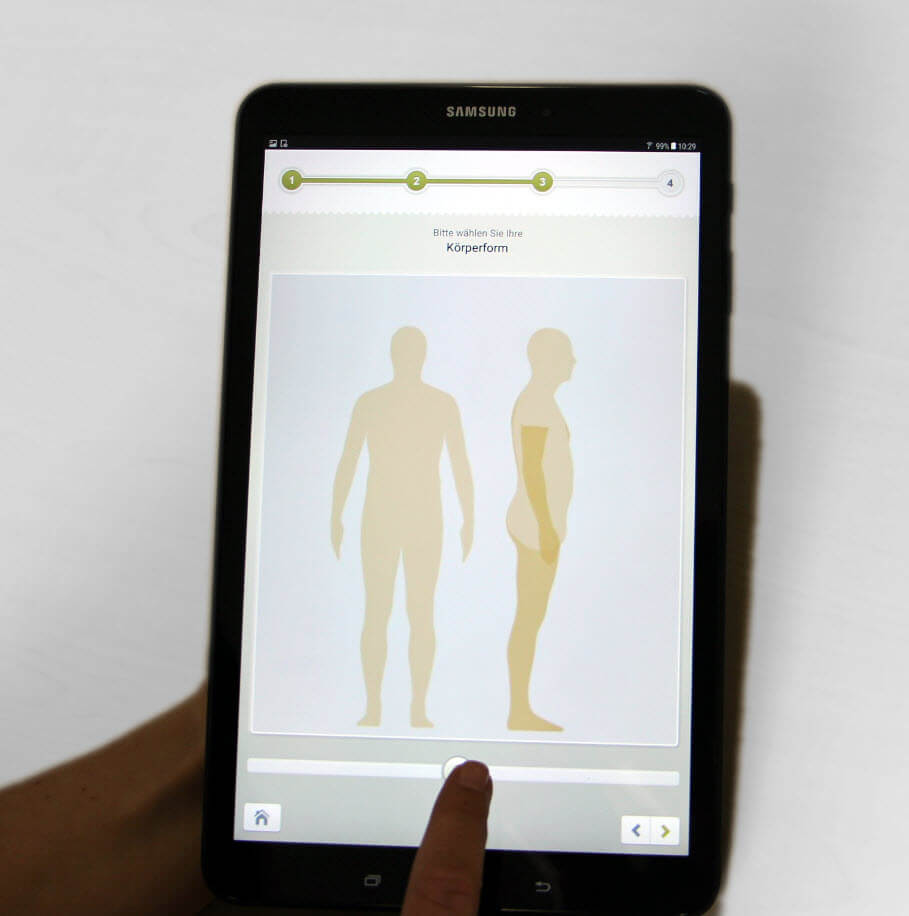
If you shop online, you often order several sizes or articles to choose from – and returns are guaranteed. The transport to and from the customer and the processing – or even partial destruction – of the garments, pollute the environment. As a result, Avalution, Assyst and DITF Denkendorf are currently developing a solution based on the world’s largest database of human body scans. The joint research project aims to significantly improve sizing and fitting predictions in online shopping with the goal to reduce return rates. The research project is funded by the Deutsche Bundesstiftung Umwelt (German Federal Foundation for the Environment).
“We want to start at the beginning of the ordering process and develop a solution that allows customers to avoid ordering different sizes for trial fitting,” says Michael Stöhr, managing director of Avalution. “The reduction of these 100% returns alone can considerably reduce the load on the environment.” The software solution will be based on Avalution’s database of human body scans, which is said to be the largest in the world.
People who buy clothing online often order several sizes to choose from and it’s therefore guaranteed that some of the garments will be returned. If nothing fits at all, everything is returned – and according to a study by the EHI Retail Institute, the rate of returns is 25-50%, depending on the product group. It is estimated that 86% of online retail returns are due to sizing and fitting issues. And, these issues are significantly higher than ‘I don’t like the garment’ returns, which sit at 68%.
Avalution therefore provides the customer with an individualised recommendation for the right size of garment when they are ordering clothing online. The customer doesn’t have to take his or her own measurements and this is particularly customer-friendly. “We only ask four simple questions – and we use the answers to create a statistical avatar that the customer can alter and adapt even more,” says Stöhr.
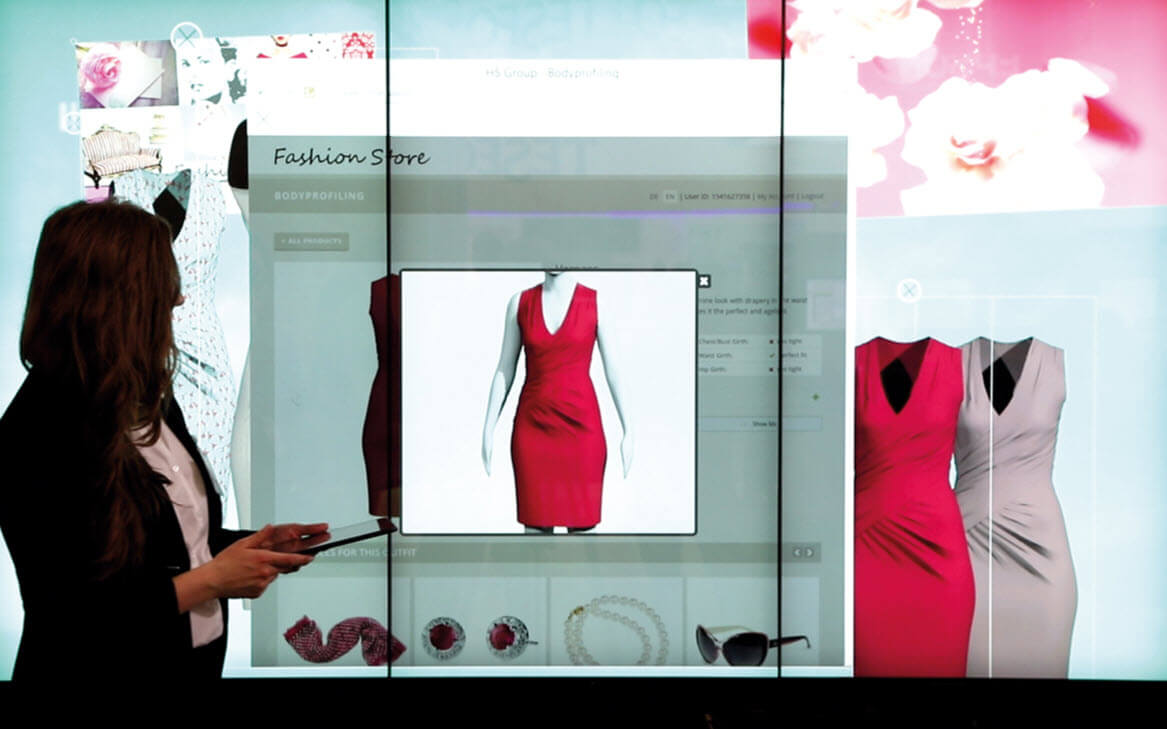
Synergies that arise from the simulation of clothing in 3D will be exploited thanks to the cooperation with Assyst in the project. The advantage of simulation with 3D Vidya is that the digital design is based on a real cut, so the clothing simulation contains valuable information that can be used for a digital fitting.
A sustainability assessment is also being developed at the DITF Denkendorf as part of the project. It will show customers how their ordering behaviour is going to affect the environment before they complete their order. The customer can then see at a glance that ordering several sizes for selection is much more damaging to the environment than choosing just one size.
“We want to merge the expertise of Avalution, Assyst and the DITF to create a completely new shopping experience for customers in online shops,” adds Stöhr. “They’ll be able to find a perfectly-fitting product much faster. At the same time, the effort involved in returning goods is reduced, lightening the load on the environment – and that’s also an important further development for e-commerce.”
The project has a duration of two years and will end on 15 July 2020.