
It is argued that digital textile printing has become a technology more suited to Western economies, where manufacturers are looking to avoid high labour and logistics costs. However, if the technology is going to seriously challenge the on-going demand for screen-printed textiles, it will need to expand in the East.
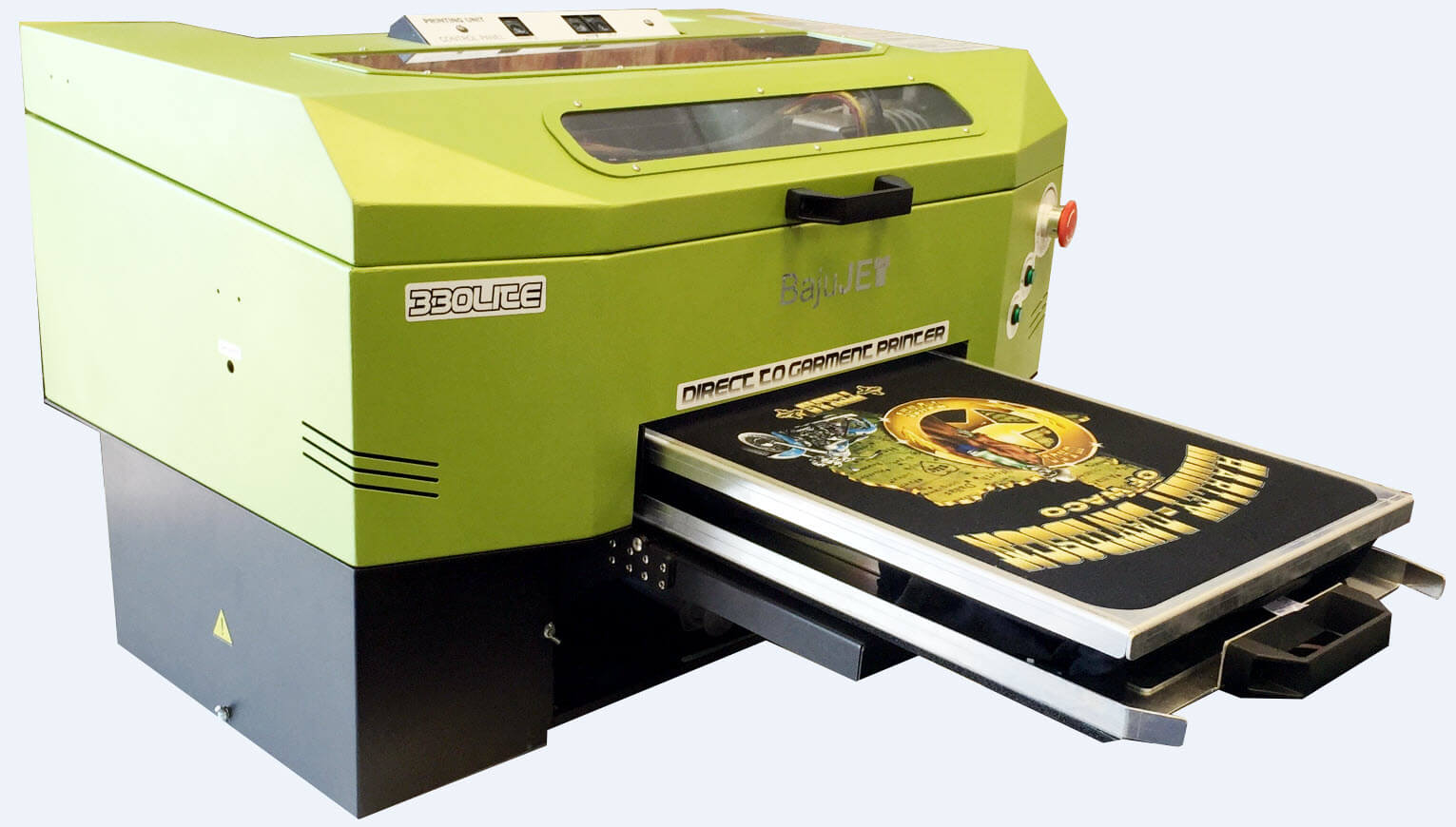
The BajuJET lite launched in 2014
One region that is home to several emerging markets is South-East Asia. Within that, Malaysia is witnessing the development of digital textile printing first hand. In the country, manufacturers are slowly turning to digital solutions in order to compete with the fast turnaround times achieved by well-established textile producers in the West. Additionally, due to the fact that screen printing has a poor sustainability record, Malaysia deems digital to be a suitable alternative to combat growing consumer concern and awareness in the West.
The growing importance of digital printing technology in Malaysia, and the broader region, has resulted in a number of OEM start-ups. One such company is Kuala Lumpur-based Hongjet, which was established in 2010 and specialises in DTG machinery. Originally, the core of the business was selling heat-transfer printing machines and supplies, as well as distributing equipment for Neenah Paper, HIX and Epson.
Since 2012, courtesy of digital’s growing demand, Andy Yew, founder and managing director of HongJet, says the company has launched one digital textile solution every two years. He says: “Following some deep R&D, which took place behind the scenes of our trading business, we launched our first product, which was a multiple-substrate label printer called LabelJET. We launched our first DTG printer called BajuJET Lite, which was then followed in 2016 by the unveiling of SolvieJET, our first desktop eco-solvent printer.”
However, HongJet made a signal of intent when it launched the BajuJET LX earlier in the year, its second low-volume DTG printer. The BajuJET Lite and LX machines have a maximum 13-inch print width and together the two machines are giving HongJet a solid reputation for DTG print technology in the region. Consequently, the OEM has revealed plans to launch an industrial-scale DTG printer in 2019.
Hongjet’s machines come equipped with just one print head which is based on the Epson DX7. Yew says: “BajuJET LX is equipped with four channels of CMYK ink and four channels of white ink. The textile ink is called RapidCURA 2 and is made in Japan. It is a CMYK ink that is specially formulated to last on light-coloured cotton fabric without pre-treatment. The ink is also compatible with metallic foil and achieves good washability, too.
“The white ink is very opaque and works well with CMYK ink during dark-coloured T-shirt printing,” adds Yew. “It’s important to note that CMYK ink does not migrate during the curing process, which is common with heat press, whereas other CMYK ink brands tend to mix into white ink when pressed with high heat and high pressure.”
Besides printers, HongJet has also created PreTcool, a pre-treatment machine for fabric and T-shirts which can cover an area of 18x22 inch, according to Yew. Like Hongjet’s two DTG printers, PreTcool is only suitable for low-volume production.
Getting the balance right when manufacturing original equipment is tricky, says Yew, but creating a solution which offers such high levels of versatility is the reason why Hongjet is focused on DTG technology. “The demand for multi-colour fine-detailed artwork printing is growing and DTG technology plays an important role in catering to those demands,” says Yew. “Another key point is that DTG’s main focus fabric is cotton, or cotton-polyester blends, which are the fabric of choice for most every-day garments.”
The fact that DTG doesn’t require minimums, coupled with the detail that textile pigment printing does not require pre-treatment and post washing, is appealing to the more environmentally-focused textile manufacturers. However, pigments - the only ink type currently available for DTG printing - are still in their infancy and problems with handfeel, clogging in the print heads, a small colour gamut and poor rubfastness still persist; the latter, in part, due to a number of poor-quality binders available on the market. This is deterring a significant number of textile manufacturers from investing in DTG solutions.
However, Yew believes the tide is turning. He says: “I have noticed a shift towards DTG recently in light of developments in ink formulations around the world. Ink is pivotal in all forms of inkjet printing and DTG is no exception. Pigment inks have progressed quickly in a short space of time and now they offer much better colour output and washfastness, both before and after curing. And, due to more competition in the market, pigment ink prices are steadily falling – by almost 50% in the past two years.
“Apart from ink performance, DTG printing is so much cleaner compared to traditional screen-printing methods and it consumes less energy than reactive dye ink printing, which involves pre-coatings, post-steaming and post-washing,” adds Yew. “Reactive dye inks are renowned for high-energy consumption so, if I had to put a time frame on when DTG will become the leading digital printing method, I’d say five years from now.”
He explains that the climate in South-East Asia – and also parts of the US, which is HongJet’s largest and most targeted export market – will aid the development of DTG printing across the two markets. Yew says: “Natural fibres, such as cotton or rayon, are much more comfortable to wear, especially in hot and humid weather and dye-sublimation printing is not optimised to print on natural fibre fabrics. Besides, DTG enables low-quantity prints in less time than what can be achieved through dye-sublimation, which requires longer setup time.
“Another advantage of DTG printing is the minimal workspace it requires,” he continues. “In contrast, dye-sublimation full printing will require much more space with more industrial-sized machinery like large-format heat presses.” This means that DTG printing manufacturers can save money on infrastructure costs by moving to smaller premises should they implement DTG technology and abandon the more established dye-sublimation printing method.
During the time in which HongJet has been manufacturing DTG machinery, Yew has reported growing demand for the technology in the country with installation numbers rising steadily. This was encouraging for Yew who has transformed HongJet while trusting that the DTG market would grow.
On the face of it, it would appear that Yew’s gamble paid off. He says: “Throughout the last four years, since we launched BajuJET Lite, we have installed almost 120 machines across Malaysia and another 30 units internationally. To put this into context, a DTG supplier which had started distributing an Australian-brand of DTG printer a few years prior to the launch of BajuJET Lite, has sold around a quarter of the units we have achieved. They struggled due to poor performing DTG inks at the time they started selling the machine. It’s not that they are bad distributors, because they have a successful track record in the embroidery sector.”
But, despite positive growth figures, the DTG sector is struggling to make a profound impact on the Malaysian textile industry, partly because the country relies on garment imports from neighbouring countries like Bangladesh, where textile labour costs are much lower, says Yew. This coupled with slow printing speeds means that DTG output is low.
HongJet is unlikely to challenge the likes of DTG specialist Kornit Digital, but its emergence in Malaysia is a sign of the future direction of the industry. With start-ups such as HongJet expanding their share of developing markets, leading OEMs could react accordingly. In order to maintain the ascendancy across the global DTG industry, well-established OEMs could make South-East Asia a focus, possibly resulting in speedier growth for the industry in the region.
It’s difficult to predict emerging markets, but analysts will know more following the launch of HongJet’s industrial-scale DTG printer, which is due to launch in the second quarter of 2019 ahead of ITMA Barcelona in the summer. At that point, the digital textile printing industry will know if DTG’s presence in South-East Asia is credible.


