Most children are toilet trained by the time they are five years old, but for children living with a disability, this takes a lot longer and many may need to rely on incontinence products well into their teens and adult life.
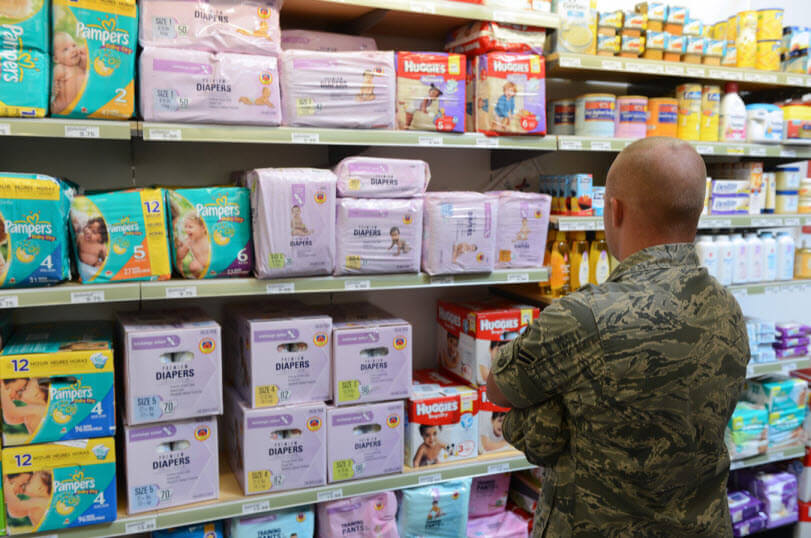
A huge gap in the market still remains for diapers that cater for the unique needs of children living with disabilities
There are diapers available for children with disabilities, but usually these need to be ordered online. This is not always convenient, as it would be much easier to find these products in the supermarket and add them to the weekly shop as most parents do. There are also issues surrounding design and comfortability that very few retailers have addressed.
But now, Comfees has partnered up with the National Down Syndrome Congress (NDSC) and the National Autism Association (NAA) to develop a survey that will help to understand how to meet the unique needs of children living with disabilities.
Comfees says it is committed to meeting consumers’ needs so they can enjoy lives of health, dignity and comfort. This includes creating products within the product line that help improve the quality of life for children with special needs.
In 2017, the company redesigned the Comfees Premium Diapers. During the redesign, in-depth market research was conducted and Comfees spoke with parents about their needs and used consumer insight to improve products.
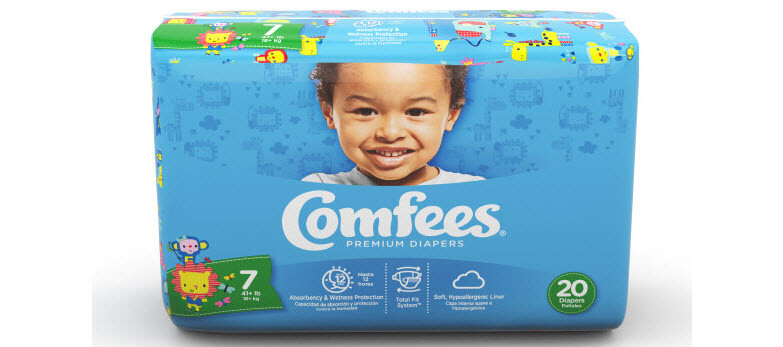
Comfees Premium Diapers are available up to size 7 for older children with pediatric incontinence
Comfees Premium Diapers have an ultra-absorbent core that provides up to 12 hours of leakage protection, and they have stretch fasteners and a shape that hugs a baby’s body for a secure fit. The diapers are also unique in that they are available up to size 7 for older children with paediatric incontinence. This size is not offered by many other brands. These diaper innovations were then incorporated into Comfees products without increasing the price, which was an important goal during the redesign.
Now, with this survey, the company wants to learn more about how to better address the needs of children living with disabilities. Because Comfees diapers are generally found through healthcare channels rather than in retail stores, this public survey will help to understand the best way to make Comfees diapers available to consumers.
Comfees partnerships
As part of Comfees partnership with the NDSC, it recently sponsored the NDSC Annual Convention in Dallas, US. That event welcomed more than 4,000 people, including caregivers, healthcare professionals, and people and families living with Down’s syndrome.
“I was proud to attend this event on behalf of Domtar,” says Margaret Maynard, Domtar Personal Care marketing associate. “Parents stopped by the Comfees booth to share their stories about the challenges of toilet training their children. Some kids are four or five when they’re out of diapers, and some are as old as 10. It is nice to know we have a product that will fit even the older children.”
Comfees also partnered with the National Autism Association and sponsored that organisation’s 2017 conference.
What’s currently available?
Most diaper brands that can be found in the supermarket, such as Pampers, do stock diapers up to a size 6+, however this size is often still not big enough for some children with disabilities.
To meet this market need, MoliCare, belonging to the Hartmann Group, has a diaper called MoliCare XS, which is an adult diaper that has been downsized for children that have outgrown the standard sizes. The shape of the design is more comfortable for older children and there are large super absorbent areas within the diaper, helping to further minimise leaks.
Similarly, Abena developed Abri-Form Junior diapers, specially designed to fill the gap between size 7 and adult extra small diapers. “You can think of them as size 8 diapers,” says Abena. To tackle the issue of the padding being too thick as children grow, the Abri-Form Junior has been designed with a narrower core, so is more comfortable between the legs.
Another diaper brand operating in this area is Libero, developed by the same company that produces TENA adult incontinence products. The diapers are said to be bigger than Pampers size 6 and feature very soft elastics, a comfortable textile-like top cover and excellent leak protection. They are printed with fun designs and resealable hook-and-loop tapes which means they can be refastened if necessary. The UK’s National Health Service (NHS) provides this particular diaper for children with special needs due to the extended sizing available.
Despite these product developments, a huge gap in the market still remains for diapers that cater for the unique needs of children living with disabilities.
In an article by UK disability charity Scope, asking supermarkets to stock diapers for disabled children, one mother said: “[Supermarkets] have the opportunity to take the lead and cater to a huge consumer group – one that is often disregarded. Please listen. This is about supply, demand and inclusion. It’s simple – there is a demand for this product and you can provide it.”
The Extra Costs Commission, which was published in 2016 by Scope, highlighted that there are around 12 million disabled people in the UK – the spending capacity of which equals to £212bn a year. The same report also mentioned that three quarters of disabled people have left a shop because of poor disability awareness. By allowing this to happen, businesses could be missing out on their share of £420m of revenue each week.
Although this information does not relate to diapers specifically, it shows just how big this untapped market is.