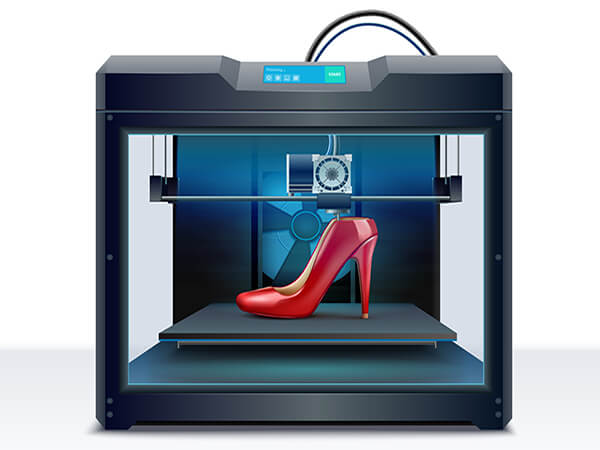
3D printing is breaking boundaries and proving to be a lucrative industry. According to Forbes, the technology has grown from a US$5bn to a US$30bn industry within the last nine years and has become essential within automotive, engineering, medical and educational sectors.
Within fashion, additive manufacturing technologies are already employed as part of printing farms – where brands utilise the machines to create personalised insoles and footwear – and big brands are leading the way towards the proliferation and standardisation of the technology. New Balance, for example, signed a licensing agreement with 3D personalised insole makers Superfeet in early 2020, which helped to bring the technology back to the fore of fashion industry conversation.
And increasingly, the tech is proving fruitful within textile and garment manufacturing too.
For example, TamiCare’s Cosyflex technology, an additive manufacturing process, is capable of printing a variety of products on-demand including T-shirts, shoe uppers and underwear from scratch, says CEO Tamar Giloh in an upcoming long-read feature for WTiN’s Textile 4.0 channel. Though market success of textile additive manufacturing has proven difficult, TamiCare seems to be raking in interest from around industry, although still seeks investment.
Meanwhile, University of Idaho’s senior instructor of apparel, textile and design, Lori Wahl, says the potential of 3D printing for fashion design has become unbound with regard to innovation in material features. Using desktop 3D printers, many fashion design students are testing the use of 3D-printed embellishments and the capabilities of printers in applying these features to textiles.
Wahl suggests getting to grips with this technology is key for young designers, since it will no doubt hold huge grip within the future industry: huge brands like Nike and Adidas already use 3D printing regularly in footwear production, so it could be assumed these household-name labels might one day be the first to adopt additive manufacturing tools for 3D printing on garments, too.
Overall, the technology holds potential to reinvent the fashion manufacturing wheel by, in theory, enabling the on-demand printing of personalised garment products while taking a hit at overproduction and production time. In the future, the technology may challenge traditional technologies like injection moulding for footwear and garment manufacturing machinery within the apparel sector.
In exploration of 3D printing, WTiN’s Textile 4.0 channel will publish a long-read report on the technology on 14 December 2020.