
The garment manufacturing industry is coming under increasing pressure to make its production methods more sustainable. With the debate surrounding microplastics intensifying, Andy Rhodes looks at what is being done.
The apparel segment is one of the most lucrative areas of the global textile industry. According to Statista, the top eight garment manufacturing nations produced a total of US$1,175m worth of apparel in 2015.
By 2025, Statista expects this figure to rise to US$1,975m, with nations such as China, India and Russia all doubling their contributions. In fact, a recent report published by the Institution of Mechanical Engineers suggests that annual growth in global demand for clothing is projected to increase from 1.5% in 2016 to between 3.5% and 4.5% by the end of 2018, with further growth expected beyond this.
However, as demand rises, so too does the environmental impact.
The garment manufacturing industry is widely known to use high amounts of water and chemicals, something which has drawn heavy criticism from campaigners. According to Mark Taylor, sustainability lecturer and research fellow, University of Leeds, UK, 9,000 litres of water are used in the full lifecycle of the average pair of jeans.
Meanwhile, the Institute of Mechanical Engineers states that in 2015, 79 billion m3 water, or 32 million Olympic-sized swimming pools, were used in the apparel manufacturing process worldwide. Perhaps more alarmingly, Refinery29 expects this to rise by 50% by 2030.
However, water consumption isn’t the only way the garment manufacturing industry is said to be harmful to the environment.
Micro plastics, large concern
The impact of microplastic pollution has been highlighted significantly in recent times, with the textile industry being earmarked as a major contributor to the problem. Some even suggest it ranks among the cosmetics industry and the soap industry in regard to microplastic pollution. Sustainability lecturer Taylor agrees.
Speaking at the recent Nonwovens Network Summer Seminar, held in Bradford, UK, on 26 June 2018, he spoke of the harm that clothing can cause the environment that consumers may not consider, even through everyday processes such as laundering.
“People are starting to point the finger at washing machines and tumble driers,” says Taylor. “People who fit industrial laundering equipment twice a year have to go and clear out all the lint in the ducting that has been caught. This is a problem.”
An International Union for Conservation of Nature (IUCN) report, meanwhile, suggests that 34.8% of releases of microplastics are due to the laundry of synthetic textiles. The Institution of Mechanical Engineers states that “one piece of clothing can release 700,000 fibres in a single wash,” while six million microfibres are released from the average 5 kg wash load of polyester fabrics.
Many of the environmental problems that stem from the apparel industry relate to our rivers, lakes and oceans. “Clearly microfibres found in the sea are coming from fabrics,” Taylor states, suggesting that they are even finding their way into the food we consume. “All UK mussels contain plastic and other contaminants, and that’s wild ones, not just farmed ones. 100% of them from different supermarkets were found to contain microplastics and other debris such as cotton and rayon.”
Pierre Wiertz, general manager of EDANA, the European association for the nonwovens and related industries, echoed Taylor’s concerns about microplastics entering the oceans. He stated that just 10 of the world’s rivers contribute 90% of the microplastics found in the ocean.
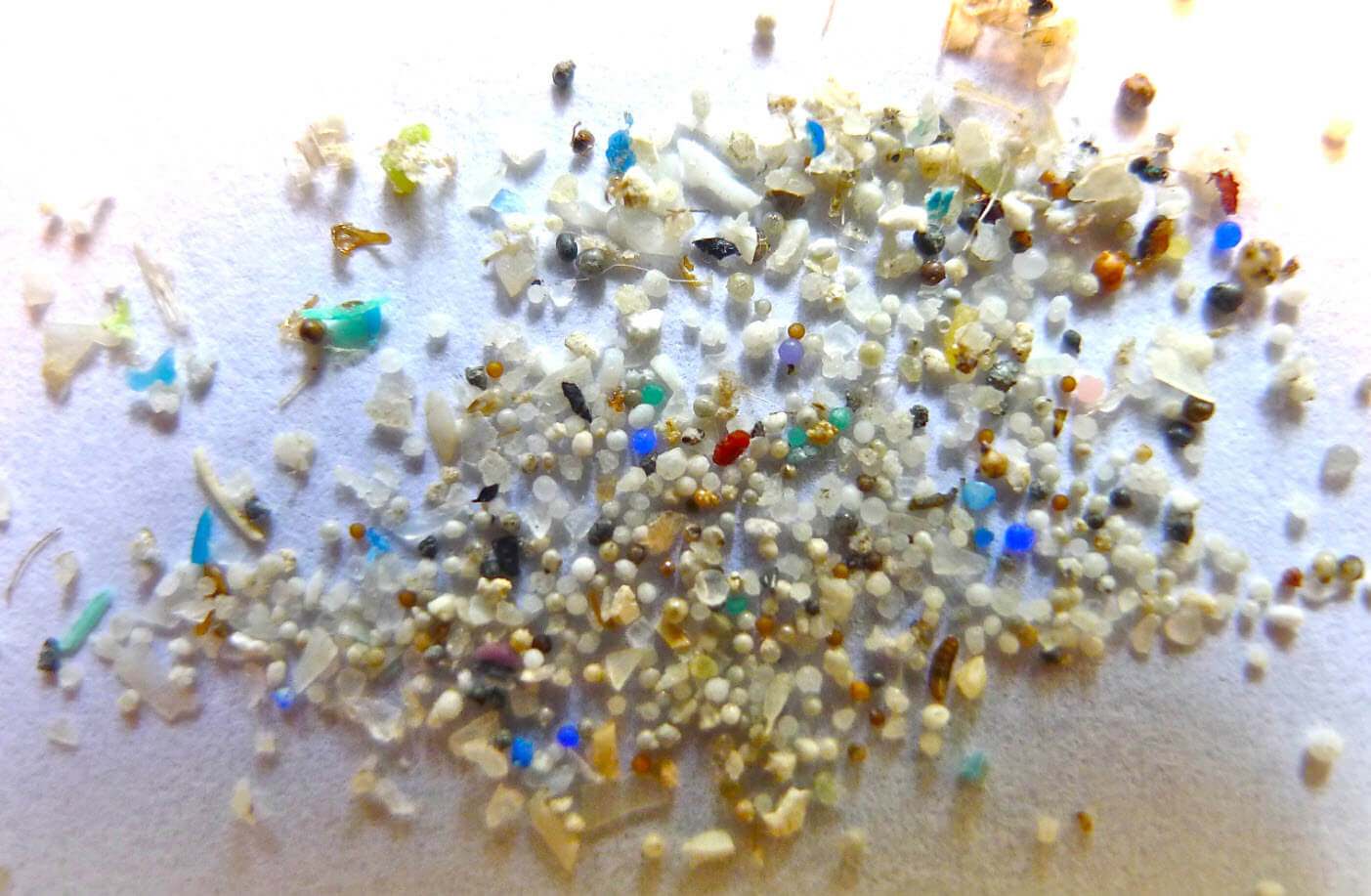 Wiertz said that 10 of the world’s rivers contribute 90% of the microplastics found in the ocean
International response
Now, governments, manufacturers and industry associations are coming together to find a solution to the problem. Aurelie Hulse, lead author of Engineering Out Fashion Waste, says: “We need to build on existing industry initiatives and fundamentally rethink the way clothes are manufactured, right down to the fibres that are used.”
Hulse continues: “Garments should be created so they don’t fall apart at the seams and so that they can be recycled after they have been worn for many years. Fabrics should be designed not to shed microfibres when washed and industry needs to look at how efficiencies can be made in the cutting process, which currently sees 60 billion sqm of cut-off material discarded on factory floors each year.”
During his presentation at the Nonwovens Network Summer Seminar, Taylor stated that the US is growing increasingly concerned about the issue and is actively working on solutions. “California was considering some legislation that would make you label polyester clothing [50% polyester content or over] as a pollutant and warn you to only hand wash it because laundering machines may release microfibres into the environment.”
Meanwhile textile manufacturers are increasingly exploring ways of producing clothing in a more sustainable way, as well as producing more sustainable and environmentally-friendly garments in general.
Germany’s Südwolle Group has developed a textile product that leaves no trace of microplastics during the washing process. The Jackson Betaspun yarn combines the benefits of merino wool with ultra-soft silk. The silk fibre is spun around the merino wool fibre in order to improve abrasion resistance and help reduce pilling.

Jackson Betaspun does not leave any traces in the form of microplastics on our planet during washing or after its lifespan
Describing the innovation to WTiN, Michel Mastio, director of Circular Knitting and Hosiery Yarns at Südwolle Group, says: “We have even gone one step further by replacing the nylon with pure silk which results in a yarn that is 100% biodegradable and does not leave any traces in the form of microplastics on our planet during washing or after its lifespan: our Jackson Betaspun.”
In order to solve the problem of pollution from the garment industry, the Institution of Mechanical Engineers’ report recommends three priority areas for action:
- The UK government, in collaboration with the fashion industry, should invest in initiatives that provide incentives for the development of more environmentally-friendly fibres.
- The UK government should work with the fashion industry and manufacturers to develop a comprehensive framework to tackle ‘greenwashing’, or false sustainability claims.
- The UK government, fashion industry and manufacturers should support the development of mechanical and chemical fibre recycling technologies, particularly those which are able to separate blended fibres.
“The garment industry is one of many industries that has a threefold impact with emissions to air, water and large amounts of waste produced for landfill and incineration,” says Dr Jenifer Baxter, head of Engineering at the Institution of Mechanical Engineers.
“Given that it has been estimated that there are 20 new garments manufactured per person each year and that consumers are buying 60% more than in 2000, these environmental implications must be addressed as a matter of urgency,” she adds.


