As the nonwovens industry looks to become more environmentally friendly, researchers are finding more innovative new solutions. Andy Rhodes speaks to Aitex’s Oscar Calvo to find out more.
The nonwovens sector is one of the textile industry’s most in-demand segments. In fact, researcher Smithers Pira indicates that by 2022 the global market for nonwovens will grow to a value of US$57.4bn, rising by 6.3% annually from 2017.
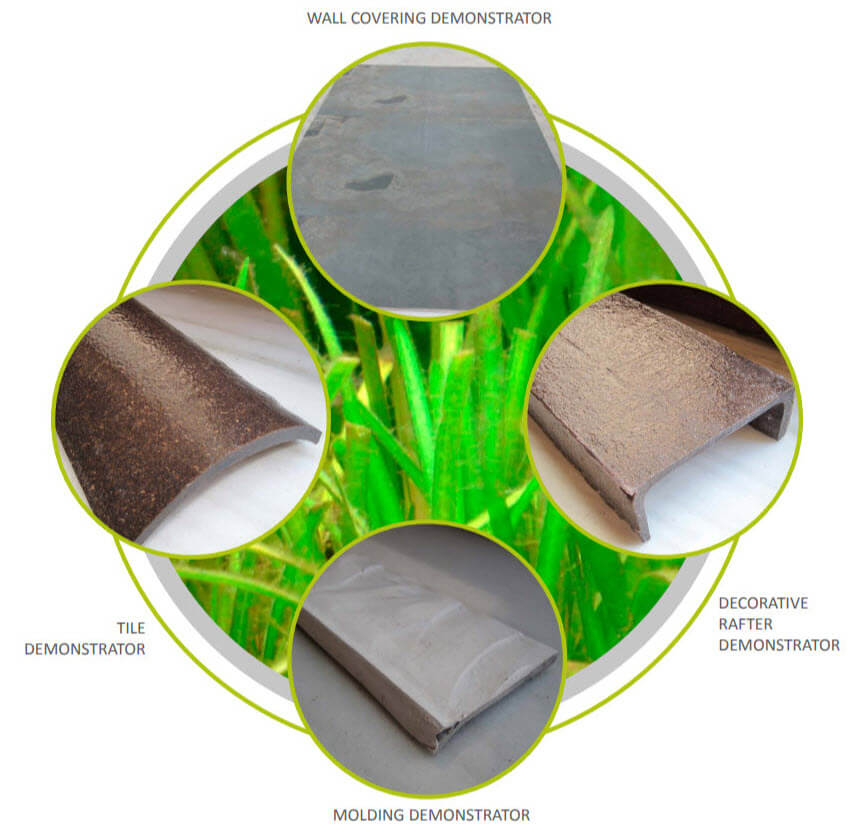
The algae-based nonwovens can be used in a number of end use applications
Image: Aitex
As a result, more work is being done to explore potential new materials that could be used to develop nonwovens. Now, Spanish textile research institute Aitex is looking into how regular beach algae can be used to create nonwovens.
At the recent Nonwovens Network Summer Seminar, held in Bradford, UK, on 26 June 2018, Oscar Calvo, researcher, R&D department, Aitex, discussed just how algae could be used to create this sustainable material.
In his presentation, he explained that because algae and seaweed accumulations are essentially waste biomass, and the fact that they can be easily processed and fiberised, they are suitable raw materials for textile products.
This is not the first time that the potential for these materials has been investigated, as Calvo explains. “The possibilities to develop nonwovens from different vegetal-based raw materials were explored previously.”
He continues: “The wetlaid technology allows the revalorisation and processability of waste coming from, for example, agricultural activities (rice, tomatoes, olives, etc) or from industrial activities such as the spinning of natural or synthetic materials. As the raw material used to develop nonwovens by wetlaid needs to be cut and transformed into small and very short particles (1.5-3 mm, a kind of ‘dust’) to be consolidated as a nonwoven, the range of potential materials and wastes to be revalorised is very wide.”
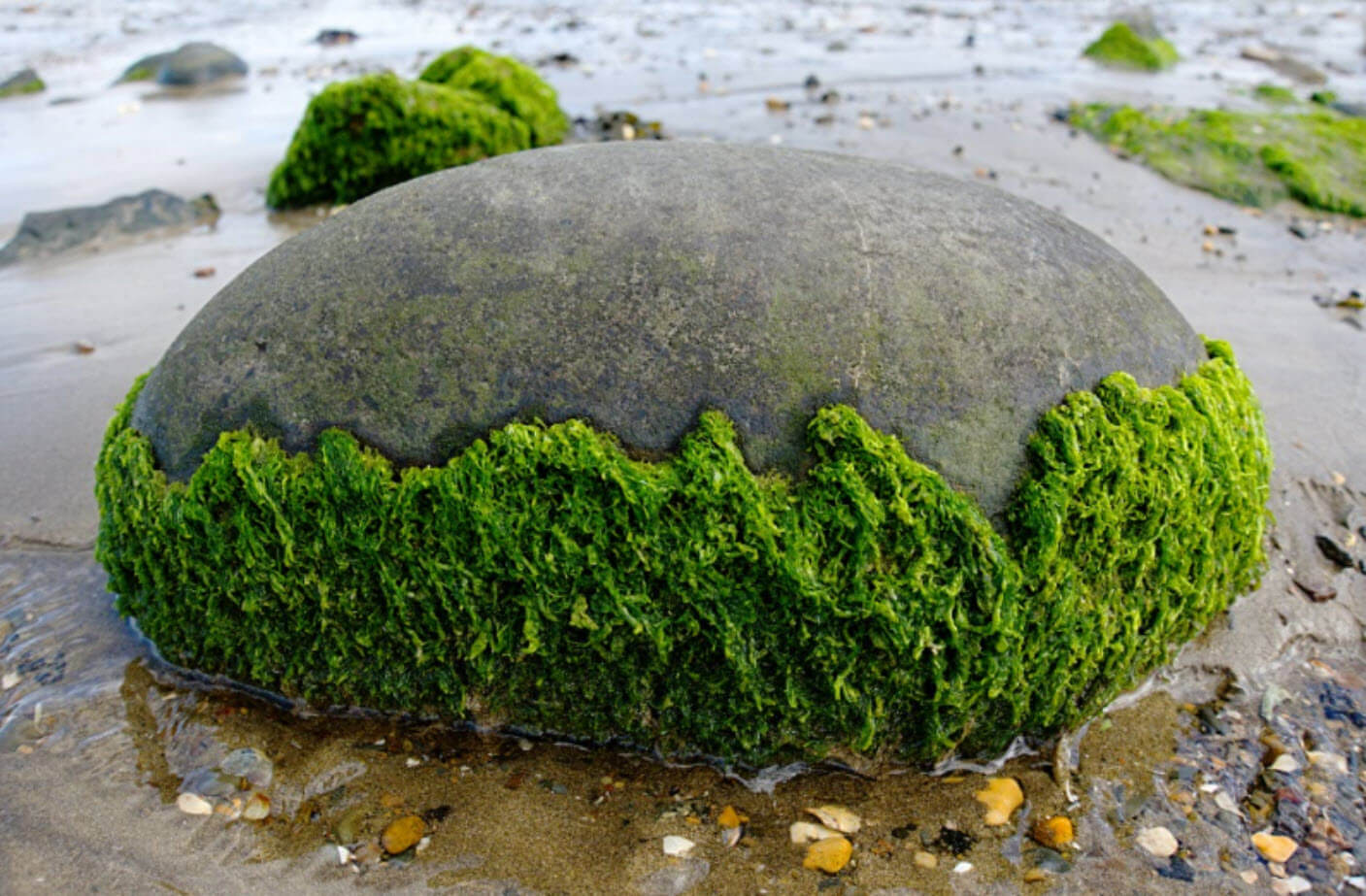
Seaweed can pose an environmental and economic problem to coastal towns and cities
Conventional process
Calvo went on to explain how the material is processed into a nonwoven textile through a combination of wetlaid technology and other processes. He says: “It was required to cut the algae wastes (previously washed and dried in a right way, of course) in order to process them as a raw material for the wetlaid nonwoven technology. Then, these very short fibres (1.5-3 mm) coming from the algae wastes were mixed with others into a water tank, in order to create the nonwoven web, further consolidated by a hot calendering process.
“In fact, algae wastes weren’t transformed chemically, for example, like the viscose method used to obtain fibres for clothing,” adds Calvo. “Only collection from the beach, cleaning/washing, drying and a mechanical cutting process were the main processes implemented to turn algae into a ‘textile’ material.”
As the new material is formed by wetlaid technology, it is suitable for a range of applications including various insulation types. “In the case of algae wastes, when mixed with a percentage of other fibres, including thermosensitive fibres to consolidate the nonwoven by a hot calendering process, the main potential comes from green end-applications for building and structural materials, like wall coverings or panels for acoustic and thermal insulation, or tiles,” says Calvo.
Sustainable focus
The algae offers a new eco-friendly material for an industry that is in desperate need of improving its carbon footprint. In recent months, the debate surrounding textile microfibres reaching and polluting the oceans has intensified, meaning that the work of projects including SEAMATTER is becoming more important than ever.
SEAMATTER was created in order to demonstrate and validate the reuse of coastal algae and seaweed accumulations as raw materials for the composites industry, as well as finding the best method of collecting and transporting the raw material.
The project is coordinated by Aitex and has partners including Coastal Ecology Institute IEL (Spain), University of Perugia (Italy) and Association of Textile Entrepreneurs of the Valencia Region ATEVAL (Spain). Explaining the role SEAMATTER played in the development of the algae-based nonwovens, Calvo says: “This process was developed along the SEAMATTER LIFE+ project (September 2012 to February 2015; execution time: 30 months).”
He continues: “The full R&D process and project included the study of collection methods of algae from the beach and further transportation to the entities in charge of classification and washing/cleaning. Some difficulties we found in relation with the classification and distribution size of the wastes included the fact that different materials can be found on the algae waste, such as sand, stones and plastics etc.
“In addition, algae wastes were cut and ‘fiberised’ in order to be processed by the wetlaid technology and specific fibre size were investigated. In final products, flame retardancy performance was required, then special fibres or chemical products were investigated and mixed with the algae-based nonwoven,” adds Calvo. “Last, but not least, suitability of several composite manufacturing methods was explored and some prototypes and demonstrators including wall covering based on a nonwoven structure, a tile, a decorative rafter and a moulding-manufactured end-product were obtained.”
Socio-economic benefits
While the algae-based textile is eco-friendly in itself, it is made greener by the fact that accumulations are removed from the beach where they cause environmental damage. “Algae and seaweed accumulations on beaches and along coasts, mainly Mediterranean but also from other EU zones, are an environmental nuisance,” says Calvo. “This biomass releases unpleasant odours, promotes mosquitoes and their rotting contributes to increasing the high mortality in shellfish beds as they turn into rubbish.”
He continues: “City councils of the coastal areas are required to remove them if they want to retain their touristic conditions and their Blue Flag Beach category. It is important to remark that sand is also removed when algae residues are collected without any control so, year by year the beach goes back and must be regenerated applying new sand.
“For this reason, currently the most widely adopted practice is to leave the algae residues in the coasts in winter and collect them in summer when tourists make massive use of the coastal areas,” he adds. “Generally, this actuation takes place within the Integrated Management System where all the marine accumulations are managed as urban solid wastes and are deposited in a landfill and/or incinerated.”
As well as being an environmental problem, algae accumulations also pose an economic problem. According to SEAMATTER, managing one tonne of algae waste costs €100. However, as a result of the project, successful new composite materials have been developed from biomass, which would otherwise have gone to landfill or have been incinerated.
The project (as an example of good practices) is part of the wider Interreg Europe RESET project, an EU-funded scheme which aims to change the way European Structural Fund policies and programmes are implemented in its partners’ regions in order to promote a more sustainable approach to production in the textile and clothing sector. In the frame of RESET project Aitex has presented other projects focused on sustainability, such as LIFE ADNATUR – Demonstration of natural coagulants use in industry and urban wastewater, or IVACE FUN2GARMENT – new applications of laser, ozone and nanobubble technologies for textile finishing.
The lead partner of the project is the Municipality of Prato, Italy, while other partners include CETI (France), CITEVE (Portugal), CLUTEX (Czech Republic), Saxon Textile Research Institute (Germany), National Research & Development Institute for Textiles and Leather (Romania), Textile Centre of Excellence (UK), Lodzkie Region (Poland), Next Technology Tecnotessile (Italy), and Aitex.
“Interreg Europe RESET project is working to share experiences across EU – linking technological evolution of products and processes with a more sustainable approach to the market,” says Calvo.
“Networking between regional and local authorities, T&C clusters and R&D centres and other stakeholders is an essential part of the transition to a more sustainable future,” he adds. “Good practices and experiences shared in each RESET technical seminar have been focused on textile recycling, water and energy saving, new sustainable chemistry, smart textiles, eco-creativity and natural fibres and new materials and applications.”
For more information on Aitex and its textile research, visit www.aitex.es