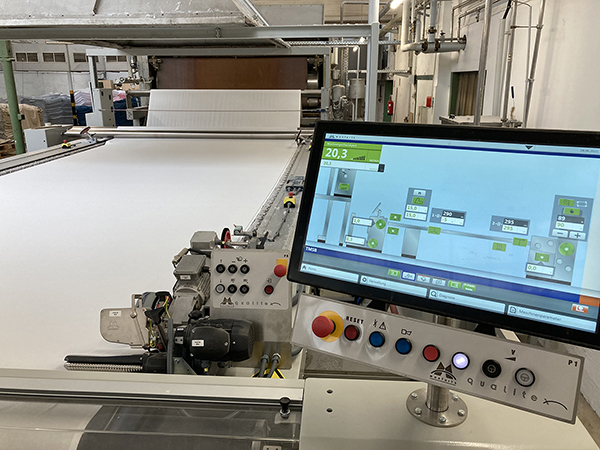
Wülfing, a German home textiles company, has adopted two near-identical Monforts sanforizing lines and opted for a new joint control system to simplify control of its finishing line. The family-owned home textiles leader hopes to boost production with the finishing line upgrade.
The company has employed Monforts’ sanforizing lines at its Borken plant in Germany since 2009, but the machines had to be operated separately via individual controls, and ‘did not represent an integrated unit’.
Wülfing consulted with Monforts on several upgrade options and opted for a completely new joint control system to merge the two machines, as well as a new connecting inlet, a tensioning and damping field and a steaming unit.
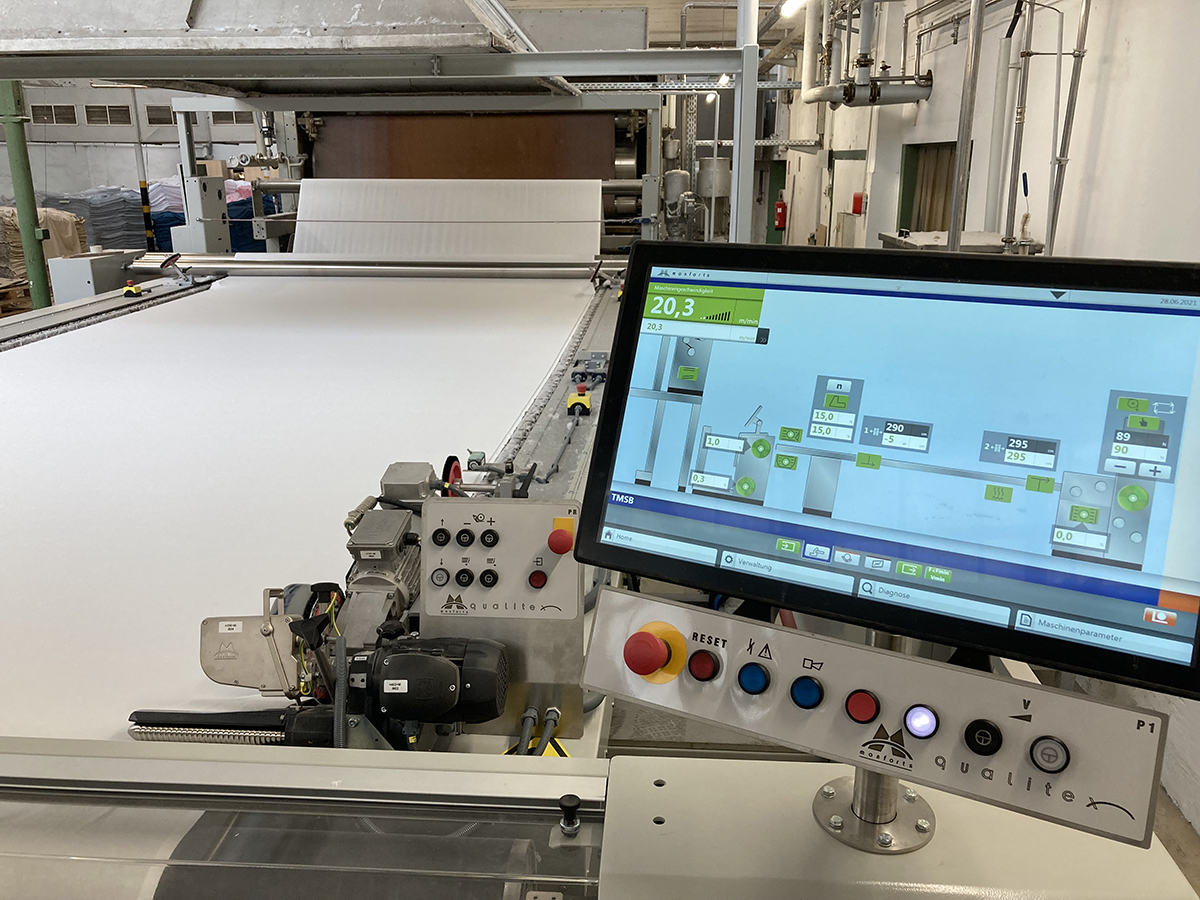
In 2009, the company opted for Monforts sanforizing lines “to guarantee the required dimensional stability and shrink-fastness of its high quality bed linen”. With a working width of over three metres, the sanforizing process is a central pillar in the production of typical wide-width cotton fabrics for home textiles.
In 2017, the company was able to acquire a second Monforts sanforizing line from another company which, although built in 2005, had been virtually unused. It was overhauled and installed behind a Monforts equalising frame of a similar age.
“Unfortunately, the two machines had to be operated separately via individual controls and did not represent an integrated unit,” explains Gerd Schulte-Mesum, Wülfing’s Borken plant manager. “This resulted in deficits in the desired productivity and in the control technology.”
Consequently, part of the upgrade included the application of technologies that would enable joint control of the technologies. Contemporarily, manufacturing and production control technologies continue to integrate many processes and machineries into one – all in aim of pushing manufacturing to the next level towards smart production.
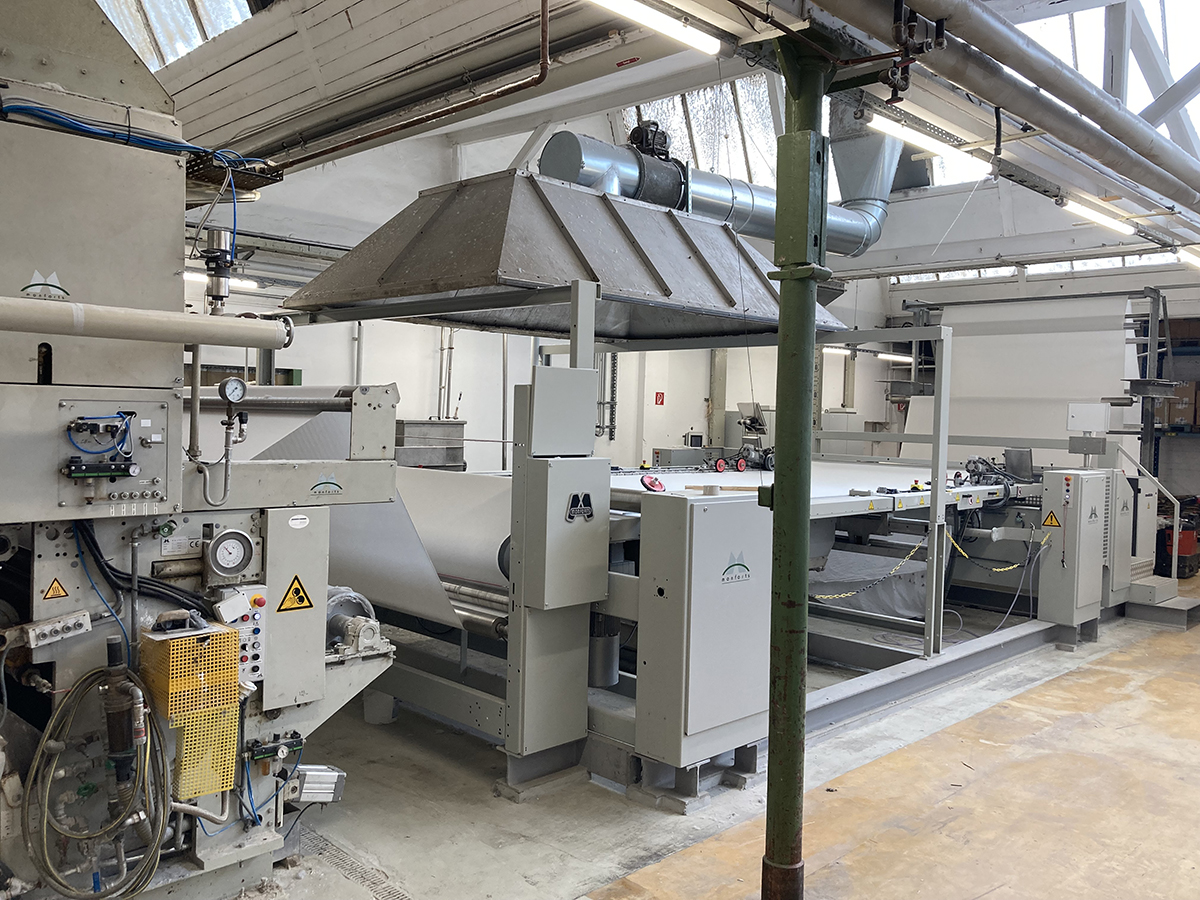
“Monforts provided a fast and precise erection and commissioning of the technology in spite of the difficult pandemic circumstances,” says Schulte-Mesum. “The result has been an increase in production speeds by 20% and enhanced uniformity in fabric width through a much-improved guidance system.
“We are also achieving energy savings as a result of the new control and drive technology and operation has been simplified and improved as a result of the unified control. We benefit from simplified access for maintenance work such as the grinding of the rubber blanket, but most of all we have greatly improved our flexibility and now have two almost identical Monforts sanforizing lines.”
“It’s been a pleasure to work with the team at Wülfing on this project, which demonstrates what is possible in the modification and upgrading of Monforts machines already in operation,” adds Thomas Päffgen, Monforts’ area sales manager.
For leading European textile manufacturers, adapting quickly to changing and highly uncertain market conditions has long been a necessity. The need for flexibility has only been intensified since the onset of the Covid-19 pandemic.
Wülfing, founded in 1885, is one of the oldest home textiles companies in Germany, with its main weaving and finishing operations located in Borken, North Rhine-Westphalia, and a further jacquard weaving mill in Steinfurt, as well as with a making up and packaging plant in the Czech Republic.
The family-owned company’s home textiles portfolio – spearheaded by the well-known Dormisette brand of bed linen – is supplied both to a wide range of retailers, discounters and catalogues, as well as to airlines hotels, retirement homes and other public institutions.
In addition, Wülfing is also a specialist in African damask fabric weaving at the production site in Steinfurt.
“Our particular strength is in wide-width weaving and the development of customer-specific ranges,” says Schulte-Mesum. “We have fully-integrated production in Germany on the most modern machines and flexibility is fundamental to our continued success. The fast-moving market demands ever-increasing innovation, service and the rapid implementation of new ideas.”