


Cold weather protective clothing is designed to protect the body from extreme environmental conditions. One of the most effective methods to protect the body is by supporting the body’s thermoregulatory mechanisms. This means that a garment should keep the body at a constant temperature and provide thermophysiological comfort for the wearer. For a person to be comfortable wearing protective clothing, the fabric should be breathable, meaning that the textile allows moisture vapour to escape, keeping the body dry and comfortable. Wind protection is another key feature of cold weather protective clothing. To achieve this, wind should be prevented from penetrating a garment’s microclimate in order to reduce heat loss from the body. Additionally, protective clothing should be waterproof to shield the wearer from any rain and prevent water penetrating inside the clothing.
Emerging research and commercial developments have both demonstrated that nanofibrous membranes have huge potential for use in cold weather protective clothing. Nanofibre technology enables the development of a fabric that’s breathable and exhibits great comfort and barrier properties due to the membrane’s large surface-to-volume ratio relating to the porous structure. Due to multiple parameters during manufacture, incorporating a nanofibrous membrane gives designers the opportunity to ‘fine-tune’ the fabric’s properties depending on the external environment that the garment is designed to be used in.
The prevalent method used to create nanofibrous membranes is electrospinning. This production technique is very versatile as it enables designers to produce nanofibrous membranes in a variety of different configurations, which will impact the overall fabric properties. In addition, electrospinning has a high production rate and relative ease of set up, which makes it a popular manufacturing method.
In this innovation profile, WTiN reports on a research outcome from the Department of Textile Engineering, at the Amirkabir University of Technology, Iran, who has developed a porous lightweight nanofibrous membrane [1].
Additionally, WTiN discusses a commercially available technology from the company North Face, named FUTURELIGHT, to determine how effective nanofibrous membranes are when used in three-layer fabric constructions for use in cold weather protective clothing [2].
Purpose
To fabricate a lightweight material that protects against cold weather and demonstrates good thermal insulation, waterproofness, and breathable properties.
Approach
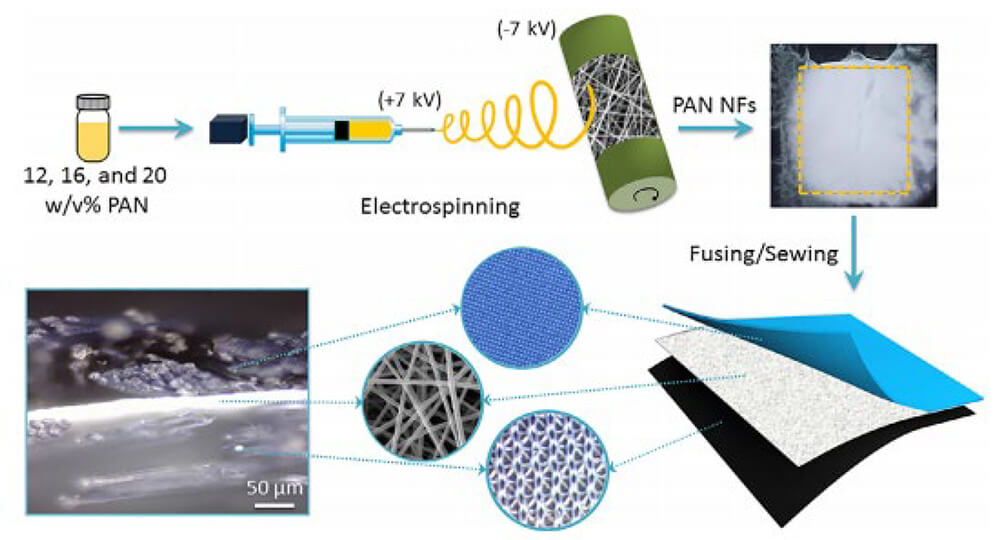
The fabric was developed using a three-layer construction technique; the layers consisted of a nanofibrous polyacrylonitrile (PAN) membrane, polyester, and nylon. The external material layer consisted of a plain weave polyester with a fabric density of 32x40 cm−2, a weight of 113.9 g/m2, and a thickness of 70 μm. The researchers used nylon for the internal layer, incorporating a 1x1 warp-knitted rib structure. This layer had a fabric density of 18x26 cm-2, a weight of 93.8 g/m2, and a thickness of 180 μm. The nanofibre PAN membrane was interlaid between the external and internal layers to create a three-layer fabric.
The nanofibre membrane was fabricated by electrospinning a PAN solution with a 20% w/v (weight/volume) concentration using a dimethylformamide (DMF) solvent. The solution was fed into a 10 mL plastic syringe with a stainless-steel blunt needle which had an internal diameter of 0.41 mm. The syringe was placed into a syringe pump and pumped at a rate of 1 mL/h. The researchers used a high DC voltage generator and set the positive and negative electrodes at 7 kV and -7 kV, respectively. The syringe needle was connected to the positive electrode, and the cylindrical collector was connected to the negative electrode. The rotation speed of the collector was set to 100 rpm and the tip-to-collector distance was set at 18 cm. The cylindrical collector was covered by aluminium foil together with the external fabric. The external fabric layer was coated with a nanofibre membrane layer that had a total thickness of 60 μm and an average fibre diameter of 600 nm.
The researchers used two different approaches to construct the fabric samples, as they wanted to analyse the effect the sealing method had on the properties and performance of the protective fabric. The first sealing method was fusing; the layers were fused together with a warp-knitted interlining using a fusing machine at the temperature of 100oC, under the pressure of 2 bar, for 10 seconds. The second approach consisted of sewing the separate layers together in a cross shape.
Results
Although air permeability promotes ventilation and comfort within a garment, reducing this characteristic can help to heighten other protective properties such as wind resistance. As previously mentioned, the sewing sealing method improved the fabric’s air permeability due to the tiny holes created by the needle, whereas the fusing technique had a less significant impact. However, the researchers found that the fusing technique gave the fabric increased windproof properties due to the interlining resin as well as the machine pressure causing air to be blocked from passing through the fabric pores. This made the fusing sealing method more suitable for cold weather protective clothing due to the reduction of wind penetration inside the garment’s microclimate and prevention of heat loss from the body due to convection.
Several parameters were measured in order to evaluate the effectiveness of using a nanofibre membrane within the construction of a three-layer fabric for use in cold weather protective clothing. The thermal resistance, air permeability, water vapour permeability, and water resistance of the fused and sewn samples were tested to assess the overall comfort and performance properties of the three-layer nanofibrous fabric. The researchers used the same polyester fabric used for the external layer as a control sample to investigate the effectiveness of the single-layer fabric in comparison to the three-layer nanofibrous fabric. The researchers found that by applying a nanofibre membrane to the internal and external textile layers, the fabric’s thermal insulation could be improved without adding significant weight or thickness to the overall fabric. In comparison to the control sample, the nanofibre membrane demonstrated a 177% to 315% increase in the thermal resistance of the fabric when using the fusing and sewing techniques.
The porosity of the fabric was found to strongly influence its thermoregulating properties. Static air is a good insulator and the pore size of the PAN 20% w/v membrane was found to allow a larger volume of air to become entrapped in the fabric, which improved its thermal insulation. Although both sealing methods improved the thermoregulatory properties of the fabric, sewing the layers together along a seam was found to have a greater impact. The sewing method allowed more air to pump through the fabric during body movements due to the small holes created during the sewing process. In comparison, the fusing method exerted more pressure on the fabric during the sealing process, which caused a reduction in the amount of air trapped inside the layer.
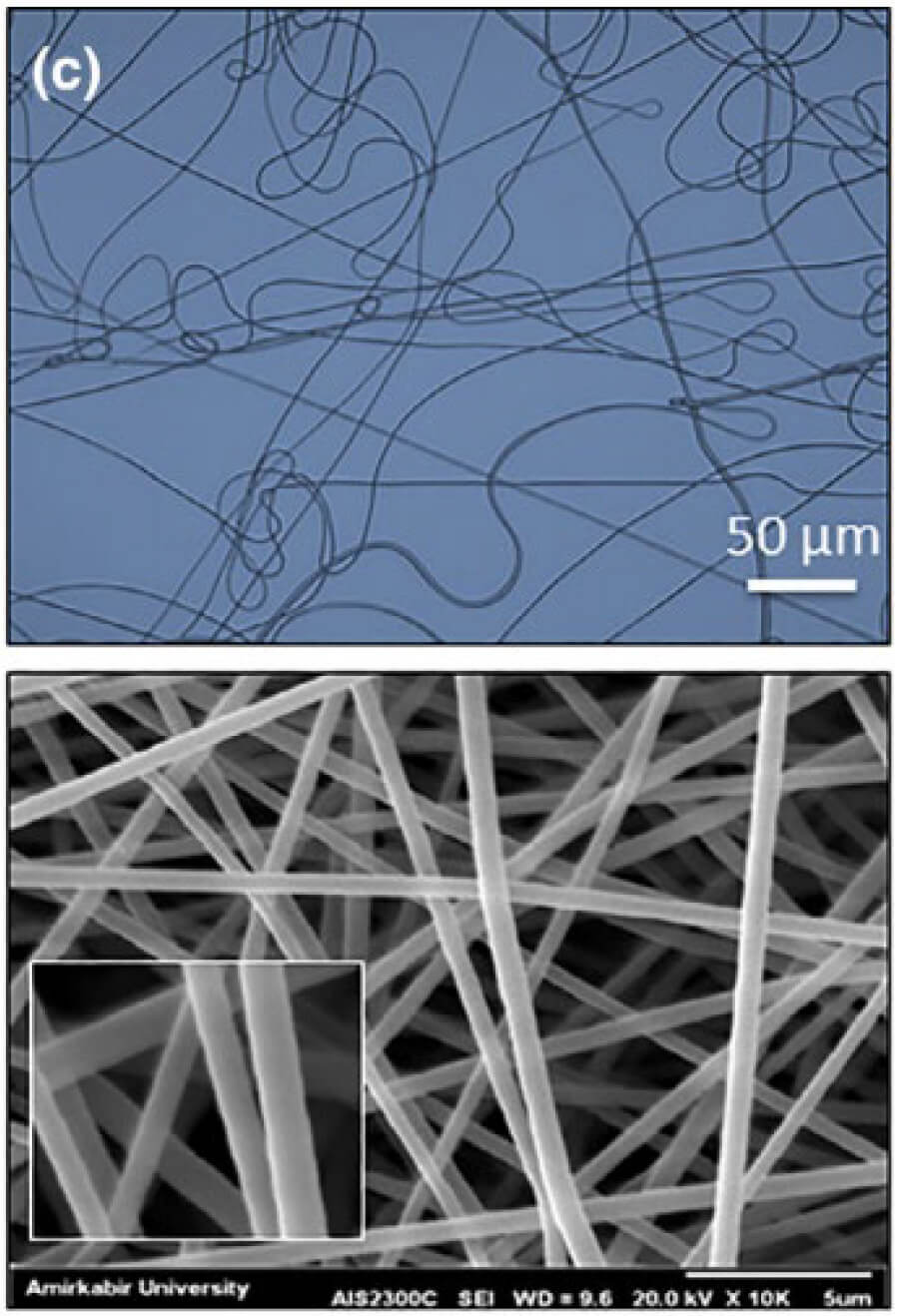
The researchers examined the breathability of the three-layer fabric by measuring its water vapour permeability. The interlining layer had a higher water vapour permeability rate than the external layer coated in nanofibres. The researchers noted that the nanofibre membrane reduced the overall breathability of the three-layer fabric. This was predominantly the case with the fused sealing method as the combination of the fusing machine pressure and the interlining resin blocked some of the fabric’s pores, which ultimately reduced the three-layer fabric’s breathability. However, the researchers found that the reduction in breathability can be controlled by altering the electrospinning parameters. It was experimentally shown that by increasing the w/v % of the solution concentrations, the porosity of the membrane was increased, improving the overall water vapour permeability of the fabric.
The fabric’s resistance to water penetration was also impacted by the sealing method. In a similar trend to air and water vapour permeability, the sewn samples were seen to be more permeable due to the increase in small holes in the fabric, whereas the fused samples demonstrated impermeable characteristics due to the closure of holes within the fabric. Therefore, the fusing sealing method would be more practical for use in waterproof fabrics as this would increase the impermeable characteristic of a garment as a whole.
Product example: FUTURELIGHT
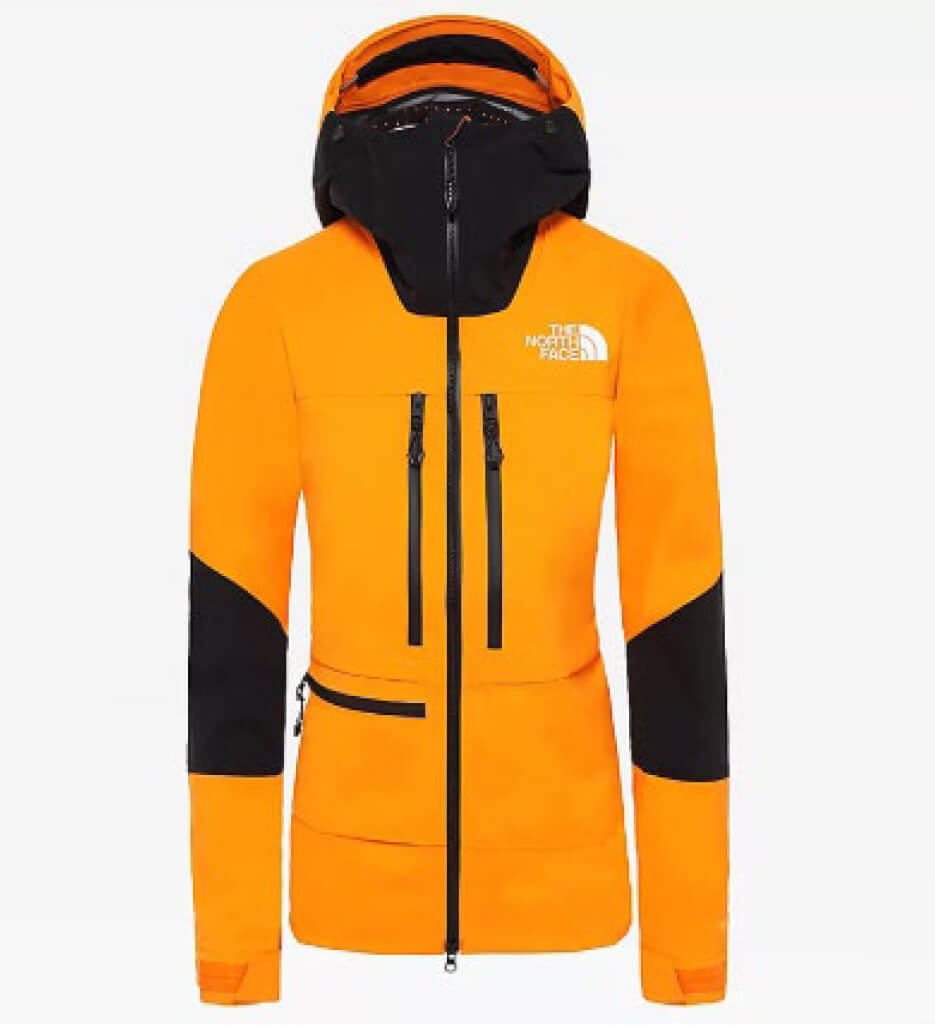
The North Face has recently launched a range of products created from its new FUTURELIGHT technology. Similar to the example discussed from Amirkabir University of Technology, FUTURELIGHT also utilises a three-layer nanofibrous fabric to create garments that are lightweight, breathable, and provide protection against harsh environmental conditions. The company states that it was able to engineer its nanofibre membrane to give it increased air permeability properties; for example, it allows more air to move through the fabric which provides greater ventilation within the garment. The company notes that this innovation improves the garment’s breathability without having a detrimental impact on its durability and waterproof properties.
The North Face created its membrane through a ‘nanospinning’ process. This technique essentially extrudes polyurethane fibres through more than 200,000 nozzles and then repeatedly layers the fibres onto themselves to create an ultra-thin and flexible membrane structure. The nanospinning process creates nanoscale pores within the membrane; the pores allow air particles to penetrate the fabric while blocking out water molecules. The company states that the membrane is bonded onto the internal and external fabrics which are constructed from 90% recycled materials with a non-PFC durable water-repellent (DWR) finish, making this fabric its most sustainable to date.
The North Face says that the porous structure of the membrane allows its designers to ‘tune’ the properties of the fabric. During the manufacturing process they are able to adjust the fabric’s weight, stretch, durability, texture, breathability and construction (knit or woven) to match the end-use of the product and enhance the comfort of the wearer. The company notes that this technology has the potential to be used across a variety of its ranges, making almost any of its garments completely waterproof [2]. This means that the jacket can be designed for a variety of activities and environmental conditions, for instance the garment’s breathability can be increased for aerobic pursuits, while its protective characteristics can be increased for harsh, wet climates. Currently, The North Face has utilised this technology for several collections including its Summit Series for high alpine conditions, Steep Series for back country treks, and Flight Series for long runs on intense trails.
Impact
This research outcome demonstrates that using a nanofibre membrane as part of a layered construction can achieve the same breathability and water resistance but with a lighter weight fabric. This means that a garment from this material will be more comfortable for the wearer and therefore has the potential to improve performance during outdoor activities. Utilising a fusing sealing method could improve the wind and water resistance of the three-layer nanofibrous fabric. Fusing also allows for moisture vapour transfer to occur, thereby rendering the three-layer nanofibrous fabric breathable, as well as increasing thermal insulation. This fabric would be ideal for use in cold weather protective clothing as it could protect the wearer from extreme environmental conditions such as rain or snow, while allowing them to stay dry and comfortable. Additionally, the PAN nanofibre membrane provides an alternative to incorporating perfluorocarbon (PFC) or polytetrafluoroethylene (PTFE) in the membranes that are nonbiodegradable and bioaccumulative, making it a more environmentally-friendly option.
As demonstrated by The North Face’s FUTURELIGHT technology, utilising a nanofibre membrane as part of a three-layer fabric construction can allow a designer to ‘tune’ the properties of the fabric. This technology allows for garments to be constructed with excellent ventilation and breathability, while retaining its waterproof, windproof, and thermal insulation properties. This will be key to future developments in outdoor clothing as designers will have the opportunity to personalise their collections to meet individual and environmental needs. (Yu, Xin, Du, Li, & Wang, n.d.)
Item 1
[1] Ghaffari, S., Yousefzadeh, M., & Mousazadegan, F. (2019). Investigation of thermal comfort in nanofibrous three‐layer fabric for cold weather protective clothing. Polymer Engineering & Science. https://doi.org/10.1002/pen.25203
[2] The North Face. (2019). FUTURELIGHT Technology. Retrieved October 28, 2019, from https://www.thenorthface.co.uk/innovation/technologies/futurelight.html#banner=fall19.Futurelight.learnmore.FuturelightMicrositeWaterproof
[3] Women’s Summit L5 FUTURELIGHTTM Jacket | The North Face. (n.d.). Retrieved November 11, 2019, from https://www.thenorthface.co.uk/shop/en-gb/tnf-gb/womens-summit-l5-futurelight-jacket-3spl?variationId=FH1#banner=fall19.Futurelight.prod.FuturelightTechnologySummitSeries