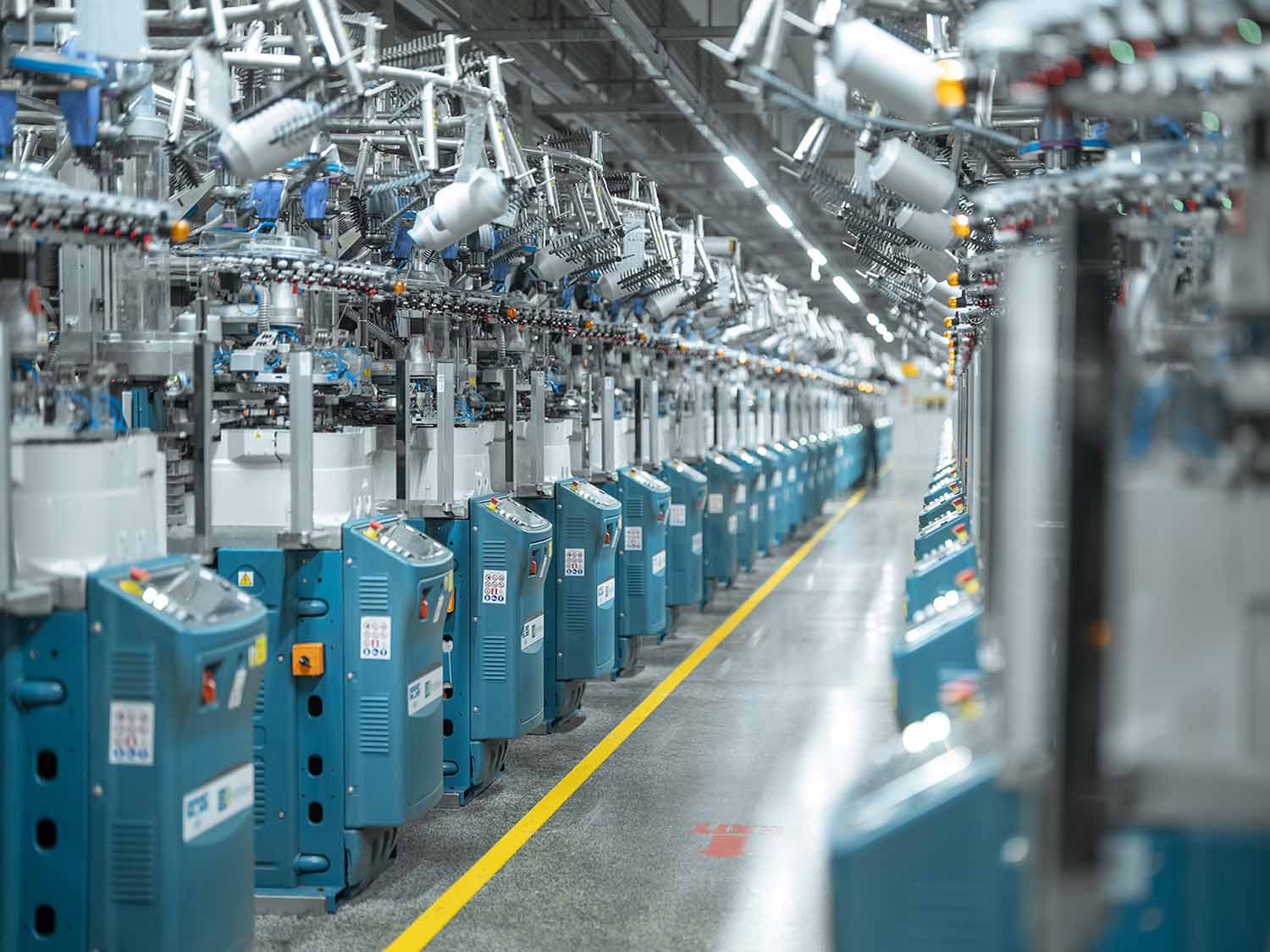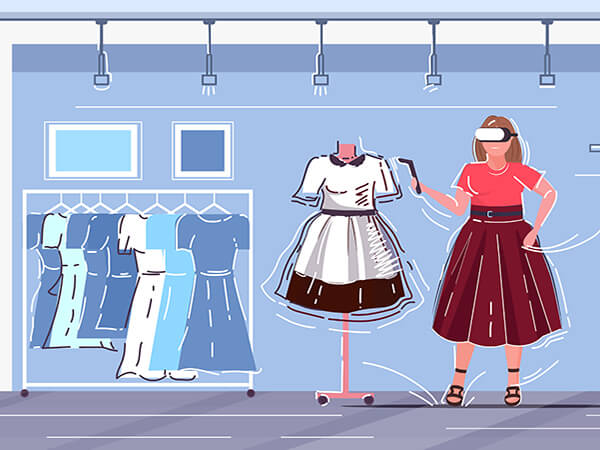
Otis Robinson explores the development, democratisation and proliferation of 3D, virtual reality (VR), digital environment and other simulation technologies throughout the garment supply chain
Introduction
Undoubtedly, the Covid-19 pandemic has disrupted the textile & apparel industry with detrimental effect to its economy, but as its players scramble for solutions, the crisis may trigger industry-wide digitalisation. Throughout the crisis, strict travel bans spread limitations throughout industry, blocking traditional garment design workflow; and as many turn their attention to digitalisation and its associated solutions, it has become clear that the outbreak is a catalyst: potentially, nothing will stay the same again.
Remote working requires new, innovative lines of connection and engagement throughout the apparel value chain – from design and manufacture to retail and the end consumer – and much of the industry has either already rapidly adopted or now faces the speedy adoption of digital tools. Specifically, digital environments that mimic the real world – simulations – have steadily popularised due to their efficacy regardless of physical proximity.
Academia has described simulations as “approximate imitation[s] of the operation of a process or system” [1]. Within industry, although simulation technologies and virtual reality (VR) technologies can be differentiated, their concepts intertwine: VR is a simulated, artificial experience that also imitates a real-world process or system using three-dimensional, computer-generated environments [2]. Thus, for the purpose of this article, anything that falls under the umbrella of simulation will be examined, since although their applications vary, the technology remains intrinsically linked in concept.
With this in mind, the examination of the past couple of decades reveals a hyper-proliferation of 3D simulation technologies throughout the fashion industry’s supply chain. It appears in various forms, from computer-aided design (CAD) software to augmented reality (AR), virtual reality (VR) and mixed reality (MR) technologies, with applications coursing through design, manufacturing and retail.
Particularly as Covid-19 weakened businesses and highlighted flaws in the textile & apparel supply chain, these simulation tools have been equipped as solutions to mend gaps: Leonie Barrie of just-style magazine suggested 3D virtual design, for example, has helped businesses to stay ‘on track’ [3]. Elsewhere, in a roundtable hosted by PI Discussions, panellists predicted trade shows and catwalks may be the next to adopt such digital tools – utilising 3D simulated models and garments – as industry increasingly considers travel restrictions, social distancing and sustainability [4].
Additionally, there exists research and academic bodies who prioritise these technologies across sectors, forging sector agnostic potential. The Glasgow School of Art’s School of Simulation and Visualisation (SimVis), for example, sits at the intersection between technology and creative practice, says Dr Matthieu Poyade, pathway leader and research fellow at SimVis. Poyade specialises in human computer interaction and extended reality and has conducted research projects exploring the efficacy of the technology within a variety of manufacturing environments.
Thus, as the technology popularises as a feature of the Industry 4.0 movement, it is essential to examine the potential of 3D simulation technologies throughout the textile & apparel supply chain.
Integrating simulation into the textile industry
Over recent years, simulation technologies have dispersed in use throughout the fashion supply chain, with applications ranging from design and manufacturing to retail and consumer purposes. These technologies tend to appear in various forms – from CAD software to AR, VR and MR applications, as previously mentioned.
In the garment industry, 3D simulation software is commonly used in the early to late stages of design, but in the grand scheme of fashion manufacturing history, only very recently has it been used to the extent we see today. Even as recently as just over a decade ago, fashion designers would still use pencil and paper [5]. The fast adoption of digital design processes can be accredited to the quickening development of design software and garment mimicry technologies over the years.
Literature suggests the developing phases of fabric simulation were not accompanied by snowballing interest until very recently. In 1975, fabric was modelled as a deformable surface with specific properties [6]. It was not until later, in the 1990s, that the simulation technology could generate wrinkles in fabric, but was “unable to model the draping of the cloth in more complex scenarios” [6]. The technology was used by aeronautics, furniture and other industries, but not yet fashion [7]. Put simply, this was because available software was complex, thus designers resisted its adoption [7], and there were wrinkles in garment simulation technology to iron out, so to speak.
But over the last decade [7] as cloth simulation technology matured, the garment manufacturing industry seemingly began to tap into its potential within the design sector [8]. In 2011, virtual cloth simulation increased attention in the fashion industry because of its potential [9]; and today, designers and merchandisers are said to recognise the effectiveness of these 3D design tools [7]. There exists a myriad of companies within the industry that offer these tools: for example, Optitex’s 3D Pattern Design Software has the ability to import fabrics and its properties to “accurately render […] fabric or a finished garment in 3D [to] maintain the shape of the avatar, the style and the properties of fabric under specific conditions” [6].
Initially, such 3D design required excessive computation time [6] and very powerful supercomputers, but today’s laptops are ‘as fast or faster’ than the latter [7]. Thus, improved computational power, alongside advanced software techniques, now enables the use of fabric draping mimicry alongside life-like avatars [7].

Within the supply chain, these garment simulations can be used for design, product prototyping and myriad other visualisation applications, and primarily, contemporary cloth design systems often intend to shorten the design process of a garment [8] through interoperable design spaces that instigate solid collaboration along the supply chain [9].
Benefits of simulation in design
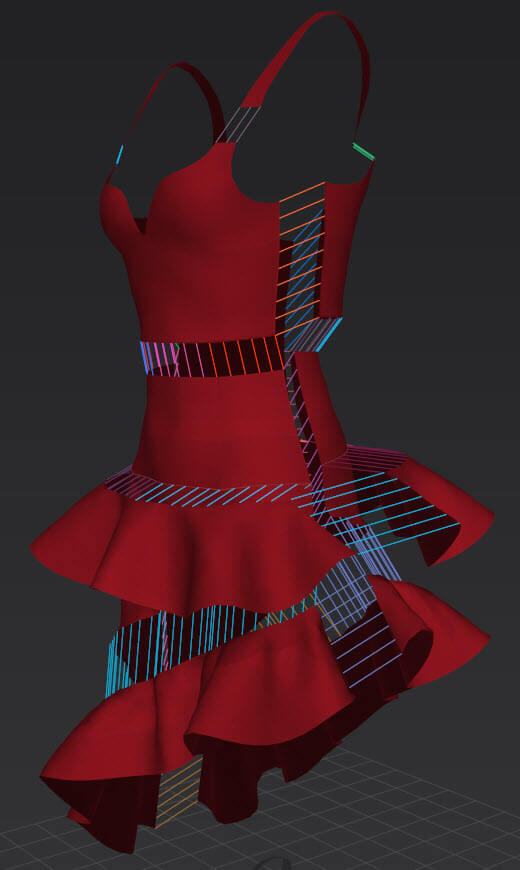
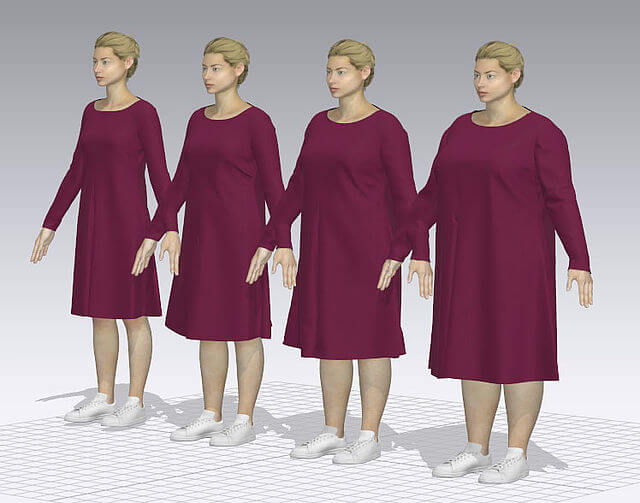
There are multiple uses for garment simulation and 3D garment assets within the industry, including the ability to place patterns around a mannequin, seam patterns together, drape using mechanical simulation, refine and alter designs in real-time, simulate interactive previews, and change measurements, posture and motion sequences [8]. By equipping 3D design and simulation technologies, further benefits within the supply chain include the ability to separate presence from physical location, data capture capabilities and the ability to create high-fidelity virtual environments [2]. Additional benefits include cost reduction, enhanced creativity and improved communication [7]. And then there is also the sustainability element with the reduced wastage and transport.
Improvements to workflow and visualisation stand alongside additional benefits: 3D software for textile-based products is also said to contribute to aesthetic and the development of new products [10]; 3D avatars allow drape and fit simulation, omitting need for physical models and strengthening size conformity [11].
Cas van Lier, marketing and communication specialist at PixelPool, a provider of technological solutions, suggests the proliferation of 3D simulation and 3D asset technologies is in direct response to fashion industry bottlenecks. In an era characterised by fast fashion and microcollections, brands must often chase short-lived trends. But time-to-market can be too long for some garments, leaving brands behind with unsold inventory while new trends supersede the last – one garment manufacturer in Bangladesh reported daily requests for new samples based on ‘fast-moving, transient Instagram trends’ [12].
Thus, the use of 3D garment simulation systems enables fast adaptation to fashion trends: “You can move forward much quicker. By designing a garment in 3D, you can present it and, upon feedback, change it instantly until it is satisfactory for everyone. Sales can use it; it saves so much time. You can jump in on trends much faster.”
Doubly, there are real-world positive changes that arise from adopting garment simulation design tools. These systems have the added benefit of offsetting carbon emissions and high energy usage habits. Van Lier says a digitalised design process cuts back on pollutant shipping and delivery processes and consumptive sampling processes, in an industry where a reported GB£5-7bn is spent on physical sampling per annum [12].
With advanced technologies reducing physical interactions – for example, Hohenstein, an international testing and research institute, whose software enables the simulation of drape, fit and size conformity using a range of simulated fabrics including lining, denim, jersey, fleece and wool [11] – physical sampling may one day become obsolete.
The use of 3D simulation technologies in design spaces was additionally observed to have popularised during the initial stages of the Covid-19 lockdowns. Kim van den Brule, virtual fashion specialist, PixelPool, says designers needed access to fabrics and colour libraries during ongoing garment design processes, and 3D technologies enabled access to these assets from remote areas, where designers were “on their own, behind a computer”.
They didn’t really have a choice, says van Lier. “The factories were shut down, but brands still needed to produce collections. So, everything up to the point of actual production is where digital came in,” van Lier explains.
The adoption of simulation tools in favour of sampling also coincided with a rising consumer focus on sustainability. As city pollution levels declined under lockdown, consumers across social media and industry discourse expressed a hyper-awareness of damaging practices, including fast fashion and pollutant garment industry traditions like the waste that accumulates with sampling.
Thus, van Lier suggests, it is hoped that the adoption of 3D design technology extends past the crisis. “If we can go back to normal, I hope that the power of 3D becomes very transparent to brands and they continue to move their innovations forward.”
Within industry, major brands are already implementing the technologies: Hugo Boss was reported to be developing 40% of its collections using 3D technology [13]; elsewhere, by adopting 3D digital design, Target was able to reduce physical sampling by 65%, while Adidas eliminated close to 1.5m physical samples between 2010 and 2013 [12].
Innovation for the future of garment simulation and design appears fruitful: a patent filed in 2019 puts forward a cloud-based online platform for one-step apparel and accessory design that comprises of multi-user, multi-level access to the exposed functionality of interactive 3D fashion design, product visualisation, made-to-measure pattern drafting and commercialisation [14, 15].
Simulation technology in the smart factory
The success of 3D simulation technologies in design filters through to garment manufacturing, too, and seemingly suggests a slow but steady ascension into the digital realm. Technology provider, meepl, suggests 3D technology can help push the garment industry towards new, innovative business models including customisation and end-to-end digitalisation [16]. Additionally, in manufacturing, simulation technologies can be coupled with AR, VR and MR technologies to help train staff, potentially assist garment manufacturing or more.
Initially, this technology required expensive, powerful, high-spec computers to run, says GSA’s Poyade. Up until the early 2000s, most VR remained in the laboratories of company R&D teams and universities. But by the late 2000s to the early 2010s, virtual reality and simulation technologies had been democratised alongside the advent of cheap and accessible smart phones and computers. Coupled with the release of VR headsets from Oculus, Poyade suggests innovations increasingly proliferated. Unsurprisingly, uses in global industries were already in development.
Linked closely with Industry 4.0, simulation in the manufacturing environment represents a move towards smart manufacturing. In the smart factory, simulation technologies can potentially reduce time-to-market, aid virtual prototype or product testing, integrate dynamic modelling and proliferate innovative staff training concepts.
Digital twin-style simulated environments – that is, simulated environments constructed of information – can be used to train staff on new machinery on factory floors so that, ‘from day one’ of installation, employees can get to work. This improves efficiency, saves money and offers a unique, virtual training environment for staff to get the hang of things. R&D in these areas is ongoing.
Nevertheless, there are many claims on the market that proprietary simulation technologies can benefit manufacturing training. First is the AR+ from Halo, a provider of enterprise resource planning (ERP) solutions, whose platform can be used in conjunction with its augmented reality offering. The AR+ projects information directly into the user’s field of vision, leaving the user’s hands ‘free for the important things’, the company told WTiN at ITMA 2019 in Barcelona, Spain [17].
Elsewhere, human-machine interactions generated by technology and wearables was proven an effective mechanism for learning: Accenture Open Innovation reported a collaboration with Cognitive3D in a case study, in which the companies demonstrated “quantitively and qualitatively that VR is [an] effective training method”, backing the hypothesis that VR would enable staff to remember how to perform tasks faster and more accurately [18].
To concur, Poyade’s own research remit orbits this potential: in 2013, Poyade says he had completed a doctoral thesis in which he examined the efficacy of virtual reality simulation technology in training and preparing maintenance staff for work in nuclear power plants. The technology made use of other technologies, like haptics, to mimic the vibrations of certain tools and physiologically prepare the body for tasks that would require pressure and motor skill training. Poyade’s later research explored the efficacy of VR simulations when applied to health & safety training in manufacturing spaces: “We use a headset, we use motion tracking technology, in order to fully immerse and recreate the psychological sensation of the user being within a [specific] hazardous environment,” Poyade says.
Though the industries are starkly different, perhaps the benefits of AR, VR and MR simulations in manufacturing spaces are sector agnostic, and thus could benefit the textile & apparel supply chains. Poyade adds that the GSA’s SimVis department has ongoing projects in progress to further examine the use cases of simulation technology in manufacturing.
Retail planning, consumer use and sustainability
Towards the end of the apparel value chain, simulation technologies – similar to that used in the design space – can help brands plan collection display aesthetics for their physical stores. PixelPool’s van Lier says: “We do visualisation of store interiors. We have a new platform called Detail, which is a fully interactive web-based platform where fashion brands can plan their new collection, visualise their new collection, fill their 3D stores with their latest collections. It basically replaces their entire physical workflow from start-to-finish, with a digital one.”
Elsewhere, during conversation, PixelPool’s van den Brule highlights another area in which simulation technologies may innovate the textile & apparel value chain: within retail and consumer environments.
Once again, conversation surrounding the use of 3D assets and simulated consumer experiences proliferated during the initial outbreak of Covid-19. As retailers and key garment and fashion industry events came to a halt, brands appeared to be on the lookout for unique solutions that could keep hold of consumer engagement. For example, this may manifest itself through virtual dressing rooms, simulation-based fashion shows and more. Poyade highlights that he is aware of additional research that overlays digital fabrics onto wearers through AR and MR technologies, which may also be suited for future design and consumer uses.
Technology providers like Accenture expect extended reality (XR) commerce to “revolutionise not only the shopping experience, but also the future of the retail industry” [19]; the market for these technologies, including VR and AR, is expected to grow to as much as US$162bn by 2020, according to IDC [19]. It is suggested this is because these technologies enable unobtrusive and experiential sales techniques. Even luxury brands like Louis Vuitton are suggested to have adopted hyper-realistic product simulations. Technology provider DDIGITT “point[s] to digital transformation as a necessary step” for such fashion brands to answer consumer concerns like sustainability, too. This is backed by insights shared during PI’s ‘Live Discussions: Covid-19’ webinar, where featured guests Cameron-James Wilson, CEO at The Diigitals, Kerry Murphy, founder and creative director at The Fabricant, and Matthew Drinkwater, head of the Fashion Innovation Agency (FIA) at the London College of Fashion agreed that in a post-Covid-19 world, 3D visualisation technologies could push meaningful change in the fashion industry [4].
Future focus
As simulation technology becomes more sophisticated, it is expected to be successfully and commercially coupled with haptic technologies for full sensory immersion across design and retail processes. For example, an EU project completed in 2007 titled HAPTEX (Haptic Sensing of Virtual Textiles) proposed the development of new avenues for research on multimodal interaction that enables the perception, touch and manipulation of textiles within a simulation – the complete virtual experience of a physical textile [21].
“It used a tactile interface and haptic interface in order to provide the user with the feeling of different textiles and fabrics,” Poyade explains. “It pioneered human-computer interactions in virtual reality applied to the textile industry.”
Research in the use of haptic technology for simulation purposes has proliferated, Poyade suggests, with applications ranging across industries. Within the textile & apparel industry, however, its uses span from design (virtual hand-feel sampling) to retail (virtual hand-feel testing of garments by ecommerce consumers).
For example, in the UK, Dr Sahar Arshi, a research fellow from the School of Design at the University of Leeds, UK, along with project lead Professor Ningtao Mao, is engaged in a project titled The Digital Communication of Fabric Properties. Part of the Future Fashion Factory (FFF), a Creative Industries Clusters Programme that supports innovative projects in the fashion and textile industry, the two-year project intends to develop a piece of software that will facilitate the virtual communication of material hand feel from one location to another, no matter where the end-users are located [22].
The value of haptic technologies within the conversation of simulation in the textile industry is thus incredibly high. Reports posit additional developments exist through the convergence of VR and AR experiences, offering rich, seamless retail experiences between reality and the digital world [19]. In the last couple of years, brands have tapped into this: Apple acquired a start-up company titled VRvana, which is reported to have pioneered this type of technology [19], for example.
Barriers
Despite proliferating R&D, barriers to the mainstream adoption of simulation and VR technologies include computational power, pricing, security and user perception [2]. Elsewhere, limitations within garment mimicry may present additional bottlenecks.
"[Clothing] is a complex material – different to steel or other solid materials," said Jörn Kohlhammer at the Fraunhofer Institute's Computer Graphics Research Center in an interview with broadcaster DW [23]. "Textiles have their own structure. Depending on how the fibres are processed, and their elasticity, the material will fall differently or pull differently when it's moved.”
Exploring the ongoing development of garment mimicry and drape simulation in a WTiN webinar [11], Jacqueline Keinath, project manager, R&D clothing technology at Hohenstein, says: “Something to keep in mind is that there is no common standard for [the way a garment falls and folds in a 3D simulation], [thus] each of these fabrics will also look slightly different in other programmes.”
Consequently, this presents a barrier of adoption within the apparel design and manufacturing sector: “This […] reveals limitations of doing fit testing solely in 3D simulation programs. In real life, the fall of the garments vary to a certain extent, which is why it is so very important to fit on real people once you are pleased with the design, colour, length, etc.”
Thus, mechanical simulation, collision detection, geometric modelling, interactivity and other areas require more focus within today’s fast-paced fashion design and manufacturing industry [6]. This includes avatars in motion, which would consider human movement in the design of garments; Hohenstein is utilising 3D and 4D scanning technologies to research this area of garment simulation [11].
Van den Brule concurs: “I hope that there is a lot more innovation [in the garment simulation space]. It’s really hard in 3D to, for example, create folded styles or hanging styles or even shoes and accessories. It takes still quite some time, so I hope there might be some changes to come.”
Nevertheless, the technology is indeed popularising. Growing investments and funding into simulation technologies suggest the aforementioned barriers may continue to fall [2], and use cases from design, through manufacturing and retail, are set to proliferate. Thus, it seems simulated assets and environments hold massive potential to innovate the apparel industry.
References
[1] Banks, J., Carson, J., Nelson, B. and Nicol, D., Discrete-Event System Simulation. 2001.
[2] Deloitte, “Utilizing virtual reality to drive supply chain innovation”, Deloitte, n.d. [Online] Available: https://www2.deloitte.com/us/en/pages/operations/articles/virtual-reality-to-drive-supply-chain-innovation.html [Accessed 1st July 2020]
[3] Barrie, L., “3D virtual design and fit tools keep fashion on track”, just-style, 2020. [Online] Available: https://www.just-style.com/analysis/3d-virtual-design-and-fit-tools-keep-fashion-on-track_id138280.aspx [Accessed 11th June 2020]
[4] Robinson, O., “Digitising fashion retail in a post Covid-19 industry”, WTiN, 2020. [Online] Available: https://www.wtin.com/article/2020/march/300320/digitising-fashion-retail-in-a-post-covid-19-industry/ [Accessed 10th June 2020]
[5] Cheng, H., “Application of Virtual Reality Technology in Garment Industry”, 3rd International Conference on Social Science and Management, 2017. [Online] Available: https://pdfs.semanticscholar.org/ef18/4e30e7fb9701a1627056f6ffa3fac6bc9706.pdf [Accessed 11th June 2020]
[6] Pesant, M., “3D challenges in the fashion industry”, 3D Insider, 2020. [Online] Available: https://3dinsider.optitex.com/3d-challenges-in-the-fashion-industry/ [Accessed 9th June 2020]
[7] Clarke, P. and Wilhelm, W. T., “3D in apparel design: a revolution in the industry”, Drapers, n.d. [Online] Available: https://www.drapersonline.com/download?ac=1245684 [Accessed 10th June 2020]
[8] Volino, P., Cordier, F. and Magnenat-Thalmann, N., “From Early Virtual Garment Simulation to Interactive Fashion Design”, MIRALab, University of Geneva, n.d. [Online] Available: http://citeseerx.ist.psu.edu/viewdoc/download?doi=10.1.1.107.7320&rep=rep1&type=pdf [Accessed 22nd June 2020]
[9] Wu, Y. Y., Mok, P. Y., Kwok, Y. L., Fan, J. T. and Xin, J. H., “An investigation on the validity of 3D clothing simulation for garment fit evaluation”, Proceedings of the IMProVe, 2011. [Online] Available: http://www.improve2011.it/Full_Paper/99.pdf [Accessed 10th June 2020]
[10] Boldt, R. and Carvalho, M., “Virtual prototyping as an evaluation method for functional clothing”, 18th World Textile Conference (AUTEX 2018), 2018. [Online] Available: https://iopscience.iop.org/article/10.1088/1757-899X/460/1/012040 [Accessed 9th June 2020]
[11] Keinath, J., “Virtual Designing and Fitting – 3D Simulation in Clothing Development”, WTiN, 2020. [Online webinar]
[12] Roberts-Islam, B., “How 3D Digital Design and Augmented Reality Can Slash Textile Waste In Fashion”, Ecoage, 2019. [Online] Available: https://eco-age.com/news/how-3d-digital-design-and-augmented-reality-can-slash-textile-waste-fashion [Accessed 11th June 2020]
[13] Zha, W., “Pioneering 3D technology: digital design at Hugo Boss”, FashionUnited, 2018. [Online] Available: https://fashionunited.uk/news/fashion/pioneering-3d-technology-digital-design-at-hugo-boss/2018120340293 [Accessed 11th June 2020]
[14] Robinson, O., “Cloud-based garment design system”, WTiN, 2020. [Online] Available: https://www.wtin.com/article/2020/march/020320/cloud-based-garment-design-system/ [Accessed 28th May 2020]
[15] Brodsky, Y., Straub, D. E., Zapadisnky, E., Popov, D. and Rudnechenko, K., “Cloud-based garment design system”, US20190272679, Patentscope, 2019. [Online]. Available: https://patentscope.wipo.int/search/en/detail.jsf?docId=US251289349&tab=PCTDESCRIPTION&_cid=P22-K56WS2-21335-1 [Accessed 5th February 2020]
[16] Stampfl, R., “An Instant 3D Body Reconstruction Platform for Apparel”, WTiN. [Online webinar]
[17] Robinson, O., “Halo ERP solutions prove popular at ITMA”, ITMA Daily News, 2019. [Online] Available: https://www.wtin.com/media/mags/itma_daily_news_2019/issue6/index.html# [Accessed 11th June 2020]
[18] cognitive3D, “How VR Improves the Effectiveness of Vocational Training,” n.d. [Online] Available: https://content.cognitive3d.com/vr-vocational-training-case-study [Accessed 1st June 2020]
[19] Camera, R., “Inventing the future of shopping through Extended Reality (XR) Commerce”, Accenture, 2018. [Online] Available: https://www.accenture.com/us-en/blogs/blogs-raffaella-camera-xr-shopping [Accessed 10th June 2020]
[20] DDIGITT, “Louis Vuitton is chic. Digital Louis Vuitton is très chic!”, 2020. LinkedIn post. [Online] Available: https://www.linkedin.com/posts/ddigitt_digitalproductcreation-3dfashion-cgi-activity-6686644173942099969-yVQN [Accessed 15th July 2020]
[21] MIRALab, “HAPTEX – Haptic Sensing of Virtual Textiles”, MIRALab, 2017. [Online] Available: http://www.miralab.ch/index.php/rushmore_event/haptex-haptic-sensing-of-virtual-textiles/ [Accessed 13th July 2020]
[22] Robinson, O. “Software for communicating fabric handle,” WTiN, 2019. [Online] Available: https://www.wtin.com/article/2019/november/041119/software-for-communicating-fabric-handle/ [Accessed 17th June 2020]
[23] Schmidt, F., “Soft wear: computer simulated design is tailoring the future fashion industry”, DW, 2014. [Online] Available: https://www.dw.com/en/soft-wear-computer-simulated-design-is-tailoring-the-future-fashion-industry/a-17567500 [Accessed 22nd June 2020]