
Cut piece fabric gripping is viewed as a major barrier to digitalisation of the textile and apparel industry. Soft robotics could have the answer but cost and capabilities are an issue; not for Chinese OEM Rochu, however. Tansy Fall reports.
The emerging technology field of soft robotics offers exciting prospects for the apparel manufacturing sector. Soft robotics are constructed from actuators, gel, elastomer and fluids, and can precisely and firmly hold fragile objects without causing any damage. As the WTiN report, ‘Fabric gripping technology for future automation’ notes, soft robotics are currently the only option for replicating a ‘human-like grip, with impactive technologies’ in the textile and apparel industry. Whilst automated ingressive, astrictive and contigutive gripping technologies – such as vacuum and needle grippers – are increasingly available for use in the sector, they have significant limitations.
Development in the area of soft robotics has been predominantly focused on integration of somatosensory systems for sensing of touch, movement, curvature, pressure and temperature, and the capabilities of soft robotics are palpable. However, it is broadly accepted that sensory soft robotics can only be applied in high-tech industries for very specific applications at present, due to both cost and speed. That is until now.
At Hannover Messe 2019, Chinese robotics business Suzhou Rochu Robotics, founded by entrepreneur Frank Zhang, presented the results of its year-long project to create a portfolio of soft robotic grippers for the apparel sector.
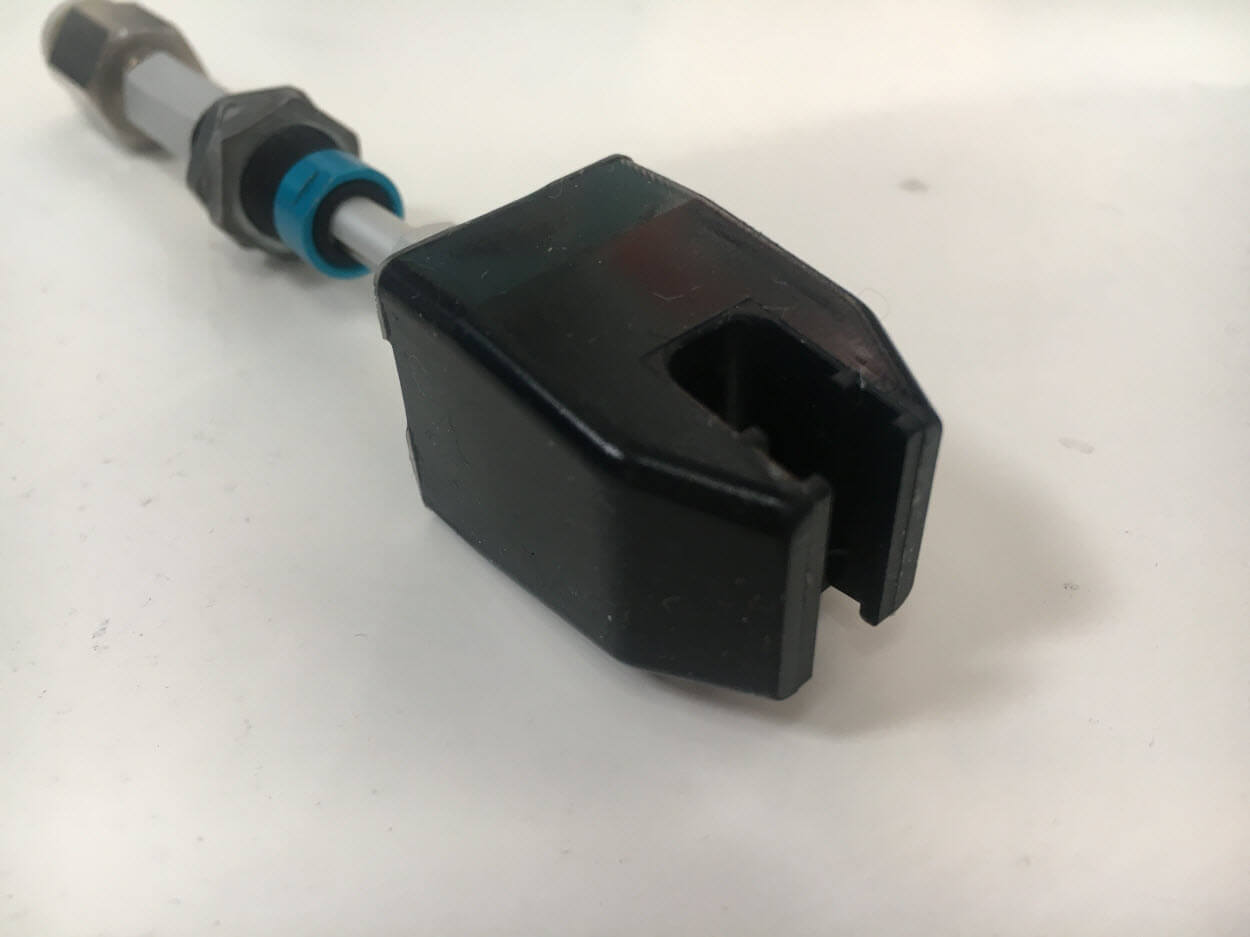
The company has developed a range of grippers, as well as a control unit and supporting structure, specifically for transportation of cut garment pieces. Six soft robotic gripper types are currently available as part of the Rochu portfolio, with each one having been designed to deal with a different weight/type of fabric or size of garment piece.
Zhang explains that the pressure each gripper exerts can be predefined for different fabric types so that the machine can automatically adapt during production to take into account a fabric’s thickness or texture. And the pinching movement is not the only aspect that can be adapted – the system is programmed to understand whether to peel the fabric from its original position or to lift it vertically, depending on the size and shape of the cut piece. “The process is easier with flat material,” Zhang adds, saying that towel material has been the most challenging to work with.
Implementation
The gripping technology is envisioned to be first implemented at the quality checking stage between cutting and sewing, working with fabric layer cakes. These cakes are produced when multiple sheets of fabric are laser or knife cut into pieces simultaneously. The result is a pile of identical, stacked garment pieces. Ahead of sewing, each of these garment pieces is manually checked for defaults, and the worker carrying out this task then restacks the fabric pieces. The difficulties in achieving accuracy in the manual restacking process means that the reformed cake can be more difficult to transport, or to feed into other automated processes (should they be further developed). Using the automatic soft robotic gripper system, the cake that is recreated is as flawless as the original cut cake.
Rochu has also developed a further gripping solution which replicates the motion of a full hand grip to move the layer cake to the next station in the garment manufacturing process – emulating the human worker. As well as the gripping technology, the whole system necessitates an intelligent vision system and software. For this, Rochu has partnered with Beijing Sigma Microelectronics.
The development has come as part of a project supported by a prominent apparel manufacturer (which cannot be named) and China-based garment manufacturer Shenzhou International Group Holdings Limited. Rochu was asked to develop a system that enabled a ‘picking speed’ of only four seconds, with a minimum success rate of 99%.
Rochu has also been tasked to bring the cost of the entire gripping system below that of the cost of labour for a worker to do the same job. Zhang comments that it is “very difficult to make something that is both cheap and smart”, however he has accepted the challenge and is working towards an affordable solution.
Moreover, the company has also been asked to create a more dynamic system that can detect the size of the cut pieces and automatically adjust the position of the grippers accordingly. This adds another development layer into the solution and the company therefore won’t be at ITMA this time around, but Zhang says Rochu will be ready for and exhibiting at sewing show CISMA 2019 later this year (http://en.cisma.com.cn/).